
Helping a child develop new skills and behaviors can be one of the most rewarding experiences for any parent. When guided by evidence-based principles, progress can become even more effective. ABA at Home provides parents with a structured, practical approach to teaching everyday skills while building positive habits. Families who use this approach often see noticeable improvements in their child’s communication, learning pace, and overall independence. With professional guidance and consistent implementation, parents can make a meaningful difference right at home. For families seeking quality support, aba in home programs offered by best rated aba services North Carolina provide expert supervision and hands-on training to ensure lasting results.
Understanding the Power of ABA at Home
Applied Behavior Analysis (ABA) focuses on understanding how behaviors work, how they are influenced by the environment, and how new skills can be taught through positive reinforcement. ABA at Home extends these techniques into the family setting, giving children a familiar and comfortable space to practice new skills.
Home-based implementation allows parents to reinforce learning consistently throughout the day. For example, mealtime routines can become lessons in communication, and playtime can teach turn-taking or sharing. By applying consistent reinforcement and structured strategies, parents can help children learn faster while reducing frustration.
This approach also encourages greater collaboration between therapists and families. When caregivers take an active role, they help maintain continuity between professional sessions and everyday life, which accelerates learning.
Creating a Structured Learning Environment
Consistency is key to effective learning. One of the first steps in applying ABA at Home is to create an environment that promotes focus and engagement.
Start by designating a quiet, distraction-free area for learning activities. The space should be organized, predictable, and equipped with materials used in therapy sessions. Visual schedules, cue cards, and token boards can help your child understand expectations and track their progress.
Children thrive on routines. Establishing consistent times for learning, play, meals, and rest builds predictability. Over time, the structured environment helps your child recognize patterns, anticipate activities, and respond more positively to transitions.
Breaking Tasks into Manageable Steps
Complex skills can feel overwhelming when taught all at once. ABA principles recommend breaking down tasks into smaller, manageable steps—a process known as task analysis.
For example, if your goal is to teach your child to brush their teeth independently, the process might start with picking up the toothbrush, then applying toothpaste, brushing the front teeth, and so on. Each step is practiced until mastered before moving on to the next.
This systematic approach helps your child build confidence as they experience success at every stage. Gradual skill development encourages motivation, and small victories keep them engaged in the learning process.
Using Positive Reinforcement
Reinforcement is the foundation of behavior learning. When your child performs a desired behavior, rewarding that action increases the likelihood it will happen again.
Reinforcers can be verbal praise, high-fives, favorite toys, or brief playtime. The key is to identify what motivates your child most. The immediacy of the reward is also essential—praise or reinforcement should follow the desired behavior right away to strengthen the connection between action and outcome.
Over time, tangible rewards can be gradually replaced with social reinforcers like praise, hugs, or shared excitement. The ultimate goal is to help your child develop intrinsic motivation to learn and engage positively.
Encouraging Communication and Interaction
Communication plays a vital role in learning and development. ABA methods encourage the use of functional communication strategies, enabling children to express their needs and feelings more effectively.
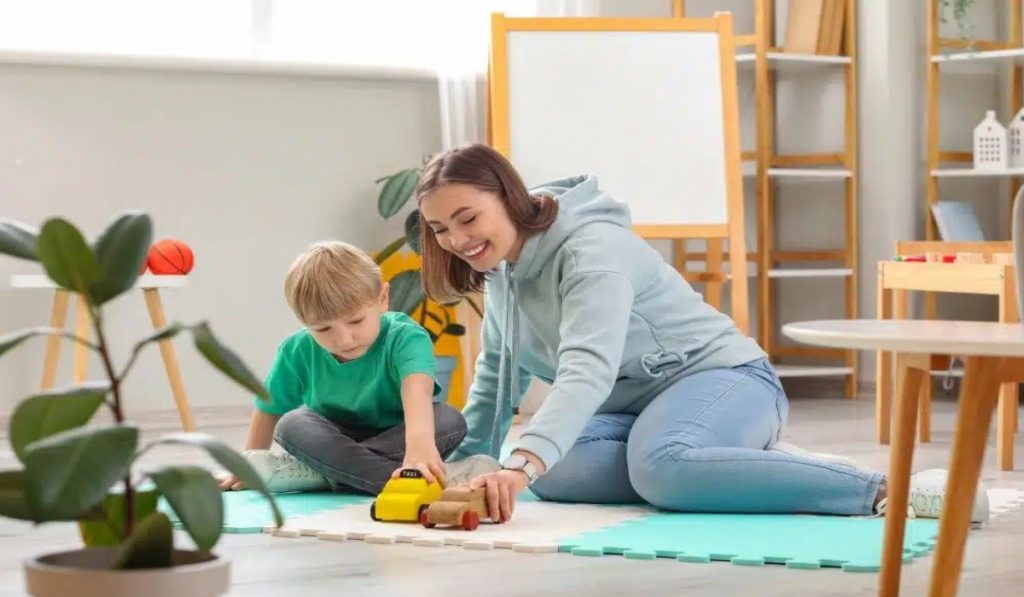
Incorporate communication opportunities into daily activities. For example, encourage your child to request items before handing them over, use visual aids to express preferences, or label objects together during play.
Consistent practice enhances vocabulary, strengthens comprehension, and builds confidence in expressing needs. Over time, improved communication helps reduce frustration and promotes smoother interactions with family and peers.
Monitoring and Measuring Progress
Tracking progress ensures that ABA strategies remain effective and aligned with your child’s development. Keep simple records of daily activities, target behaviors, and achieved milestones.
You might note how often your child completes a task independently or responds to instructions correctly. Periodic review sessions with your child’s therapist can help adjust goals, refine strategies, and introduce new learning objectives.
When progress is visible, both you and your child gain motivation to keep going. Even small improvements reflect the success of consistency and positive reinforcement.
Turning Everyday Routines into Learning Opportunities
One of the greatest advantages of ABA at Home is the ability to turn daily routines into meaningful learning moments.
During meals, you can practice following directions, naming foods, or using utensils properly. Bath time can teach sequencing—turning on the water, applying soap, rinsing, and drying. Household chores, such as folding laundry or setting the table, can help build responsibility and motor coordination.
By transforming ordinary activities into structured lessons, children learn functional skills that enhance independence. These real-life experiences make learning natural and practical, which accelerates their understanding and application.
Building Patience and Consistency
Consistency and patience are the backbone of home-based ABA success. Every child learns at their own pace, and progress often takes time.
Parents should remember that occasional setbacks are part of the learning journey. Staying calm and positive helps your child feel supported rather than pressured. Celebrate every success—no matter how small—and use challenges as opportunities to adjust strategies.
Frequent collaboration with your therapy team ensures that the program remains effective and tailored to your child’s evolving needs.
Involving the Whole Family
Family involvement plays a powerful role in reinforcing learning. When siblings or other caregivers participate in the same techniques, children receive consistent cues and support across all interactions.
Family activities such as cooking, gardening, or playing board games can be transformed into learning opportunities where cooperation, sharing, and turn-taking are emphasized.
When everyone is on the same page, your child experiences a more unified approach, which accelerates behavioral consistency and skill mastery.
Partnering with Professionals for Guidance
While parents are central to home learning, professional guidance ensures that techniques are applied correctly. ABA professionals, such as Board Certified Behavior Analysts (BCBAs) or Registered Behavior Technicians (RBTs), can assess your child’s unique strengths and challenges to design personalized learning programs.
Partnering with certified professionals also allows parents to learn proper data collection, reinforcement schedules, and behavior modification techniques. For those interested in pursuing a meaningful career in this field, searching for rbt jobs near me can open opportunities to become part of a growing community dedicated to improving lives through ABA.
Maintaining Motivation and Engagement
Sustaining engagement requires creativity and flexibility. Introduce variety by rotating activities, using games, and incorporating your child’s favorite interests into lessons.
Short, focused sessions tend to be more effective than long, drawn-out ones. End each session on a positive note to leave your child feeling successful and eager for the next one.
You can also use visual progress charts, stickers, or token systems to help your child see how far they’ve come. Celebrating progress reinforces positive emotions associated with learning.
The Long-Term Benefits of ABA at Home
When practiced consistently, ABA at Home does more than teach immediate skills—it builds a foundation for lifelong learning. Children learn how to adapt, communicate, and participate meaningfully in their environment.
Parents gain valuable insight into how behavior and learning are interconnected. They become empowered advocates who can guide their child’s growth beyond therapy sessions.
Ultimately, the success of this approach depends on collaboration, consistency, and a deep commitment to helping your child achieve their full potential.
Conclusion
Implementing ABA at Home allows parents to play an active role in shaping their child’s learning journey. Through structure, reinforcement, and positive interaction, children can learn faster, communicate more effectively, and gain confidence in their abilities.
When supported by trained professionals and guided with patience, the home becomes a dynamic learning space where progress thrives every day.
At Alight Behavioral Therapy, we provide personalized, in-home ABA therapy and autism evaluations, all designed to help children on the autism spectrum reach their full potential.
FAQs
What is ABA at Home and how does it work?
ABA at Home is the application of Applied Behavior Analysis principles in a child’s familiar environment—home. It helps parents teach essential life, social, and learning skills using structured methods and positive reinforcement. By turning everyday routines into learning opportunities, this approach helps children progress faster while feeling comfortable and supported.
Why is consistency important when using ABA at Home?
Consistency ensures that the child receives the same messages, cues, and rewards across different activities and settings. When parents apply consistent reinforcement and routines, it strengthens learning patterns and helps new behaviors become permanent. The more predictable the environment, the faster the child can adapt and learn.
How can I start implementing ABA techniques at home?
Begin by identifying simple goals—such as improving communication, following directions, or building independence in daily tasks. Break each skill into smaller steps and reward your child for completing them. Consult with a certified behavior analyst or therapist for professional guidance and to ensure strategies are tailored to your child’s needs.
What are the benefits of ABA at Home compared to center-based programs?
ABA at Home allows for individualized attention in a familiar setting, reducing anxiety and distractions. It provides flexibility in scheduling and enables parents to observe and participate directly in therapy. This hands-on involvement helps reinforce learned behaviors throughout the day, promoting faster progress.
How can parents support their child’s learning during daily routines?
Parents can turn ordinary routines into learning opportunities. For example, encourage your child to identify colors while dressing, count utensils while setting the table, or name objects during play. Repetition and positive reinforcement during such activities make learning natural and enjoyable.
What type of rewards should I use for positive reinforcement?
The best rewards depend on what motivates your child. It could be verbal praise, stickers, a favorite toy, or a few minutes of extra playtime. The reward should be immediate and meaningful to reinforce the connection between the behavior and the positive outcome. Over time, shift toward social rewards like praise or high-fives to encourage internal motivation.