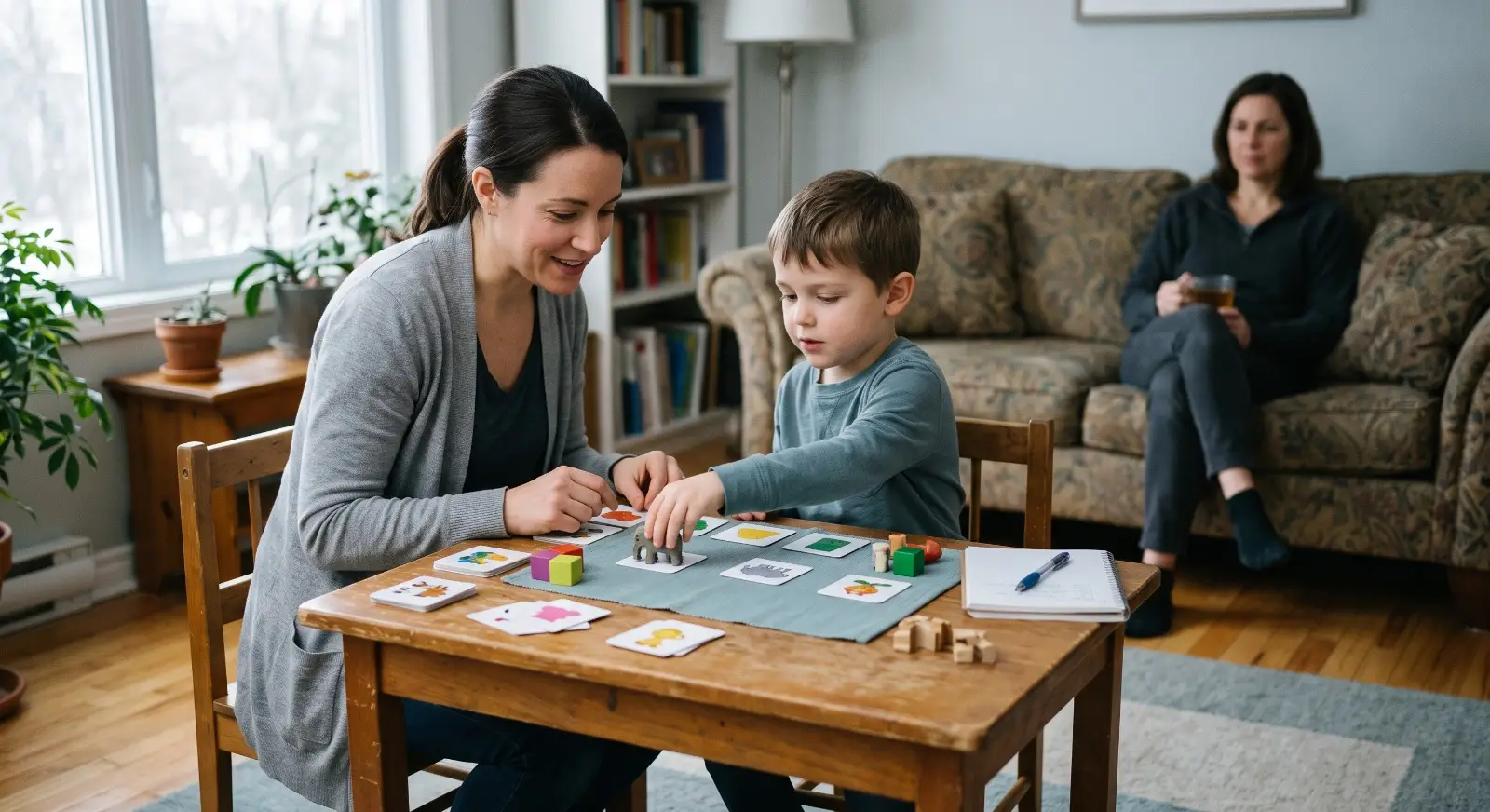
If you’re looking into in-home ABA therapy in Durham, NC, you’re probably trying to answer a very real question: what will this actually look like in our home and in our daily life? In most cases, it starts with an assessment, a conversation about your child’s needs, and a gradual plan led by a BCBA, with direct support that may also include an RBT.
If you’d like a broader overview first, you can learn more about in-home ABA therapy in North Carolina.
Key Facts: In-Home ABA Therapy in Durham, NC at a Glance
- Who leads care: A BCBA usually oversees assessment, treatment planning, and progress review. An RBT may provide much of the direct session support.
- Where sessions happen: Therapy takes place in everyday routines at home, including playtime, meals, transitions, and after-school moments.
- What early sessions focus on: Building comfort, observing routines, understanding the home environment, and identifying goals that matter to your family.
- What parents do: Caregivers share priorities, ask questions, and practice strategies that make sense for daily life.
- How progress is reviewed: The team looks at what is and is not working in real situations, then adjusts goals over time.
For families comparing options, Alight ABA’s page on home-based ABA support in North Carolina can be a helpful next step.
Why Durham Families Often Consider In-Home ABA Therapy
For many families, in-home ABA feels more approachable because it happens where real life is already unfolding. Instead of adding one more unfamiliar setting, support can be built into routines your child already knows, whether that means playtime in the living room, a tricky transition after school, or a mealtime that tends to feel stressful.
That matters for practical reasons, but it matters emotionally too. Durham families are often juggling work, school schedules, commuting, and the pressure of trying to make the right decision for their child. In-home care can take away some of that friction by meeting families in a setting that already feels familiar.
It can also look different depending on your child’s age and needs. For toddlers, the focus may be early communication, play, and caregiver coaching. For school-age children, it may center on after-school transitions, flexibility, sibling dynamics, or communication at home. For older children and teens, goals may lean more toward independence, self-advocacy, and daily responsibilities.
That said, in-home ABA is not automatically the best fit for every child or every family. Some children do well in a clinic setting, and some benefit from support across more than one environment. Still, for families who want help inside the routines that matter most, home-based care can be a strong option.
What Happens Before In-Home ABA Therapy Starts
Before regular sessions begin, most providers walk families through a process that helps clarify fit, goals, and logistics.
The first step is usually an initial call or consultation. This is the point where families can talk about what daily life looks like, what feels hardest right now, and what kind of help they are hoping to find. A thoughtful provider should leave room for your questions and should not make this part feel rushed.
From there, a BCBA may begin assessment and home-context discovery. That often means observing your child, learning about routines, and understanding what is going well alongside what feels challenging. The goal is not to judge your home or your parenting. It is to get a real picture of what support could look like in everyday life. If your child is still early in the diagnostic process, what to expect from an autism diagnostic evaluation may be a useful resource.
After that, goals are typically developed with caregiver input. Those goals should feel specific to your child, not copied and pasted from a template. They may focus on communication, flexibility, play, safety, self-help routines, or behaviors that are making daily life harder than it needs to be. A strong provider should be able to explain why a goal matters and how progress will be reviewed.
Scheduling, staffing, and onboarding usually come next. Families may learn who will supervise care, who will provide direct sessions, how often therapy is recommended, and how the team plans to communicate. Younger children may need more parent presence early on. School-age children may need scheduling built around dismissal, homework, or after-school fatigue. Older children may need goals tied more clearly to daily living and independence.
Insurance or coverage verification is often part of this stage too. Because benefits can vary, families should expect guidance without broad promises. If that piece feels overwhelming, it may help to review ABA therapy coverage and insurance benefits and financial help for ABA therapy in North Carolina.
One thing many parents need to hear is this: you do not need a picture-perfect home before therapy starts. A good team is there to understand your actual routine, not some idealized version of it.
What In-Home ABA Sessions Usually Look Like
Once services begin, in-home ABA often feels more natural, and less intimidating, than many families expect.
A session may start with a quick check-in, a warm greeting, and a few moments spent helping your child settle in. Especially early on, part of the work is simply building trust and making the home environment feel comfortable for everyone involved.
From there, support may move between structured teaching and real-life moments. That could mean practicing communication during snack time, working through a difficult transition, building play skills, or helping a child stay regulated during a task that usually brings frustration. In another home, the focus might be dressing, toileting, sibling interaction, or more independence with a daily routine.
This is part of what makes home-based therapy so practical. A sibling passing through the room, an off-schedule afternoon, or a hard transition after school is not always a disruption to work around. Very often, it is the context the team needs in order to support the child in a meaningful way.
Families should also know how the clinical team fits together. The BCBA is usually responsible for assessment, goal setting, supervision, and adjusting the plan as needed. An RBT may provide much of the direct support by carrying out that plan during day-to-day routines and activities. Even with that structure, sessions should still be individualized. The work should reflect your child’s goals, energy level, and needs in the moment.
Most families can also expect some kind of caregiver update, whether that is a quick debrief, written notes, or a more formal progress conversation. If you’d like a closer look at what early therapy can feel like, what parents can expect during the first 30 days of ABA therapy and how to understand your child’s ABA progress can add helpful context.
What Parents Can Expect Their Role to Be
Parents are usually an important part of in-home ABA, but that does not mean you are expected to become the therapist.
In most cases, your role is to share what matters most, communicate openly with the team, and help carry over strategies in ways that feel realistic for your household. Some sessions may involve more hands-on parent participation. Others may involve a brief update and a simple suggestion to try between visits.
The best provider relationships tend to feel collaborative. You should feel heard, not judged. You should understand why goals were chosen, how progress is being tracked, and what the team wants you to watch for at home. The process works best when families feel supported, not pressured.
If you’re looking for more on this part of the process, how parents can support ABA therapy at home and why parent training matters in ABA therapy are useful next reads.
The HEARTH Fit Framework for Choosing the Right In-Home ABA Provider
If you’re comparing providers in Durham, it helps to look beyond broad claims and think about family fit. The HEARTH Fit Framework offers a simple way to do that.
H – Home Readiness
Home readiness is not about making your home look perfect. It is about whether the provider understands your child’s routines, sensory needs, sibling dynamics, and the spaces where support may happen. A good team should work with real family life, not expect a staged environment.
E – Expectations
A strong provider should clearly explain what happens before therapy starts, what early sessions may look like, and how goals are introduced and updated. Clear expectations can lower stress and help families feel more prepared.
A – Alignment
Alignment means the provider’s communication style, treatment approach, and priorities actually fit your child and your family. Do you feel listened to? Do the goals make sense? Does the team explain things in a way that feels clear and respectful? Many families are looking for that mix of clinical confidence and genuine warmth.
R – Real-Life Transfer
Real-life transfer asks whether the skills being worked on actually show up in daily routines. For younger children, that may mean communication during familiar activities. For school-age children, it may mean smoother homework transitions or better flexibility during changes. For older children, it may involve independence, responsibility, and community participation.
TH – Team and Help Systems
This part of the framework looks at the support around care. How often does the BCBA check in? Will staffing be consistent? What role will parents play between sessions? Can the team coordinate with school or daycare when it makes sense? The right provider relationship usually includes steady communication and room to adjust when family needs change.
Durham In-Home ABA Readiness and Provider-Fit Checklist
Use this checklist during consults or early comparison calls.
Before You Start
- Identify your child’s current strengths and the challenges that affect daily life most.
- Write down which home routines feel hardest right now.
- Think through what session times are actually manageable for your family.
- Confirm whether the provider serves Durham families in your area.
Questions for the Provider
- How often will the BCBA supervise care and communicate with us?
- Who will provide direct sessions, and how consistent is staffing likely to be?
- How are goals selected, reviewed, and updated?
- What role should parents expect to play during and between sessions?
- How does the team handle siblings, interruptions, and busy home routines?
- How does the provider approach insurance or coverage verification?
- If needed, how does coordination with school or daycare usually work?
What to Watch in the First Few Weeks
- Communication feels warm, respectful, and clear.
- Goals reflect your child rather than sounding generic.
- Support is happening inside real routines, not only isolated tasks.
- You understand what progress is being tracked and why.
- The home routine starts to feel more supported over time.
FAQ: In-Home ABA Therapy in Durham, NC
What is in-home ABA therapy?
In-home ABA therapy is individualized support that happens in a child’s home and is built around real routines, goals, and challenges. It is meant to help skills grow where they are actually used. If you’d like a broader overview, in-home ABA therapy in North Carolina explains the service in more detail.
What should families expect during the first in-home ABA session?
The first session often centers on observation, relationship-building, and learning how your child responds to familiar routines. Some direct teaching may happen, but early visits are usually about understanding the environment and helping everyone feel more comfortable.
How involved should parents be in in-home ABA therapy?
Parents are usually a meaningful part of the process, but that does not mean they are expected to manage therapy on their own. Most families are asked to share priorities, stay in communication with the team, and practice strategies that fit naturally into daily life.
What does an RBT do during an in-home ABA session?
An RBT often provides direct support during sessions by following the treatment plan, helping the child practice skills, responding to real-life routines, and sharing observations with the supervising BCBA.
How do I choose the right ABA provider in Durham?
Look for a provider that offers both clinical clarity and a strong family fit. The HEARTH Fit Framework can help you think through home readiness, expectations, alignment, real-life transfer, and team support.
Is ABA therapy covered by insurance or NC Medicaid?
Coverage may be available, but the details depend on the child’s needs, the provider, and the specific plan. A trustworthy provider should explain the verification process clearly and help you understand what documentation may be needed. For a deeper overview, read ABA therapy coverage: understanding insurance benefits and what financial help is available for ABA therapy in North Carolina.
If you’re ready to explore next steps, Alight ABA’s page on in-home ABA therapy in North Carolina offers a clear starting point for families who want to understand how home-based support may fit their child and their routine.