If you’re feeling nervous about your child’s first ABA therapy session, that’s completely normal. In most cases, the first visit is less about jumping into big goals and more about getting to know your child, noticing routines and communication patterns, and helping everyone feel comfortable. It’s a starting point, not a test.
This guide walks through what usually happens before, during, and after that first appointment so you can feel more prepared without feeling like you have to make everything go perfectly.
Quick Answer and Key Facts About the First Session
- A Board Certified Behavior Analyst (BCBA), a Registered Behavior Technician (RBT), or both may be part of the first visit.
- The session may feel slow, playful, or mostly observational, and that is normal.
- Your child does not need to “perform” for the session to be useful.
- Parents are often asked about routines, triggers, communication, favorite activities, and current concerns.
- Session length varies based on the provider, the setting, and the purpose of the visit.
- Most first sessions end with observations and next steps, not immediate therapy results.
Younger children often need more play-based interaction and more parent input. Older children may be ready for simple conversation, choices, or short structured activities.
A Simple Way to Think About the First Session
Settle the Scene
Try to keep the day as normal as you can. Having a favorite toy, comfort item, or familiar activity nearby can help your child ease in. It also helps to think about anything that might affect the visit, like poor sleep, hunger, medication changes, or sensory stress.
If therapy is happening at home, consider where the session might begin and whether siblings, pets, or extra noise could make the space feel busier. You do not need a perfectly quiet house or a perfectly prepared setup. In-home care is meant to fit real life. If you want more ideas, this guide on supporting in-home ABA therapy is a helpful next read.
Track What the Team Is Learning
A first session is usually about learning, not judging. The clinician may watch how your child communicates, transitions, plays, responds to a new person, and moves through familiar routines. They may also ask questions about what matters most to your family right now.
That does not mean your child is being graded. Observation helps the team understand where to start and what kind of support may be most helpful. If assessment comes up in the conversation, it can help to understand why a comprehensive ABA assessment can be helpful.
Expect Connection Before Instruction
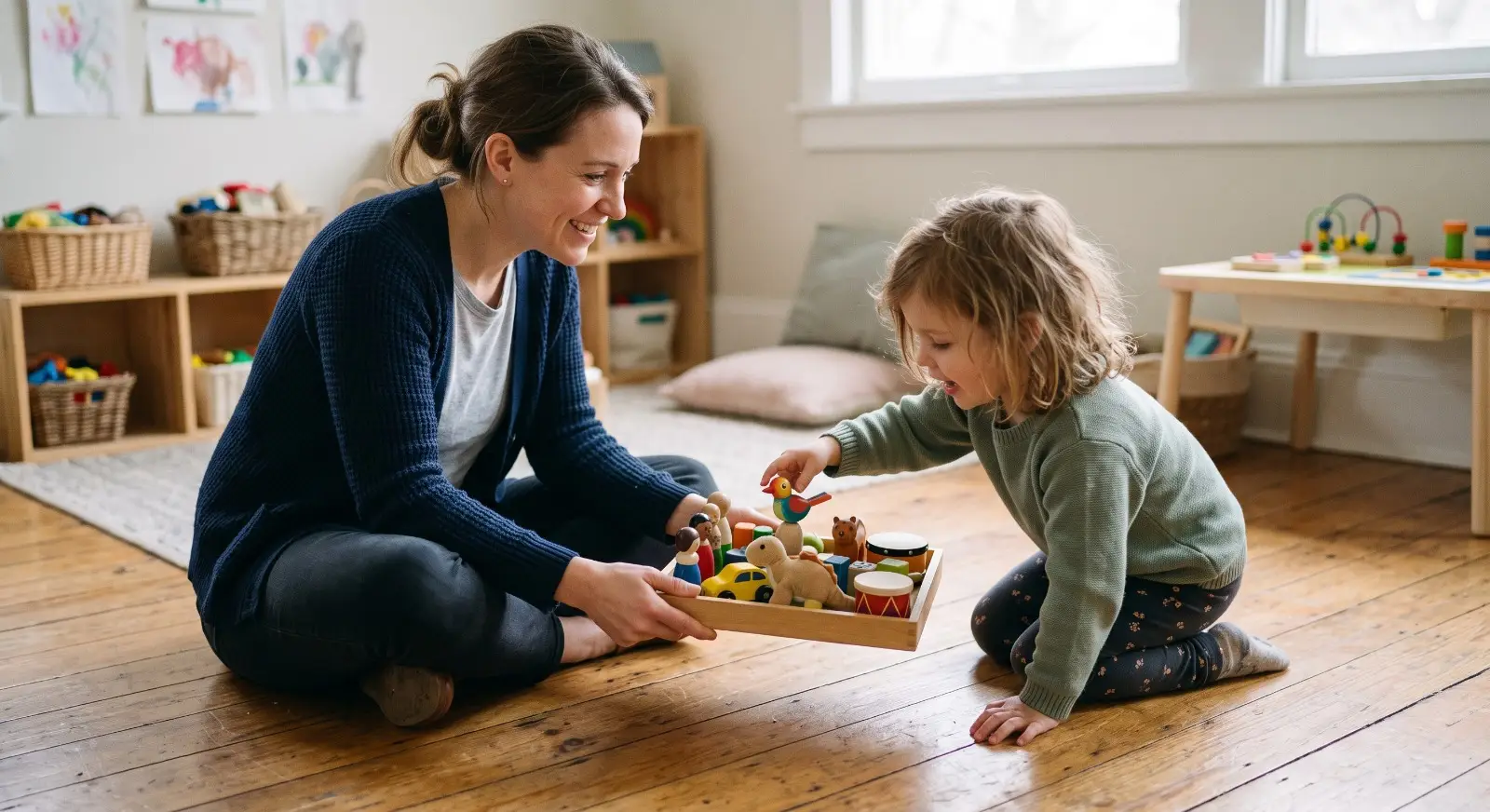
Sometimes a strong first session looks quiet from the outside. A therapist may spend much of the visit building trust, following your child’s lead, and seeing what helps them feel safe. That is still meaningful progress.
If your child is shy, clingy, avoidant, or dysregulated, it does not mean the appointment went badly. Many children need time to warm up, especially with someone new. Younger children may connect more easily through play, while older children may do better with slower pacing, choices, or conversation. In many cases, connection comes before formal teaching.
Ask for Meaning, Not Just Updates
At the end of the visit, it helps to focus on what the therapist noticed and what those observations mean. You might ask:
- What stood out to you today?
- What seemed to help my child feel comfortable?
- What should we expect at the next session?
You may be asked to stay close, step back, answer questions, or help with a transition. That can vary from child to child. Your role is not to make the session go perfectly. It is to help the team understand your child a little better. For a broader look at that partnership, you can also read about why parent training matters in ABA therapy.
Route the Next Step
Before the appointment wraps up, you should have a better sense of what comes next. That may include follow-up observations, scheduling details, paperwork, insurance questions, or early treatment-planning steps.
If your family is still moving from diagnosis into treatment, it may also help to read more about what the diagnostic evaluation process can look like for children. And if you want a bigger-picture roadmap, this article on what the first 30 days of ABA therapy often look like can help you picture the next stage after that first visit.
First ABA Session Prep Card
Before arrival
- Set out preferred toys, activities, or comfort items.
- Make a quick note of sleep, meals, medications, and anything else that could affect regulation.
- Write down one or two questions you want answered first.
During the visit
- Share what usually helps your child warm up.
- Let the therapist know whether staying nearby or giving a little space tends to work better.
- Remember that observation and rapport-building are productive, even if the session feels slower than expected.
Before the therapist leaves
- Ask what felt easier than expected.
- Ask what felt hard and what the team wants to watch next time.
- Confirm next steps, including scheduling, follow-up, or paperwork.
FAQ
What happens during the first ABA therapy session?
Most first sessions focus on observation, rapport-building, and parent input. The therapist is usually learning how your child communicates, plays, regulates, and responds in a familiar environment.
How long is the first ABA therapy session?
It depends on the provider, the setting, and the purpose of the visit. Your team can tell you whether this appointment is mainly for observation, intake, or the start of direct services.
How should I prepare my child for the first ABA session?
Keep it simple. Stick to the usual routine when possible, have comfort items nearby, and give a calm, age-appropriate heads-up if that tends to help.
Will the therapist mostly observe, or will my child be asked to do activities?
Either can happen. Younger children often see more play-based interaction and observation, while older children may be ready for more direct conversation or a few simple tasks.
What role do parents play during the first ABA appointment?
Parents provide context the therapist cannot know right away. You may answer questions, help with transitions, or observe quietly, depending on what your child needs in the moment.
What happens after the first ABA therapy session?
Most teams will share early observations, explain next steps, and clarify what the next visit may focus on. The goal is usually for you to leave with more clarity and support, not more pressure.