If you are new to ABA, it is understandable to wonder what you are actually agreeing to. ABA services are individualized supports based on Applied Behavior Analysis. They may help a child or young adult build communication, social, adaptive, daily-living, and safety skills while addressing behaviors that get in the way of learning or quality of life. The exact plan depends on assessment, goals, family priorities, setting, and coverage rules.
Key Facts
- ABA services are not one fixed program or schedule.
- A plan may include assessment, treatment planning, one-to-one support, BCBA supervision, caregiver coaching, data review, and coordination.
- Goals should be meaningful to the person and family, with attention to communication, participation, independence, comfort, safety, and quality of life.
- Alight ABA primarily provides in-home and community-based support in familiar routines.
What Do ABA Services Include?
ABA services may begin with information gathering, observation, or a functional behavior assessment (FBA). An FBA looks at what happens around a behavior so the team can better understand what support may help. It is different from an autism diagnostic evaluation. Alight offers autism diagnostic evaluations and, for Minnesota families, Comprehensive Multi-Disciplinary Evaluations (CMDEs) connected to the EIDBI benefit.
Depending on the person’s needs, services may include:
- an individualized treatment plan;
- one-to-one teaching and support;
- BCBA design, supervision, and progress review;
- direct sessions with an RBT or trained behavior technician;
- caregiver education and coaching; and
- data collection and coordination across appropriate settings.
ABA is the broader approach. Discrete trial training (DTT) is one teaching method that may be used in some plans, not another name for every ABA service.
Who Provides ABA Services?
A BCBA, or Board Certified Behavior Analyst, develops or oversees the plan, interprets assessment and progress information, supervises care, and works with the family to adjust goals. An RBT or behavior technician may provide direct teaching and support under supervision. Caregivers bring priorities, observations, and questions to the team. They can learn how to support skills in daily life without being expected to become full-time therapists.
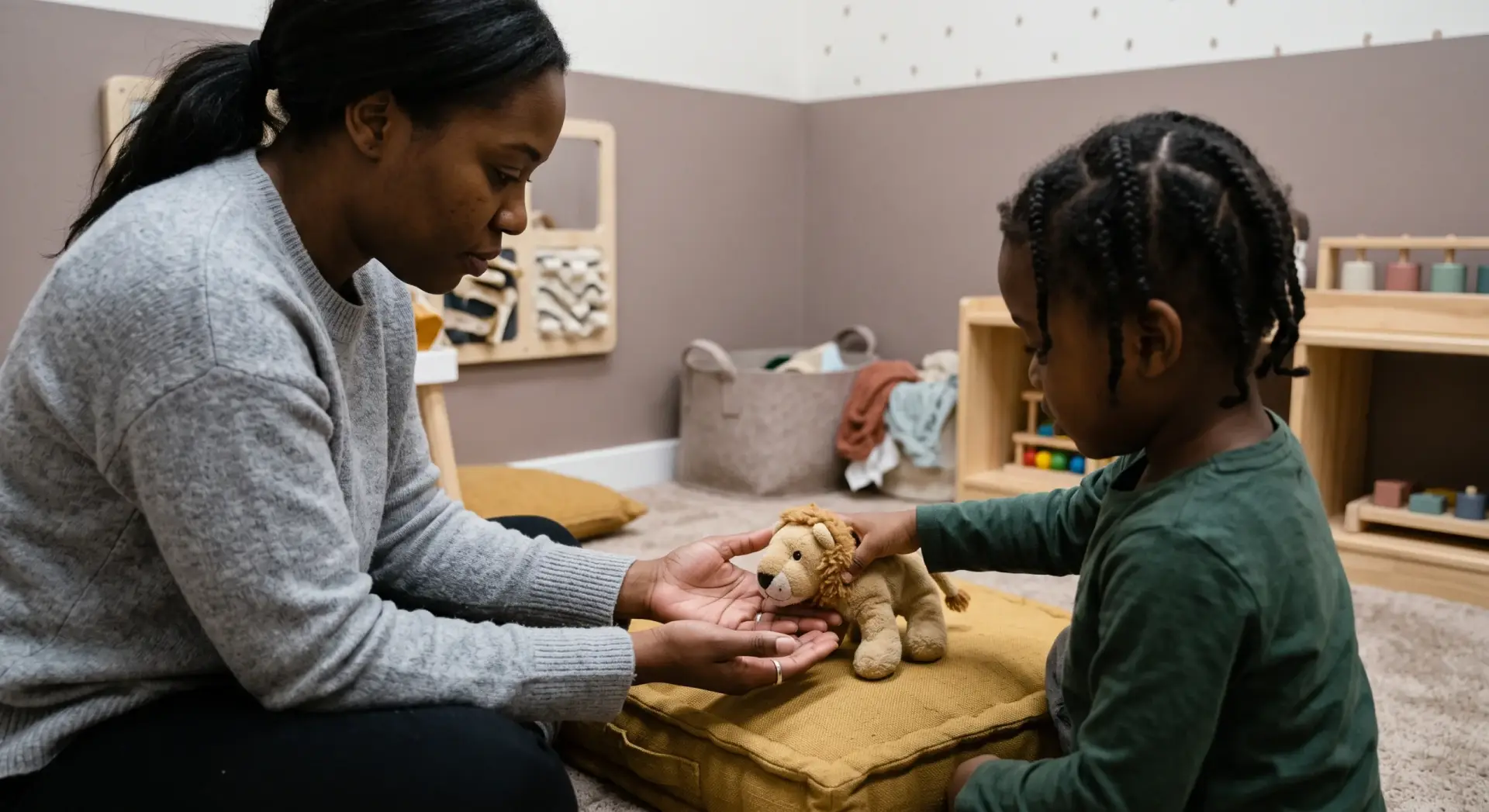
A session might include practicing how to request help, move through a transition, join play, follow a routine, dress, manage mealtime, build safety skills, participate in the community, or become more independent. Play and ordinary routines can become meaningful learning opportunities when they connect to the person’s plan.
Where Alight’s In-Home Model Fits
Alight’s warm, primarily in-home and community-based model brings support into the places where skills are used. Familiar routines can help connect therapy with everyday communication, independence, and caregiver coaching. Home is not automatically the right setting for every person, so the choice should reflect goals, comfort, family priorities, and clinical fit. Learn more about in-home ABA therapy services.
The HOME-to-Help Map
This parent-facing map is a simple way to organize questions, not a clinical protocol.
- H | Hear the family’s priorities: Start with strengths, preferences, routines, communication, safety, and quality-of-life goals.
- O | Observe real routines: Consider where support is needed during play, transitions, self-care, communication, or community participation.
- M | Match people and supports: Clarify what the BCBA, direct provider, caregiver, coaching, and progress review each involve.
- E | Extend skills and next steps: Ask how skills will be practiced across appropriate settings and how coverage questions will be handled.
Starting ABA Services in Minnesota or North Carolina
The process often includes contacting a provider, completing the relevant diagnostic or treatment-planning assessment, reviewing goals, checking benefits and authorization, beginning services, and reviewing progress with the team. An autism evaluation, CMDE, FBA, and treatment authorization are related, but they are not interchangeable.
Coverage depends on the person’s plan and circumstances. Minnesota families may hear about EIDBI, Medical Assistance, or MinnesotaCare. The Minnesota DHS EIDBI Provider Manual provides policy context. In North Carolina, families may encounter Medicaid’s research-based behavioral health treatment (RB-BHT) requirements under Clinical Coverage Policy 8F. Ask the payer and provider to confirm current eligibility, credentials, covered services, authorization, settings, and hours. Rules for child-focused programs should not be assumed to apply to adult recipients simply because the reader is an adult.
ABA Services Clarity Card
Before an intake call, ask:
- What is the current need: an evaluation, treatment-planning assessment, direct support, caregiver coaching, or a combination?
- What goals matter most for communication, participation, safety, independence, routines, or quality of life?
- Who handles assessment, sessions, supervision, coaching, and progress review?
- How will the setting, comfort, choices, dignity, and communication guide care?
- What will show whether the plan is helping, and which coverage requirements need to be verified?
Questions Families Often Ask About ABA Services
What does ABA stand for, and what are ABA services?
ABA stands for Applied Behavior Analysis. ABA services use individualized goals to support useful skills and quality of life. There is no universal package or schedule.
Who provides ABA services: a BCBA, an RBT, or both?
Often both. The BCBA oversees planning and supervision, while an RBT or behavior technician may provide direct support. Staffing models vary, so ask how the team communicates with caregivers.
What happens before the first session?
The provider gathers information, discusses priorities, reviews relevant assessments, and explains the proposed plan. For a closer look at that early experience, read what to expect during your child’s first ABA therapy session.
Is ABA covered in Minnesota or North Carolina?
It may be, but eligibility and authorization vary by plan and state. Ask the provider and payer to confirm current requirements.
At Alight ABA, the next step is a clear conversation about your family’s priorities, the service model, and what support may fit your routines.