If you have searched autism masking girls late diagnosis because your daughter seems fine at school but falls apart at home, you are not overreacting. Many parents notice a pattern that is easy for others to miss: a girl who looks quiet, bright, cooperative, or socially capable on the surface, but who seems drained, rigid, anxious, or overwhelmed once the school day ends.
This article is for parents trying to understand whether masking could be part of the picture. It focuses on girls in childhood, not broad adult late-diagnosis stories, and it is meant to help you make sense of the gap between outward coping and hidden effort. The goal is not to label every shy or sensitive child. It is to understand when repeated patterns may point to a need for a closer look.
Why Autism Masking in Girls Often Leads to Late or Missed Diagnoses
Masking, sometimes called camouflaging, means using learned behaviors to appear more socially comfortable or typical than a child actually feels. In girls, this may not look like deliberate hiding. More often, it looks like copying, rehearsing, studying other children, following rules closely, or working very hard to avoid standing out.
That matters because autism in girls does not always match the older stereotypes many adults still expect. Instead of obvious social differences, disruptive behavior, or narrow interests that look unusual to outsiders, a girl may be described as shy, anxious, perfectionistic, mature for her age, gifted, or simply very quiet. She may follow directions well, do solid academic work, and stay out of trouble. That can make it easy for teachers, clinicians, and even family members to assume everything is fine.
Girls may also be misread when anxiety, ADHD, sensory differences, or high achievement seem to explain part of the picture. Sometimes those concerns are real and important. But they may not explain the whole pattern. A child can be anxious and autistic. She can have ADHD and still be masking autism. One trait alone does not confirm autism, and no article can diagnose a child, but consistent patterns across settings deserve attention.
What Masking Can Look Like in Real Life for Girls
At school or in structured activities
At school, masking can look like a child who keeps herself together by staying highly controlled. She may copy how classmates talk, laugh when others laugh, force eye contact because she has been taught it is expected, or wait for social cues before joining in. During group work, she may seem engaged while actually relying on imitation and guesswork. At recess, she may hover near other children without feeling fully connected. In dance, church, or other structured activities, she may participate well because the rules are clear.
To teachers, this can read as compliance, maturity, or quiet success. What they may not see is the amount of effort it takes to keep up with shifting expectations, noise, sensory demands, and unspoken social rules.
At home after the performance ends
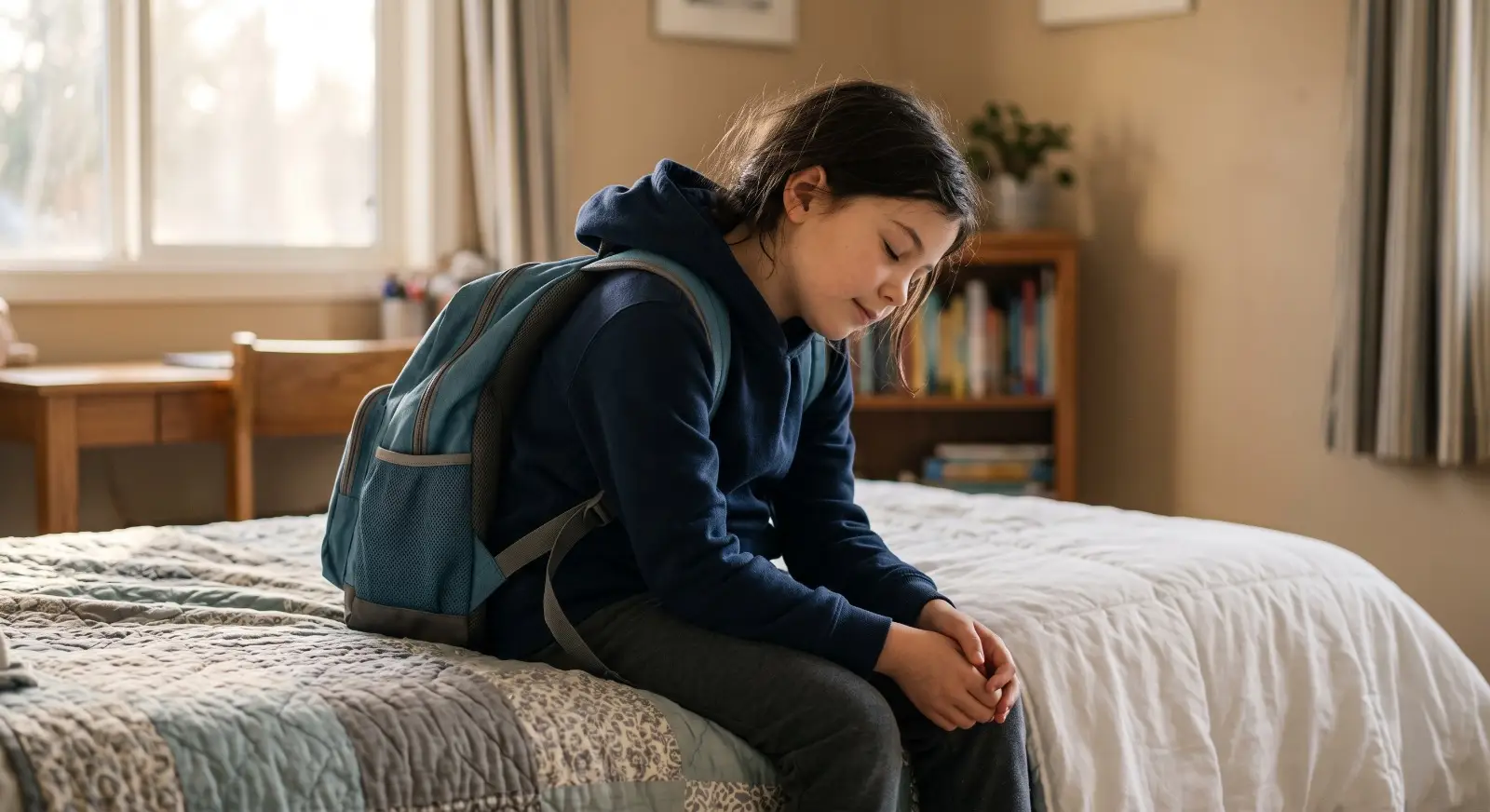
Home is often where the cost of coping becomes visible. A girl who looked calm all day may come home exhausted, irritable, tearful, rigid, or shut down. She may need a long recovery period after school, a birthday party, or even a playdate. Some children melt down over seemingly small changes because they have used so much energy holding it together elsewhere.
Parents may notice headaches, stomachaches, school refusal, intense need for sameness, or a pattern of emotional collapse after busy social settings. These reactions are easy to misread as attitude or willful behavior. In some cases, they may be signs that the child is overloaded, depleted, and struggling to recover from sustained social and sensory effort.
In friendships and social life
Masking can also show up in the way girls manage friendships. A girl may copy a friend’s interests, phrases, clothing choices, or play style so she can blend in. She may rehearse what to say before social situations or seem socially included without fully understanding how friendships work. On paper, she has friends. In real life, those relationships may feel confusing, one-sided, or fragile.
Parents sometimes notice that their daughter seems desperate to fit in but comes away from social time overwhelmed or unsure what went wrong. She may mirror others well enough to avoid standing out, while still missing the deeper give-and-take of conversation, flexibility, and social repair.
The Cost of Being Overlooked
When masking delays recognition, the cost is not just a later label. The child may spend years using extra effort to meet expectations without getting the understanding or support she needs. That can lead to fatigue, anxiety, perfectionism, social confusion, low confidence, and a growing sense that other people seem to understand life more easily than she does.
For families, being overlooked can create its own stress. Parents may question themselves after hearing that their child is doing well at school. They may struggle to explain why home life feels harder than teachers or relatives realize. That disconnect can be isolating.
A later or missed diagnosis can also delay helpful next steps, whether that means a fuller evaluation, school accommodations, more accurate treatment planning, or simply a clearer understanding of what the child is experiencing. Earlier understanding is not about changing who a child is. It is about reducing confusion and making support more precise.
The S.T.A.G.E. Review
S – Settings gap
Start by comparing what your child looks like across settings. How does she function at school, at home, during extracurriculars, and in less structured social environments? A child who appears fine in one setting may still be working extremely hard in another. Write down concrete examples such as “participates in class but cries after pickup” or “does well with routines but shuts down during unstructured play.”
T – Trait pattern mismatch
Look for patterns that do not fit outdated autism stereotypes but still matter. This can include social copying, scripted language, sensory strain, strong rule-following, rigid routines, quiet compliance, or intense interests that seem age-appropriate on the surface. The question is not whether any one trait proves autism. The question is whether the overall pattern keeps repeating in a way that typical explanations do not fully cover.
A – After-cost
Pay close attention to what happens after the effort ends. Does your daughter need a long time to decompress after school? Does she become irritable, anxious, tearful, or shut down after social demands? Does a successful day in public lead to a difficult evening at home? The after-cost is often one of the clearest signs that “fine” is taking a lot of work.
G – Gendered expectations
Notice where adult assumptions may be shaping interpretation. Girls are often described as shy, mature, emotional, or high-achieving long before anyone asks whether they may be masking deeper difficulties. Those labels can contain part of the truth, but they can also minimize concerns. If your instincts tell you something is not adding up, it is reasonable to look more closely.
E – Evaluation next step
Once you have examples, move from concern to action. Compare notes with teachers or other caregivers. Ask whether they see the same child you see at home, or only the version who is holding it together in structured settings. If the pattern remains concerning, request a developmental or autism-specific evaluation rather than waiting for the difficulties to become more obvious.
Home-to-School Masking Evidence Tracker
Observed Behaviors
Track what you actually see, not what you fear it might mean. Useful examples include copying peers, using scripted phrases, forcing eye contact, becoming distressed by sensory input, relying on perfectionism, staying very quiet to avoid mistakes, or struggling to keep friendships steady.
Setting Comparison
Create a simple side-by-side record for school, home, activities, and social events. What do teachers report? What do you see after school? What happens during birthday parties, group projects, or unstructured play? This comparison often highlights the settings gap more clearly than memory alone.
After-Effect / Recovery
For two to three weeks, note what happens after demanding situations. Record fatigue, irritability, meltdowns, shutdowns, headaches, stomachaches, school refusal, or the need for long decompression time. Patterns matter more than one hard day.
Next-Step Notes for Professionals
Bring three to five concrete examples to a pediatrician, psychologist, or school team. You might note that she copies peers to join in, seems socially fine at school but crashes at home, becomes highly distressed by sensory demands, or has been labeled anxious even though the full picture feels broader. This kind of detail helps move the conversation from vague concern to a more useful evaluation discussion.
What Parents Can Do Next
If this article sounds familiar, start by observing rather than rushing to conclusions. Document what you see across settings. Compare school reports with home behavior. Keep examples specific. Instead of saying, “She struggles socially,” you might say, “She watches other children closely, copies their words, and needs hours alone after group activities.”
If concerns have been dismissed before, it can help to use direct language: “I know she appears to cope well in structured settings, but I am seeing a consistent pattern of exhaustion, rigidity, and social strain outside those settings. I would like an autism-specific evaluation to understand whether masking could be part of what we are seeing.”
Ask what type of assessment is appropriate and who is qualified to complete it. A careful evaluation should look at development, behavior across settings, social communication, sensory patterns, and possible overlap with anxiety or ADHD. The goal is not to force an answer. It is to get a clearer understanding of what support, if any, would actually help.
Families often feel less stuck once the pattern is taken seriously. Alight’s broader approach reflects that same principle: move families toward clearer understanding, practical support, and less uncertainty rather than pressure or false reassurance.
FAQ
Why is autism harder to detect in girls?
It is often harder to detect because girls may mask social and sensory difficulties more effectively, and adults may still expect autism to look like older, more obvious stereotypes. As a result, girls are more likely to be seen as shy, anxious, mature, or simply quiet rather than referred for evaluation.
How does autism masking show up in girls?
It can show up as copying peers, rehearsing conversations, forcing eye contact, following rules closely, or blending into friendships without fully understanding the social demands. Many girls seem fine in public but show exhaustion, irritability, shutdowns, or meltdowns after the effort ends.
At what age are most girls diagnosed with autism?
There is no single age that applies to every child. Some girls are identified early, but others are diagnosed later because their signs are subtle, misunderstood, or explained away by other concerns. A later diagnosis does not mean the difficulties were not there earlier.
Why are girls often misdiagnosed with anxiety or ADHD?
Anxiety and ADHD can overlap with autism, and sometimes they are part of the picture. The issue is that they may explain only part of what is going on. When social copying, sensory strain, rigid coping, and the home-versus-school gap are also present, autism may need to be considered too.
Can a girl seem fine at school and still need an autism evaluation?
Yes. Doing well in a structured setting does not rule out meaningful difficulty. Some girls manage by copying others, staying highly controlled, and using a great deal of effort. If the cost of that coping shows up after school or across other settings, an evaluation may still be appropriate.