If you are looking into in-home ABA therapy in North Carolina, you are probably trying to answer a few big questions at once. Will this help my child? Will it work in real life, not just during sessions? And how do I choose a provider that feels qualified, respectful, and genuinely supportive?
In-home ABA can be a strong option for families who want help where day-to-day challenges actually happen. That might mean support with communication, routines, transitions, safety, behavior, or independence, all in the home and sometimes in the community. For many families, the biggest benefit is not just convenience. It is that therapy can be built around real life.
At Alight ABA, that process is meant to feel warm, practical, and steady. The goal is not to overwhelm you with jargon or pressure you into a decision. It is to help you understand what in-home ABA can look like, who it may help, what to ask, and how to decide whether it fits your child and your family.
Quick Summary for North Carolina Families
- Who it may help: Children and young adults who need support with communication, routines, transitions, safety, behavior, social development, or daily living skills.
- Where it happens: Mostly at home, with community-based practice when goals need real-world carryover.
- Who does what: A BCBA guides assessment, treatment planning, and progress review. An RBT or other direct therapy provider often handles regular one-to-one sessions.
- What parent involvement looks like: Ongoing communication, collaboration, and coaching, not just drop-in visits with little context.
- What goals can include: Functional communication, easier routines, safer behavior, emotional regulation, independence, and participation in family or community life.
- What insurance usually involves: Benefit verification, possible authorizations, and plan-specific rules that can vary across North Carolina families.
- What availability can look like: A provider may serve North Carolina broadly, but actual in-home coverage can still vary by county, travel radius, and clinician availability.
- What to keep in mind: In-home ABA can be a great fit, but it is not automatically the best choice for every child or every family.
What In-Home ABA Therapy in North Carolina Means
In-home ABA therapy is Applied Behavior Analysis delivered in the place where your child already lives, learns, and moves through daily routines. Instead of practicing everything in a clinic first, the therapy team works in familiar spaces and everyday moments, like getting dressed, moving between activities, asking for help, handling mealtimes, playing with siblings, or getting out the door.
That matters because many of the challenges families want help with do not happen in a therapy office. They happen at home, during transitions, during stressful routines, or in the middle of a busy day. When support happens in that same environment, goals can be more practical and easier to connect to daily life.
For some North Carolina families, in-home care also makes logistics easier. Travel may be hard for a child who struggles with unfamiliar settings, or simply exhausting for a family already juggling work, school, medical appointments, and everyday responsibilities. In-home care can reduce some of that strain while giving the therapy team a clearer view of what real life actually looks like.
Just as important, ABA should never be framed as fixing a child or forcing compliance. Good care is individualized. It should focus on useful skills, reduced barriers, and better quality of life in a way that respects the child and the family.
If you want a fuller picture of what sessions can look like, what an ABA therapy session actually looks like is a helpful place to start.
What In-Home ABA Looks Like in Daily Life
Home-based ABA usually starts with assessment-informed goals. A BCBA looks at your child’s strengths, challenges, routines, and support needs, then builds a treatment plan around the next most meaningful steps. Those goals may focus on communication, play, transitions, safety, social skills, independence, or reducing behaviors that get in the way of daily life.
Regular sessions often happen one on one with a direct therapy provider, while the BCBA oversees the plan, reviews progress, updates goals, and guides the broader clinical approach. Strong in-home care should also include parent coaching. Families deserve to understand what the team is working on, why those goals matter, and how to support progress in everyday moments without feeling like they have to become full-time therapists themselves.
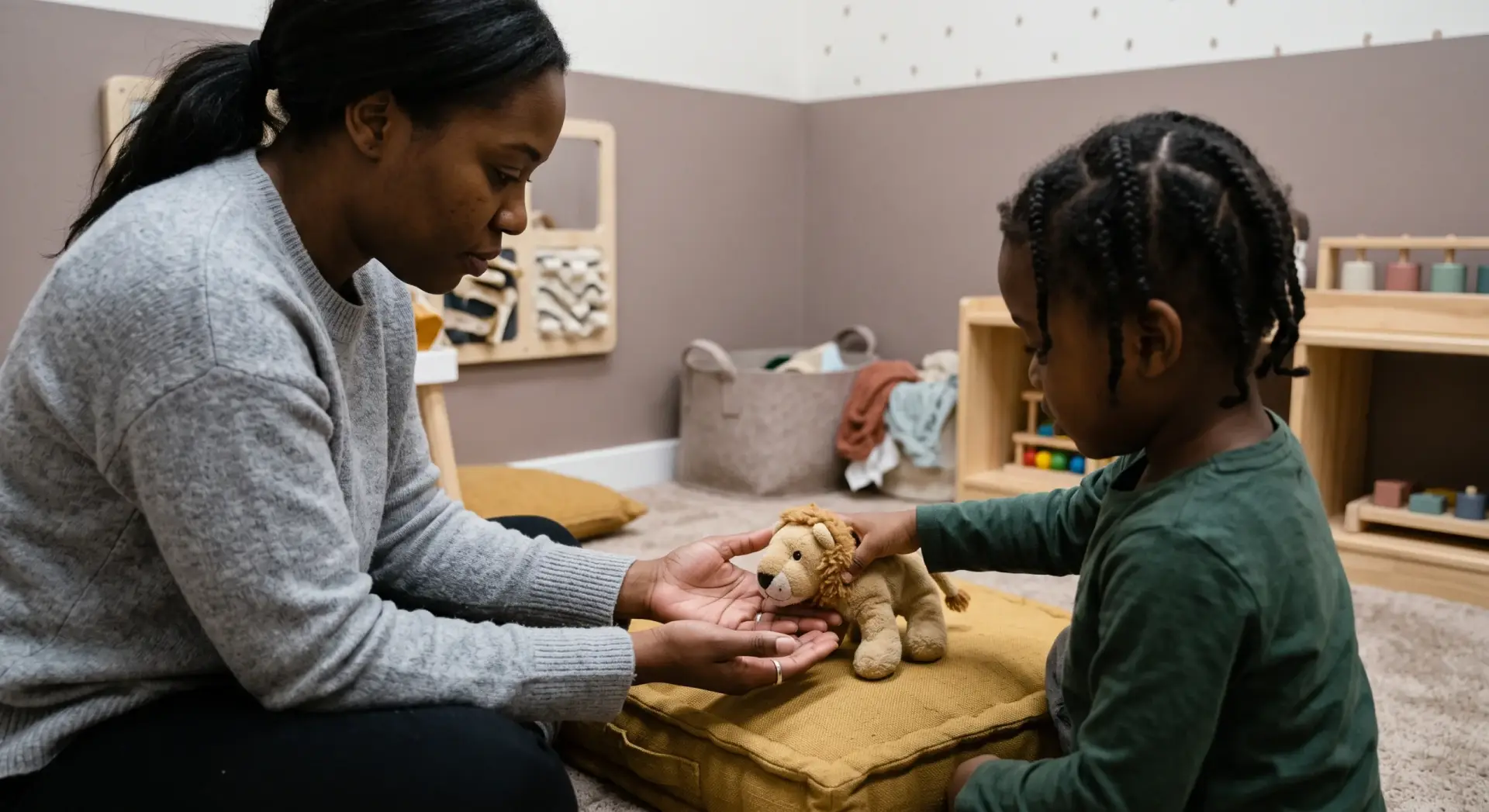
In real life, that may look like practicing requests during snack time, working through transitions before leaving the house, building tolerance for tooth brushing, improving play on the living room floor, or supporting safer behavior during errands and community outings. One reason many families like this model is that practice happens in the same places where those skills are actually needed.
The home setting should still feel collaborative, not intrusive. Therapy should work with your routines as much as possible, not make family life feel even heavier. If you want a closer look at why many families prefer this setting, the benefits of in-home ABA therapy and how to tell if it is the right fit adds useful context.
Who In-Home ABA May Be a Good Fit For
In-home ABA may be a strong fit when the biggest challenges show up in daily family life. That often includes children who have trouble with routines, transitions, communication, unsafe behavior, emotional regulation, or independence at home. It can also be helpful for parents who want support in the exact environment where those hard moments are happening.
Age can shape what strong in-home support looks like.
Toddlers
For toddlers, goals often center on early communication, play, flexibility, routines, and caregiver-supported learning. Because young children depend so much on their caregivers, this stage usually works best when parent support is part of the process. Families who are also sorting through early signs, evaluations, or first treatment decisions may appreciate support that feels clear and approachable. If that is relevant to your child, why ABA therapy can matter in the early years may help.
School-Age Children
For school-age children, in-home ABA may support smoother mornings and evenings, easier homework transitions, better communication during frustration, more positive sibling interactions, and greater independence across the day. It can be especially useful when skills learned in another setting are not yet carrying over at home.
Teens and Young Adults
For teens and young adults, goals may focus more on independence, self-advocacy, social participation, community routines, and daily living skills. At this stage, the best goals should feel respectful, practical, and connected to the person’s real life.
In-home ABA is not the right answer for every family. Some children do better with the structure of a clinic, access to peers, or a hybrid schedule that combines home-based and center-based support. The better question is not whether in-home therapy sounds appealing. It is whether it matches your child’s goals, your family’s routines, and the kind of support that will actually help right now.
The Front-Door Fit Map
If you are trying to decide whether to move forward with in-home ABA, The Front-Door Fit Map can make the choice feel more manageable. It is a simple way to think through needs, logistics, care quality, and next steps before choosing a provider.
Daily-Life Pressure Check
Start with the parts of daily life that feel hardest right now. Is your child having trouble communicating needs? Are routines like dressing, meals, homework, or bedtime turning into constant stress? Are there safety concerns, difficult transitions, or behaviors that leave everyone feeling drained?
This step is not about labeling your child. It is about getting clear on where support is most needed. The clearer that picture becomes, the easier it is to judge whether in-home therapy is likely to help.
Home-Setting Match
Next, ask whether the most important goals are best practiced in familiar routines and real-life settings. If the biggest challenges happen at home, in-home work may make a lot of sense. It can also be helpful for children who struggle with travel, unfamiliar environments, or carrying skills from one setting into another.
There is also a practical side to this. Is there enough structure in the home for regular sessions? Are caregivers comfortable having therapy take place there? Would a blended model make more sense if some goals need home carryover and others might benefit from clinic structure?
Oversight and Care Quality
Setting matters, but quality matters just as much. Parents should understand who is responsible for assessment, planning, supervision, and ongoing clinical decisions. A trustworthy provider should be able to explain BCBA involvement, how therapy is individualized, how progress is reviewed, and what parent coaching really looks like.
Good care should feel thoughtful, measurable, and realistic. It should not depend on vague promises or guaranteed outcomes. If you are comparing programs, this guide to choosing an ABA therapy provider can help you ask better questions.
Coverage and Access Reality
This is one of the most important parts of the decision. A provider may work across North Carolina, but that does not always mean equal in-home availability in every county. Travel radius, staffing, scheduling consistency, and insurance participation all affect what is realistically available where you live.
That matters in both metro and rural areas. Families in larger cities may have more options, but those options can still differ a lot in scheduling, supervision, and responsiveness. Families in less densely served areas may need to ask more directly about travel range and long-term consistency.
Next-Step Readiness
Once you understand fit, quality, and access, the next step becomes easier to see. Some families are ready to book a consultation and verify benefits. Others may need to compare home-based care with clinic-based therapy, gather diagnostic information, or prepare for an assessment first.
The goal is not to rush. It is to move forward with better information and a little more confidence. If you want more context on what early services can feel like, what to expect in the first month of ABA therapy is a good next read.
What to Expect From the First Steps
Starting services usually feels less overwhelming when the process is clear. While every provider’s workflow can look a little different, many families move through these early steps:
- Initial consultation: You talk through your child’s needs, current concerns, and whether in-home support seems like a likely fit.
- Insurance verification: The provider reviews accepted insurance categories, benefit details, and any authorization requirements that may apply.
- Assessment and clinical planning: A BCBA evaluates your child’s strengths, challenges, and priority goals. Diagnostic context and medical-necessity requirements may shape this stage.
- Goal development: The treatment plan should be built around functional, individualized goals, not a one-size-fits-all checklist.
- Home-session setup: The team works with your family on scheduling, session flow, and how therapy can fit into real routines.
- Parent coaching and communication: Families should get guidance on how to support progress, ask questions, and stay involved without feeling left to figure everything out alone.
- Progress review: Goals, data, and day-to-day outcomes are reviewed over time so the plan can shift when needed.
This is also where Alight ABA’s broader support model may matter for some families. Because the organization offers both ABA therapy and autism evaluation services, some families may appreciate a more connected path between diagnosis, treatment planning, and next-step support when that is relevant. If parent collaboration is a major priority for you, how to lead your child’s ABA therapy team with confidence is a helpful companion resource.
In-Home ABA vs. Clinic-Based ABA
Families often compare these two settings as if one must be better for everyone. Usually, the answer is more nuanced than that.
| Consideration | In-Home ABA | Clinic-Based ABA |
| Where skills are practiced | In daily routines and familiar environments | In a more structured therapy setting |
| Generalization | Often stronger when the goal is to use skills at home and in everyday life | May need extra planning for skills to carry over into home routines |
| Parent involvement | Usually more direct because caregivers are nearby and can see the process | Often more observational or discussion-based, depending on the program |
| Structure | Flexible and individualized, but shaped by real family life | Often more predictable and controlled |
| Peer exposure | May be limited unless community goals are included | May be easier to build in, depending on the clinic model |
| Travel demands | Lower for many families | Higher, especially if a child struggles with transportation or unfamiliar settings |
| Best-fit scenarios | Home-based challenges, routine-based goals, caregiver coaching, community carryover | Need for structured environment, peer interaction, or setting-specific support |
Some children do best with one setting. Others do best with a hybrid approach. The right choice depends on goals, regulation needs, family logistics, and which setting will make progress easier to use outside a therapy session.
Insurance and Access for In-Home ABA Across North Carolina
Insurance questions are part of the decision for most families. In North Carolina, coverage for in-home ABA may depend on the insurance plan, medical-necessity documentation, authorization requirements, diagnosis details, and provider participation. Medicaid and private insurance questions can look different from one family to the next, so it helps to start from the assumption that your situation may be unique.
When you talk with a provider, ask practical questions early:
- Which insurance categories do you work with?
- Do you help with insurance verification and authorization steps?
- What information is usually needed before services can begin?
- How does BCBA supervision work once treatment starts?
- Do you reliably provide in-home services in my county or area?
- If availability is limited where I live, what alternatives or timelines should I expect?
That last question matters. A statewide presence can be meaningful, but it is not the same as confirmed clinician availability in every part of North Carolina. Families deserve a clear answer about travel radius, scheduling consistency, and what support will realistically look like over time. For a broader financial overview, this guide to ABA therapy insurance coverage can help you prepare.
Decision Tool: Is In-Home ABA the Right Starting Point for Our Family?
Use this simple decision path before a consultation and again after comparing providers:
- Where do the biggest challenges show up most often? If the hardest moments happen during home routines, in-home support may deserve a closer look.
- Do the goals need real-life carryover? Communication, transitions, safety, and independence often benefit from practice in the places where they actually happen.
- How well does the home setting support regular sessions? Think about space, routine consistency, and caregiver comfort.
- How much caregiver involvement is realistic right now? Parent partnership matters, but the plan still needs to feel sustainable.
- Is reliable provider coverage available in your county or region? Ask about travel range, staffing, and long-term consistency.
- What does insurance or authorization make practical right now? Sometimes logistics shape what can start first.
- Would clinic structure or peer exposure meet an important need? If yes, compare both settings carefully.
- Would a hybrid model make more sense? Some families do better with a combination rather than an all-or-nothing choice.
If your answers point toward strong home relevance, workable logistics, and collaborative support, in-home ABA may be a strong starting point. If the answers are mixed, that does not mean therapy is off the table. It may simply mean you need a more tailored path.
FAQ
What is in-home ABA therapy?
In-home ABA therapy is individualized Applied Behavior Analysis provided in the child’s home and, when appropriate, in community settings. The goal is to build useful skills and reduce barriers in the places where daily life actually happens.
How does in-home ABA therapy work?
A BCBA usually leads assessment, treatment planning, and progress review. Regular one-to-one sessions are often delivered by a direct therapy provider such as an RBT, and parents receive coaching so they can better support progress in daily routines. Session structure varies based on the child’s needs and goals.
Is in-home ABA therapy covered by insurance in North Carolina?
It may be, but coverage depends on the plan, authorization requirements, diagnosis details, and provider participation. Families should ask about both private insurance and Medicaid-related requirements when verifying benefits.
What are the benefits of in-home ABA therapy compared to clinic-based therapy?
In-home ABA can make it easier to practice skills where they are naturally needed, reduce travel strain, and give parents more visibility into the process. At the same time, some children may benefit more from clinic structure, peer opportunities, or a hybrid approach.
Who is a good fit for in-home ABA therapy?
Children and young adults who need support with communication, routines, transitions, safety, behavior, independence, or family-centered carryover may be good candidates. Fit should always be determined case by case, based on goals, setting, and logistics.
How do I choose an in-home ABA provider in North Carolina?
Look for clear BCBA oversight, individualized treatment planning, consistent family communication, practical insurance guidance, and honest answers about service-area reliability. Strong decisions usually come from clear clinical information, not broad marketing promises.
Take the Next Step With More Clarity
If you are considering in-home ABA therapy in North Carolina, the goal is not to make a rushed decision. It is to choose support that fits your child, your home, and your family’s real needs. Alight ABA approaches that process with warmth, clinical guidance, and practical help at each step.
If you want to keep comparing options, start with how to choose an ABA therapy provider or learn more about what families can expect in the first month of ABA therapy.