If your first in-home ABA session is coming up, it is completely normal to feel a little nervous. Many parents wonder whether they need to clean the whole house, buy special materials, or somehow make everything go smoothly before the therapist arrives. You do not need to do any of that perfectly. The goal is simply to make the space safe, reduce the biggest distractions, and help your child feel as comfortable as possible.
A good ABA therapy home visit checklist is less about creating a perfect setup and more about removing stress where you can. A calm, workable environment gives the therapist a better chance to learn about your child, your routine, and the kind of support that will actually help in real life.
Quick Answer: What Parents Actually Need to Do Before the First Home Visit
Before the first home visit, most families only need to do five things: choose a space to work in, put away major distractions or safety concerns, pull together a few favorite items, prepare siblings or pets, and confirm the visit details. That is enough for a strong start.
Think of the first session as a beginning, not a test. Your home does not need to feel clinical. It just needs to feel manageable. The therapist is there to understand your child in the comfort of your home, not to judge how your household looks or how perfectly the visit goes.
Quick Summary
- Pick one main area where your child and the therapist can interact without too many interruptions.
- Keep a few favorite toys, activities, snacks, or comfort items nearby.
- Share important context, like sensory triggers, communication style, safety concerns, or changes in your child’s day.
- Make a simple plan for siblings, pets, and household noise.
- Expect early sessions to focus on comfort, observation, and relationship-building.
For younger children, preparation often comes down to safety, simple play, and familiar routines. For older children or teens, privacy, respectful communication, and comfort may matter more. If you want a broader look at how home and school-based ABA services can fit into daily life, Alight has a helpful overview.
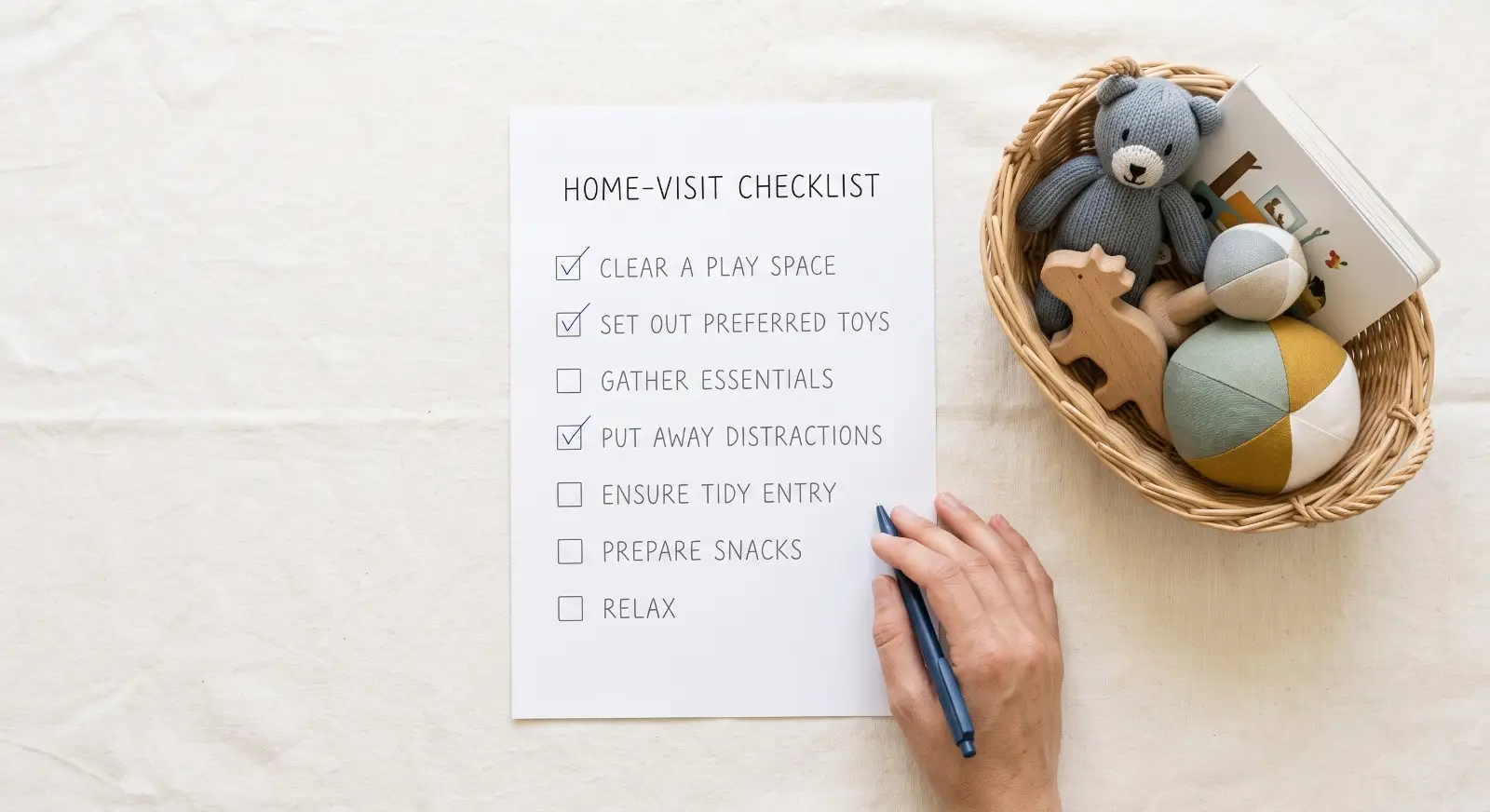
First ABA Home Visit Checklist
1. Before the day of the visit
A little planning ahead can take pressure off the day itself.
- Confirm the appointment time, who is coming, and any arrival details they may need.
- Choose a main session area and, if possible, a backup area in case your child needs a change of space.
- Set aside a few items your child already enjoys, such as puzzles, sensory toys, books, music, or a favorite snack if appropriate.
- Make note of anything important to share right away, including safety concerns, sensory sensitivities, communication supports, or routines that tend to be hard.
- If your child is older, think about what helps them feel respected and at ease, not just what keeps them busy.
You do not need a long speech prepared. A few practical notes about what your child likes, avoids, or responds well to can go a long way.
2. The hour before the visit
The last hour is a good time to simplify, not scramble.
- Tidy the session area enough to make it usable, but do not worry about deep-cleaning the whole house.
- Put away anything unsafe, especially fragile objects, sharp items, or things that are likely to cause conflict if your child sees them.
- If you can, help your child take care of basic needs first, like using the bathroom, having a snack, or getting a transition reminder.
- Let siblings or other caregivers know the plan so the house feels more predictable.
- If you have a pet that gets excited around visitors, it may help to keep them in another room at the start.
Try not to build the visit up as a big performance moment. Your child does not need to “be good” for therapy to be useful. The more neutral and calm the lead-in feels, the better.
3. At arrival and session start
Once the therapist arrives, simple is best.
- Show them the area you had in mind for the session.
- Share a quick update about how your child is doing that day, including sleep, mood, illness, schedule changes, or anything else relevant.
- Mention any immediate safety issues or house rules they should know.
- Then give the therapist room to start building rapport, observing, and getting a feel for the environment.
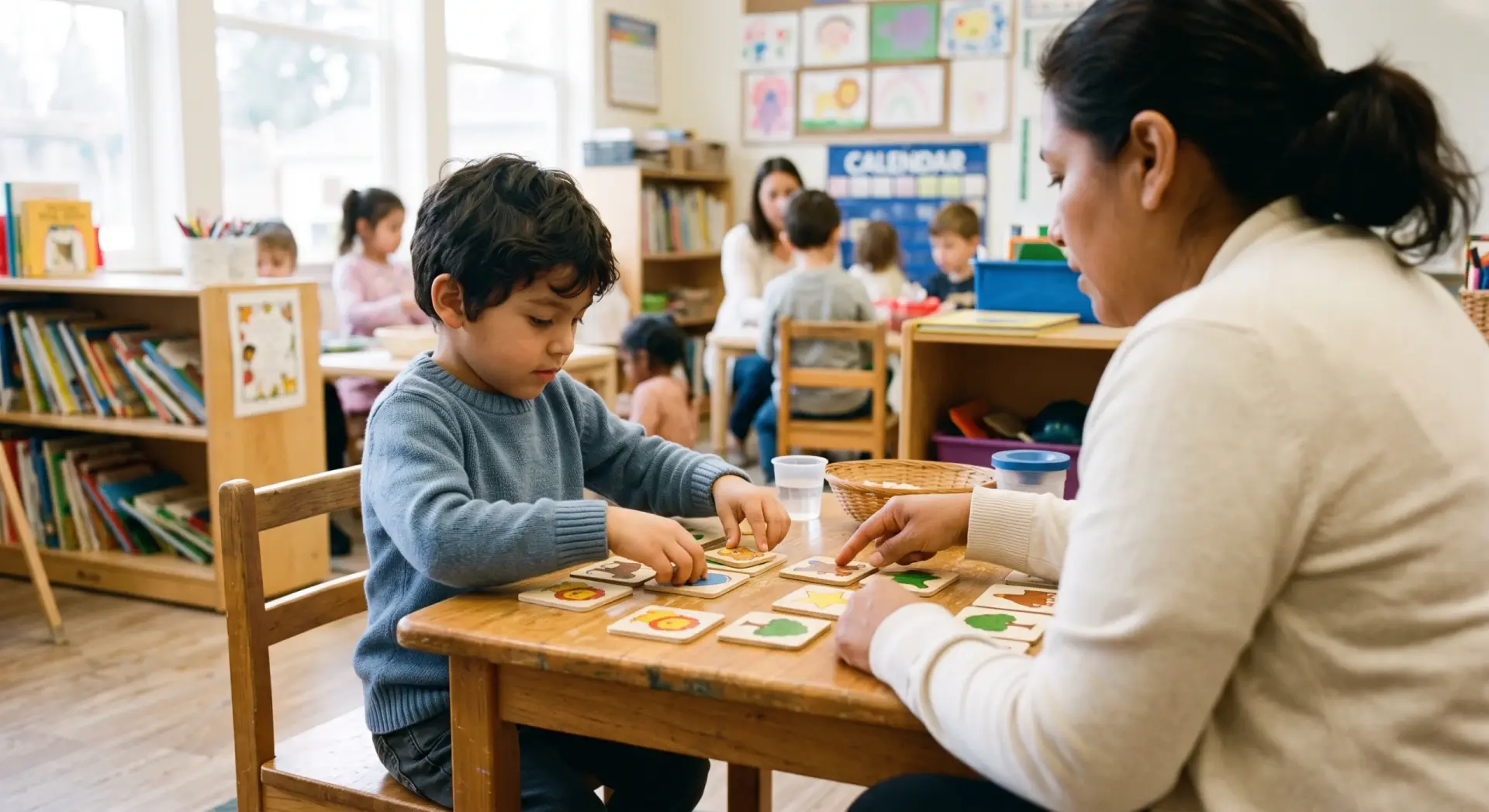
Many first visits are quieter and less structured than parents expect. That is normal. The therapist may spend time noticing how your child plays, transitions, communicates, and responds to new people before introducing more formal activities.
4. Right after the session
The first visit can bring up relief, questions, or both.
- Jot down anything you want to remember while it is still fresh.
- Notice what seemed to help your child settle in and what felt harder than expected.
- Keep expectations realistic. Early sessions often focus on connection and observation more than obvious progress.
- Save any follow-up questions for the next conversation with the care team.
If you want to understand what usually happens after that first meeting, this guide to what the first 30 days of ABA therapy often look like can help.
How to Set Up a Therapy-Friendly Space Without Turning Your Home Into a Clinic
A therapy-friendly space does not need to be fancy. It just needs to work.
Start with an area where your child can move, sit, or play without too many interruptions. For some families, that is a living room corner. For others, it may be a bedroom floor, dining area, or playroom. If you live in a smaller home or share space with other people, do not worry about creating a dedicated therapy room. A consistent spot is helpful, but flexibility matters too.
Focus first on the biggest distractions. That could mean turning off the TV, moving a tablet out of sight, or limiting access to toys that may be too hard to transition away from. You do not have to strip the room down. In fact, familiar items are often helpful.
Comfort matters just as much as setup. Younger children may do best with open floor space and fewer visible choices. Older children may be more comfortable with a quieter area, a chair option, or a setup that feels more age-appropriate. Lighting, noise, and texture can all affect how easy it is for a child to settle into the visit.
There is no single “right” home setup. The point is not to create a perfect space. It is to make room for the therapist to learn what works for your child in everyday life.
What Parents Should Have Ready and What the ABA Team Will Usually Bring
One of the most common worries before a home visit is whether you need to buy therapy supplies. In most cases, you do not.
The most useful things to have ready are often already in your home. That might include favorite toys, comfort items, snacks, communication supports, or a short list of routines your child enjoys or struggles with. If your child uses visuals, AAC, or calming strategies that already work, those are worth sharing too.
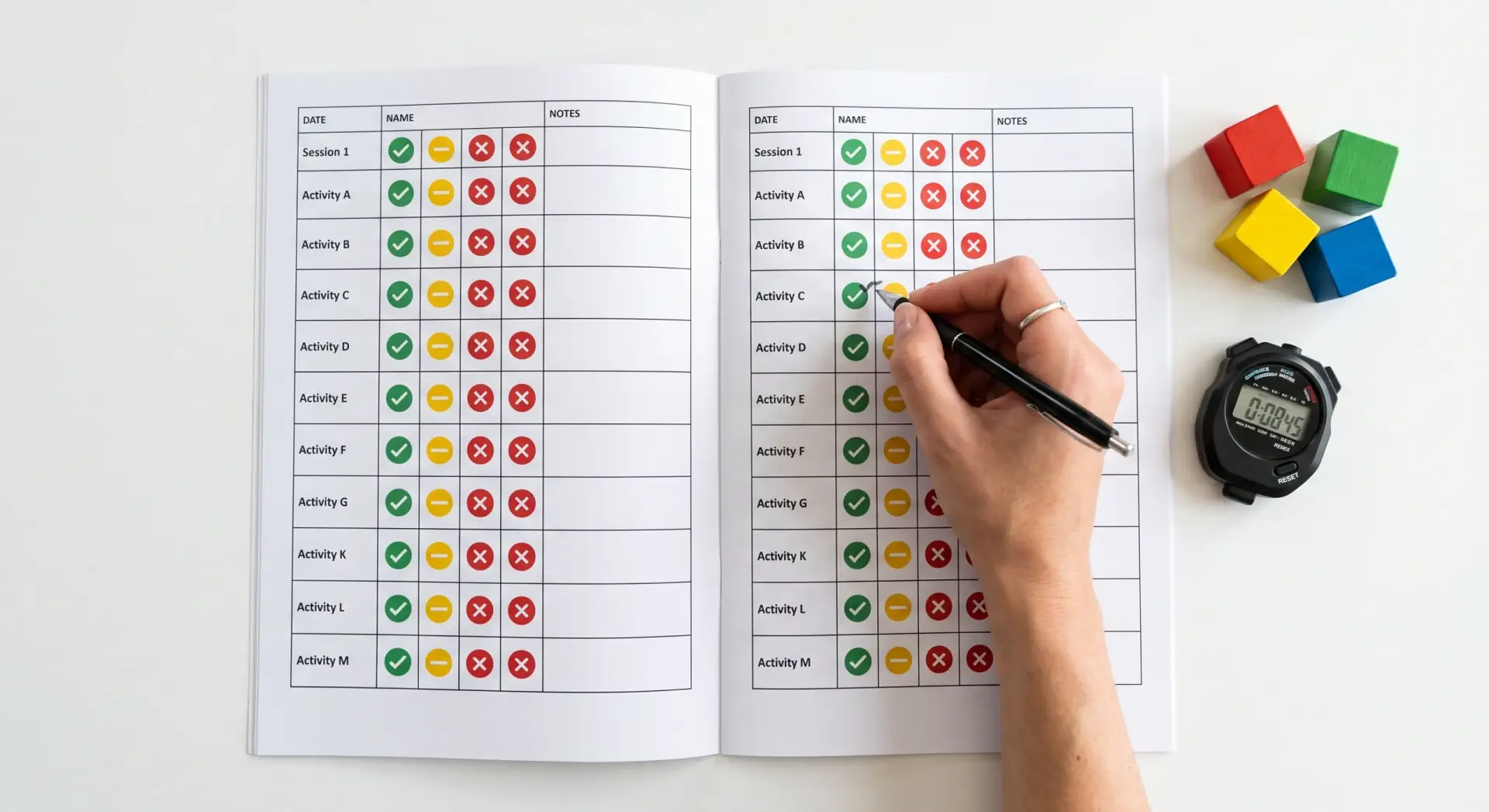
The ABA team usually brings the clinical side of the visit. That may include observation goals, data collection methods, activity ideas, and strategies based on what they learn from your child and home environment. You do not need to figure all of that out on your own.
If sessions continue, the team can help you decide whether any specific materials would be helpful later. Until then, familiar household items are often the best place to start. For more on what parent involvement can look like once therapy is underway, Alight also shares practical ways parents can support ABA therapy at home.
How to Prepare Your Child, Siblings, Pets, and Family Routine for the Visit
The best preparation is usually clear, simple, and low-pressure.
For a younger child, you might say something like, “Someone is coming to play and learn with you at home.” For an older child, you can be more direct: “A therapist is coming to get to know you and learn what support helps most.” You know your child best, so use the kind of language that already helps them feel safe.
Try not to overload the moment with too many new rules or too much explanation. A basic heads-up, a reminder close to the visit, and a familiar transition strategy are often enough. If your child benefits from a visual schedule or first-then language, keep using what already works.
Siblings may need a plan too. In some homes, a quick introduction helps them feel included. In others, it works better for them to have their own activity in another room, at least during the first part of the session. Pets can be similar. A calm pet may not be a problem, but an excited one can make it harder for everyone to settle in.
It also helps to think through the everyday routine. Naps, meals, work calls, school pickup, and other normal household demands can all shape how the visit feels. The therapist does not need a polished version of family life. They just need an honest one.
What Parents Should Expect During and Right After the First In-Home ABA Session
The first in-home ABA session is often about learning, not performing.
That may mean introductions, observation, play, conversation with the parent, and a lot of attention to how your child responds to the space and the new person in it. The therapist may be looking for things like interests, comfort level, communication patterns, sensory needs, and how transitions tend to go.
Parents are an important part of that process, but you are not expected to run the session. Your role is usually to share context, answer questions, and help the therapist understand what daily life looks like in your home. Some children warm up quickly. Others need more time. Neither response means the visit went badly.
After the session, you may get a brief recap, a few next steps, or some questions to think about before the next visit. Progress usually builds over time. If you want a fuller picture of what those early weeks can involve, this article on what parents can expect during the first 30 days of ABA therapy is a helpful next step.
Common Mistakes That Can Make a First Home Visit Harder
Most first-visit mistakes come from stress, not from doing something wrong.
Here are a few common ones to watch for:
- Trying to make the whole house perfect: Safe and workable is enough.
- Putting every preferred item out of reach: The therapist often needs to see what motivates your child.
- Adding a lot of new rules before the visit: Too much change at once can make the day harder.
- Hovering through every minute of the session: Stay available, but give the therapist room to observe and connect.
- Expecting obvious results right away: Early visits are often about comfort, trust, and information-gathering.
- Buying new materials before you know what is actually needed: Start with familiar items first.
- Talking around older children instead of including them when appropriate: Respect goes a long way.
If you start noticing broader patterns over time, Alight’s article on common mistakes parents make during ABA and how to avoid them goes deeper without losing the supportive tone families need.
FAQ
How do I prepare my home for ABA therapy?
Focus on safety, comfort, and the biggest distractions. Choose one workable space, set out a few familiar items, and share anything important the therapist should know about your child’s routine or needs.
What should be included in an ABA therapy home visit checklist?
A helpful checklist includes appointment details, the main session space, favorite toys or motivators, sensory or safety notes, sibling and pet planning, and a few quick details about your child’s routine and communication style.
What should parents expect during the first in-home ABA therapy session?
Most first sessions include introductions, observation, rapport-building, and parent conversation. The therapist may spend more time learning about your child and household than jumping into structured demands right away.
Do I need to buy special toys or materials for in-home ABA?
Usually not. Many families start with items they already have at home, including toys, snacks, comfort objects, or communication tools. The team can guide you if anything more specific would help later.
What should siblings or pets do during an ABA session at home?
That depends on your child and your household. In many homes, it helps to give siblings another activity and keep excitable pets out of the room at first. The therapist can help you decide what makes the most sense as sessions continue.
If you are exploring support and want a clearer sense of how in-home care can fit your child’s routine, you can also read more about home and school-based ABA services.