If you’re looking into in-home ABA therapy in Fayetteville, you’re probably trying to answer a few big questions at once. Is this available near us? Will it help with the parts of daily life that feel hardest right now? And how do we choose a provider we can trust? For many families, in-home ABA can be a strong fit when support is needed with communication, routines, safety, or daily living skills in the place those challenges actually show up most: home.
That decision can feel deeply personal, because it is. You are not just comparing services. You are thinking about your child, your routine, and whether support will make life feel calmer and more manageable. This guide walks through what in-home ABA can look like in Fayetteville, what questions matter most, and how to figure out whether it feels like the right next step for your family.
Quick Facts About In-Home ABA Therapy in Fayetteville, NC
In-home ABA therapy is support that happens in your child’s everyday environment, where routines, communication challenges, and real-life learning opportunities already exist.
- Families in Fayetteville and across Cumberland County often look at home-based care when they want support that fits into meals, transitions, school routines, sibling dynamics, and other parts of daily life.
- Younger children may spend more time building communication, play, and early routine skills, while older children and teens may work on independence, self-advocacy, community skills, and flexible problem-solving.
- A BCBA usually leads the assessment, treatment planning, and progress review. An RBT may provide much of the direct support under BCBA supervision.
- NC Medicaid and private insurance may cover ABA therapy, but benefits, authorizations, and provider participation still need to be verified.
- If you want a broader starting point, Alight’s overview of in-home ABA across North Carolina covers the basics in more detail.
Is In-Home ABA the Right Fit for Your Child and Your Family?
In-home ABA can be especially helpful when the goals you care about show up most often at home. That might mean communication during meals, smoother mornings, safer transitions, more independence with dressing or toileting, or less stress around everyday expectations. When support happens in the same setting where those moments occur, children can practice skills in context instead of only in a clinic.
For toddlers and younger children, that may look like play-based learning, support with early communication, and caregiver coaching that makes daily routines easier to navigate. For school-age children, home-based care may help with after-school transitions, homework tolerance, sibling interactions, or more flexible coping. For older children and teens, the focus may shift toward self-management, independence, social communication, and carrying skills into community settings.
At the same time, in-home ABA is not automatically the best fit for every child. Some children do better in a clinic setting, or with a mixed approach that combines home-based work with clinic-based structure. ABA is one evidence-based support option, not the only path, and the best setting depends on your child’s goals, learning style, and your family’s routine. The CDC’s overview of treatment approaches for autism can help put behavioral support into a broader context.
| In-Home ABA | Clinic-Based ABA |
| Builds skills in familiar routines and real home situations | Offers a more controlled environment with fewer household distractions |
| Makes caregiver coaching easier to observe and practice in real time | Can be helpful for children who benefit from a separate therapy setting |
| Often works well when goals involve routines, safety, communication, or daily living skills | Can be helpful when a child responds well to structure outside the home |
| Depends on household schedule, space, and day-to-day consistency | May reduce some home logistics, but can add commuting time |
If you want a deeper side-by-side comparison, Alight’s guide to home ABA vs. center ABA can help you think through the tradeoffs without assuming one setting works for every family.
The Front-Door Fit Check
Everyday-Pressure Lens
Start with the moments that feel hardest right now. Maybe mornings unravel before school. Maybe mealtimes feel tense every day. Maybe transitions lead to big reactions, or communication breakdowns are making home life more stressful than it needs to be. Some families are also trying to manage safety concerns, sibling strain, or the challenge of carrying school strategies into life at home.
Looking at those pressure points first keeps the decision grounded in real life. Many families in Fayetteville are not searching for therapy in the abstract. They are looking for support that could make daily life feel steadier, warmer, and easier to manage.
Home-Setting Lens
Next, think about whether the goals you care about make the most sense to practice at home. In-home ABA can be a strong option when a child needs support using communication during routines, handling transitions, following household expectations, or learning skills in the places where they matter most.
It also helps to think honestly about the setting itself. Is there space to work? Are there times in the week when sessions would feel realistic? How much noise, sibling activity, or schedule variation is typical in your home? A good provider should help you think through those questions practically. Your home does not need to be perfect before support can begin.
Provider-Partnership Lens
Provider fit matters just as much as service availability. Ask how the BCBA is involved in assessment, goal-setting, supervision, and progress reviews. Ask how direct staff are trained, how often caregivers receive updates, and what parent coaching actually looks like.
This is where partnership becomes more than a nice phrase. A strong provider should be able to explain how goals are chosen, how progress is measured, how concerns are handled, and how your family’s priorities shape the plan. Words like personalized or tailor-made only mean something if the provider can show you what that looks like in practice.
Access-and-Coverage Lens
Local access questions matter early. A provider may say they serve Fayetteville, but real availability can depend on your exact neighborhood, staffing, travel across Cumberland County, and the times your child is available. Insurance participation can also vary by plan, authorization requirements, and current network status.
This can matter even more for families connected to Fort Liberty or anyone expecting a future move. Relocation, schedule changes, and continuity of services can all affect whether a provider is a realistic long-term fit. Asking those questions early can save time and frustration later.
Next-Step Lens
Once you look through the daily-pressure, home-setting, provider, and access questions, the next step usually becomes clearer. Some families are ready to book a consult. Others may need to compare a few providers first, verify benefits, or think more carefully about whether home-based care really fits better than clinic-based support.
There is no prize for rushing. The goal is to find support that feels clinically sound, practical for your family, and sustainable in everyday life.
Fayetteville In-Home ABA Provider Comparison Sheet
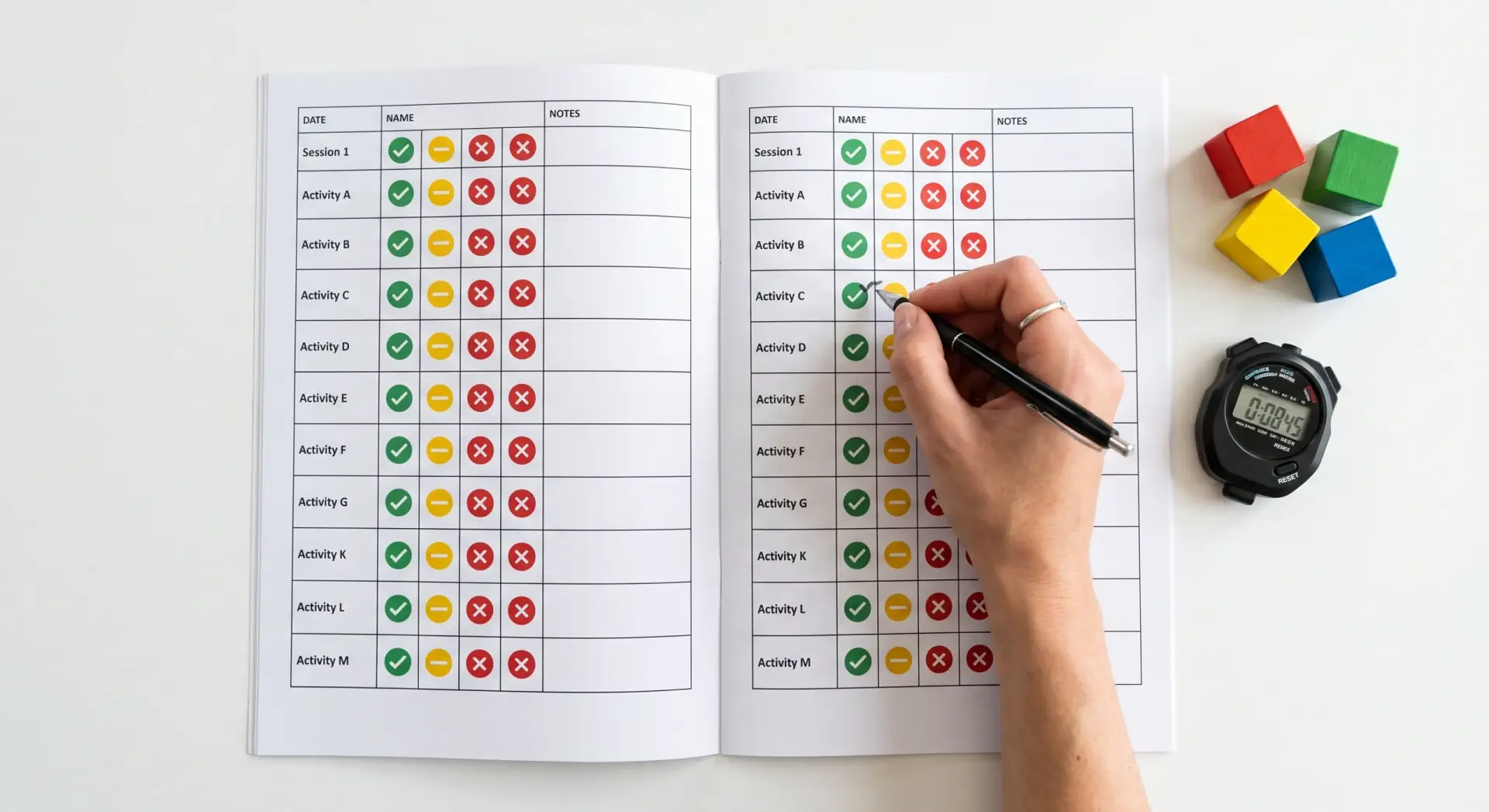
If you are talking with more than one provider, a simple side-by-side comparison sheet can make the process much less overwhelming. It helps when every conversation starts to sound similar.
For each provider, compare:
- Provider name
- Exact Fayetteville or Cumberland County service area
- BCBA oversight model
- Caregiver coaching approach
- Insurance and NC Medicaid acceptance
- Scheduling flexibility
- First-step process
- Signs the provider sees your child as a good fit for in-home care versus clinic-based care
- Questions, concerns, or red flags
A good comparison sheet is not about ranking providers by marketing language. It helps you see who explains things clearly, responds realistically, and seems best prepared to support your child in the context of your actual home life.
Insurance, NC Medicaid, and Local Access Questions to Clarify Early
Before intake moves too far, ask what needs to be verified. That usually includes insurance participation, authorization requirements, referral rules if they apply, expected documentation, scheduling limitations, and whether the provider can consistently serve your part of Fayetteville.
This matters because “we serve Fayetteville” can mean different things in practice. A provider may cover only certain parts of the city, have limited travel capacity, or offer fewer after-school time slots than families expect. Getting clarity early can help you avoid unnecessary stress.
For a broader look at funding questions, Alight’s North Carolina ABA funding guide is a helpful next read. Use it as a planning tool, then confirm the details directly with both the provider and your insurance plan. Coverage is never something to assume.
What the First Steps Usually Look Like if You Decide to Move Forward
Most families move through a similar early process, even though the exact timeline can vary. It usually starts with first contact, followed by insurance verification, intake questions, assessment or clinical review, goal-setting, and then early session planning.
A first in-home visit may include observing routines, talking through your biggest concerns, reviewing communication or behavior patterns, and identifying where support would be most useful. You may be asked about meals, sleep-related routines, safety concerns, school coordination, and what daily life feels like right now.
It helps to have a few things ready before that stage:
- Your top two or three concerns
- The routines that feel hardest at home
- Your child’s current schedule
- Questions about caregiver involvement
- Questions about supervision, communication, and progress review
Families often feel less overwhelmed when the process is explained clearly and kindly. If you want a better sense of how this support can look, Alight’s look at how they support North Carolina families with in-home autism therapy offers more context.
Local Considerations for Fayetteville, Cumberland County, and Fort Liberty Families
Local relevance should do more than repeat the city name. In Fayetteville, the practical questions often involve travel range, coverage across Cumberland County, scheduling around school and work, and whether a provider can stay consistent when family routines shift.
For military families connected to Fort Liberty, continuity can be especially important. If relocation is possible, or if schedules can change quickly, ask how the provider handles transitions, paperwork, and continuity planning. This resource for military families in North Carolina who need ABA during frequent relocations may help you think through those questions ahead of time.
The strongest local providers will be able to talk honestly about service-area reality, not just broad service-area claims. That kind of clarity can help families make better decisions with less stress.
FAQ
Is in-home ABA therapy available in Fayetteville, NC?
Yes, in-home ABA therapy is available in Fayetteville, but exact availability still depends on provider staffing, your location within the service area, and scheduling capacity. If you want a broader statewide overview first, start with Alight’s North Carolina in-home ABA page and then confirm the details that apply to your household.
Does NC Medicaid cover ABA therapy in North Carolina?
NC Medicaid may cover ABA therapy in some situations, but coverage depends on eligibility, plan requirements, authorizations, and provider participation. The safest approach is to verify benefits directly and ask the provider what documentation or approval steps usually come first. Alight’s guide to financial help for ABA therapy in North Carolina is a useful planning resource.
How is in-home ABA different from clinic-based ABA?
In-home ABA focuses on skills in real family routines and familiar spaces, while clinic-based ABA happens in a more structured treatment setting. Home-based care can be especially useful when goals involve communication, transitions, daily living, and caregiver coaching. Clinic-based care may be worth comparing when a child benefits from more separation from home distractions or a different therapeutic setup. For a fuller breakdown, see Alight’s home ABA vs. center ABA comparison.
What qualifications should I look for in an ABA provider?
Look for clear BCBA oversight, well-defined roles for direct staff such as RBTs, a realistic approach to goal-setting, and a provider who communicates openly with caregivers. You should also ask how progress is reviewed, how parent coaching works, and how concerns are handled if something does not feel like a fit. Alight’s parent’s guide to choosing an ABA provider can help you prepare those questions.
What should I ask before starting services at home?
Ask about service area, scheduling, insurance verification, caregiver involvement, BCBA supervision, first-visit expectations, and how progress updates are shared. It also helps to ask how the provider decides whether in-home care is the right setting for your child and what would make them recommend a different model. Using a comparison sheet for these answers can make your final decision much clearer.
If you are looking for in-home ABA support in North Carolina and want a next step that feels clear, calm, and practical, Alight Behavioral’s in-home ABA page for North Carolina families is a good place to continue.