If you are wondering whether ABA therapy can help with friendship skills for autism in school settings, you are probably thinking about specific moments in your child’s day: walking up to a group at recess, sitting alone at lunch, freezing during partner work, or going quiet after a misunderstanding with a classmate. For many parents, the hardest part is not just seeing their child struggle socially. It is not knowing what kind of support could actually help.
School friendships can be especially complicated because they depend on timing, shared interest, flexibility, and comfort. They are not built through scripts alone. They grow through repeated, safe, enjoyable interactions with peers.
That matters because autism affects social communication and interaction in different ways for different children, as organizations such as the CDC and the National Institute of Child Health and Human Development describe. Some children want connection but have trouble joining in. Others may connect more easily in one setting than another, or need extra support when school feels noisy, fast, or unpredictable.
This article explains how individualized ABA therapy may help support the skills behind friendship in real school situations. The goal is not to force popularity or polished social performance. It is to help children build more comfortable, reciprocal, and meaningful connections over time.
Why School Friendships Can Be Hard for Autistic Children
School is socially demanding in ways adults often underestimate. Children are expected to read unwritten rules, notice openings in conversation, shift between activities quickly, and recover from awkward moments without much time or support. Even when a child wants friends, knowing how to enter, sustain, or repair an interaction can be hard.
Common barriers can show up in very practical ways. A child may not know how to join a game that has already started. They may miss a classmate’s facial expression or tone and keep talking after the other child has moved on. They may become upset when playground rules change unexpectedly, or shut down after being told “not now” by a peer.
For younger children, friendship challenges may center on shared attention, simple play entry, turn-taking, and basic conversation starts. A child might stand near peers but not know how to move from parallel play into shared play. For later elementary students, the demands often get more complex. Group belonging, flexibility, reputation with peers, humor, and conflict repair all start to matter more.
It is also important not to assume every autistic child struggles for the same reason. Sometimes the main barrier is communication. Sometimes it is sensory overload, anxiety, motor planning, or a mismatch between the environment and the child’s comfort level. Sometimes a child has the skill in one setting but cannot yet use it consistently in a busy classroom or on the playground.
What Meaningful Friendship Progress Can Look Like at School
Meaningful friendship progress is not about having a large group of friends or performing social rules perfectly. In many cases, one steady peer connection matters more than broad popularity.
Progress may look like repeated safe interactions with the same classmate, more comfort during unstructured time, shared enjoyment, or a child showing interest in reconnecting after school. It may mean they respond more often when another child speaks, stay engaged longer in a game, or recover more quickly when an interaction does not go as planned.
For younger children, progress might start with moving from side-by-side play into simple shared play, handing a toy to a peer, or tolerating short back-and-forth exchanges. For older elementary children, progress may look more like conversational reciprocity, shared interests, flexible problem-solving, or being able to repair a social mistake without completely withdrawing.
What counts as progress should stay individualized. A child who moves from avoiding recess entirely to joining a game for two minutes has made real progress. So has a child who learns to say, “Can I have a turn next?” instead of walking away frustrated. These are not small changes when they increase belonging, confidence, and participation.
How ABA Therapy Can Support the Skills Behind Friendship
ABA therapy may help by targeting the underlying skills that make friendship easier, rather than trying to teach friendship as a scripted outcome. Research suggests behavioral interventions can support communication, social participation, and daily functioning when goals are individualized and practiced across settings. In school contexts, that often means focusing on the specific skills a child needs most.
Communication and conversational turn-taking are a common starting point. A child may practice greeting a peer, asking to join an activity, staying with a topic for two or three exchanges, or noticing when it is someone else’s turn to talk. In school, that might help during lunch conversations, center time, or partner work.
Reading peer cues and building perspective-taking can also matter. Some children need help noticing when a classmate is inviting interaction, feeling annoyed, or ready to move on. Support might include modeling, role-play, or reviewing what certain facial expressions, body language, or tone changes can mean in age-appropriate ways.
Flexibility is another key area. Friendship at school often requires handling changed rules, different play ideas, or a classmate wanting something unexpected. ABA-informed support may help children practice tolerating small changes, trying a peer’s idea, or using a backup plan when the original plan falls apart.
Emotional regulation is closely tied to social success. A child who becomes overwhelmed during noisy lunch periods or frustrated during fast-moving games may need support recognizing early signs of stress and using a strategy before the interaction breaks down. That could include asking for a short break, using a visual reminder, or practicing a calming routine that helps them return.
Repair after conflict is just as important as starting an interaction. A child may need help learning what to do after interrupting, grabbing materials, misunderstanding a joke, or hearing “no” from a peer. That might mean practicing simple repair phrases, learning how to pause before reacting, or figuring out how to rejoin without shame.
Finally, joining and sustaining group activities often requires several skills at once. A child might need help noticing the group’s rhythm, waiting for an opening, adding one relevant comment, and staying flexible long enough for the interaction to continue. The most useful goals are usually concrete, naturalistic, and tied to real school routines rather than abstract social ideals.
The BRAVE Friendship Map
Belonging outcome
Start by defining what meaningful friendship progress actually looks like for your child. For one child, that may be greeting the same classmate each morning. For another, it may be staying in a recess game for five minutes without becoming overwhelmed. The goal should reflect comfort, reciprocity, and belonging rather than popularity.
Real-world barrier
Next, identify the specific school moment where connection breaks down most often. Is it walking up to peers at recess? Starting a lunch-table conversation? Managing turn-taking during group work? Recovering after a disagreement? A clear problem is easier to support than a broad goal like “make more friends.”
Adult alignment
Parents, ABA providers, and school staff do not need to do the same job, but they should reinforce the same target. A BCBA might help define the skill and practice plan. A teacher might provide a simple cue or create a predictable opportunity for partner interaction. A parent might practice the same language during playdates or community outings. This keeps support coordinated without expecting school staff to act as therapists.
Visible practice
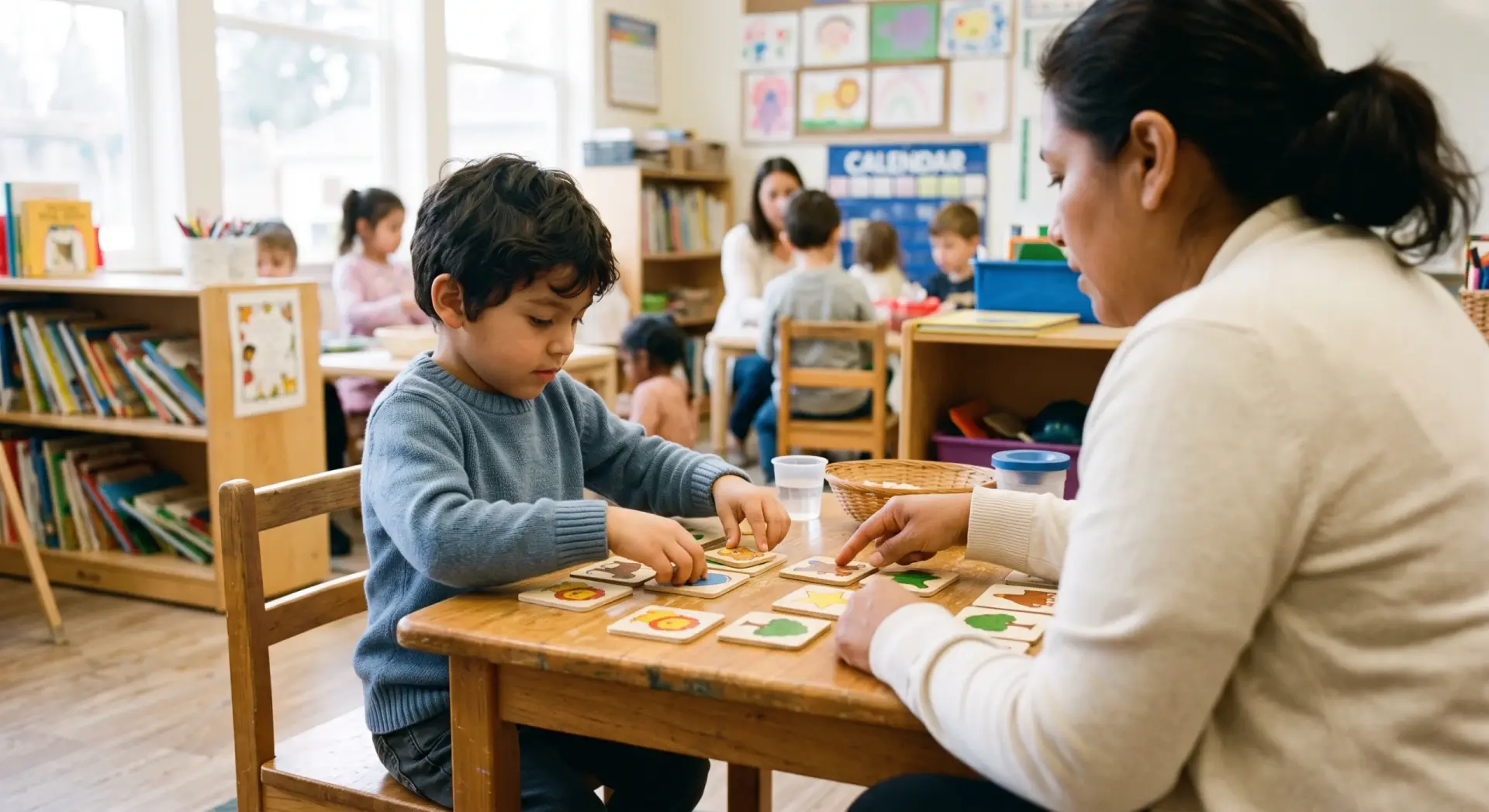
Before expecting spontaneous success with classmates, it helps to create safe places to rehearse. That may include role-play at home, video modeling, structured peer practice, or practicing the same skill during lower-pressure activities. Repetition matters, but it should feel supportive rather than forced.
Evidence of connection
Look for signs of authentic change over time: repeated engagement with the same peer, longer back-and-forth exchanges, easier recovery after a hard moment, or more willingness to try again the next day. These markers tell you more than whether a child can repeat a memorized phrase.
What Friendship Support Can Look Like in Real School Situations
Recess and playground entry
Recess can be one of the hardest parts of the day because children have to enter moving social situations quickly. Imagine a child who wants to play tag but stands nearby until the game ends. Support might focus on noticing an opening, using one simple entry phrase, and tolerating the fact that the game may change as soon as they join. If the child misses a turn or gets confused, the goal is not perfection. It is learning how to stay with the interaction a little longer.
Lunch and unstructured conversation
Lunch adds noise, movement, and fast topic changes. Some children need support learning how to start a conversation, make one related comment, or notice when another child is interested. Others may need help coping when a conversation stalls so they do not interpret that moment as total rejection. Environmental supports can matter here too, especially if sound, crowding, or transitions make it harder to stay regulated.
Group work and classroom participation
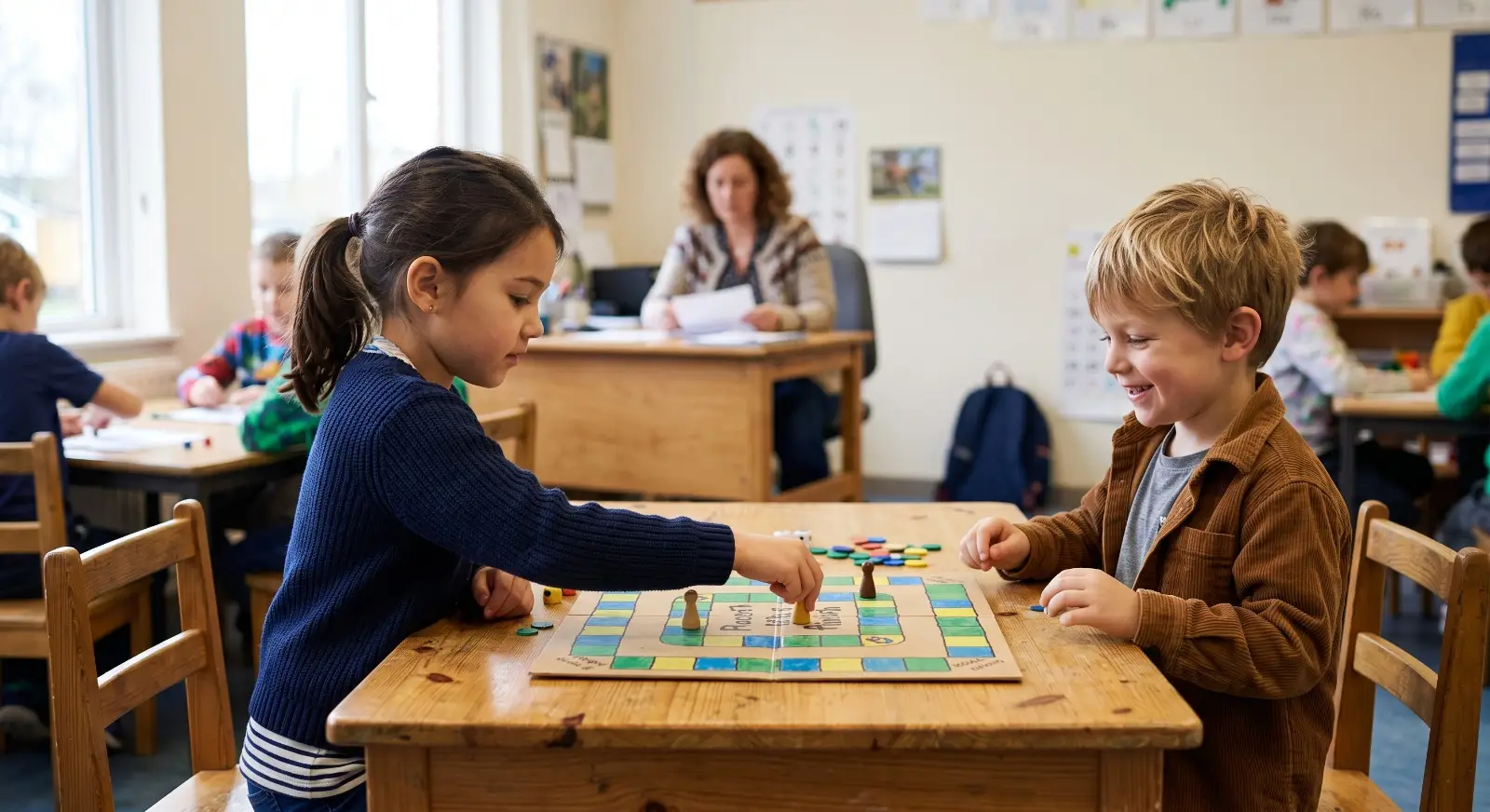
Friendship-building often overlaps with classroom participation. A child who can wait, share materials, respond to peer ideas, and stay flexible during group tasks is often more available for connection. In these moments, support may target turn-taking, interpreting feedback, or asking for clarification instead of shutting down.
Handling rejection, conflict, or misunderstanding
No child avoids every social setback. What matters is helping them recover. Younger children may need simple repair skills such as giving space, trying again later, or using a short phrase like “Sorry, can I try again?” Older elementary children may need more nuanced support around teasing, exclusion, mixed signals, or changing group dynamics. Adults can coach these moments without controlling every peer interaction. Sometimes the most helpful support is a brief debrief, a plan for next time, and reassurance that one hard moment does not define the whole day.
School Friendship Support Checklist
Use this checklist to focus support on one real school situation at a time.
- Current school moments to review: recess, lunch, group work, arrival and dismissal, specials, clubs, or after-school activities.
- Primary barrier to connection: difficulty initiating, reading cues, staying in conversation, tolerating changes, managing sensory overload, regulating emotions, or repairing after conflict.
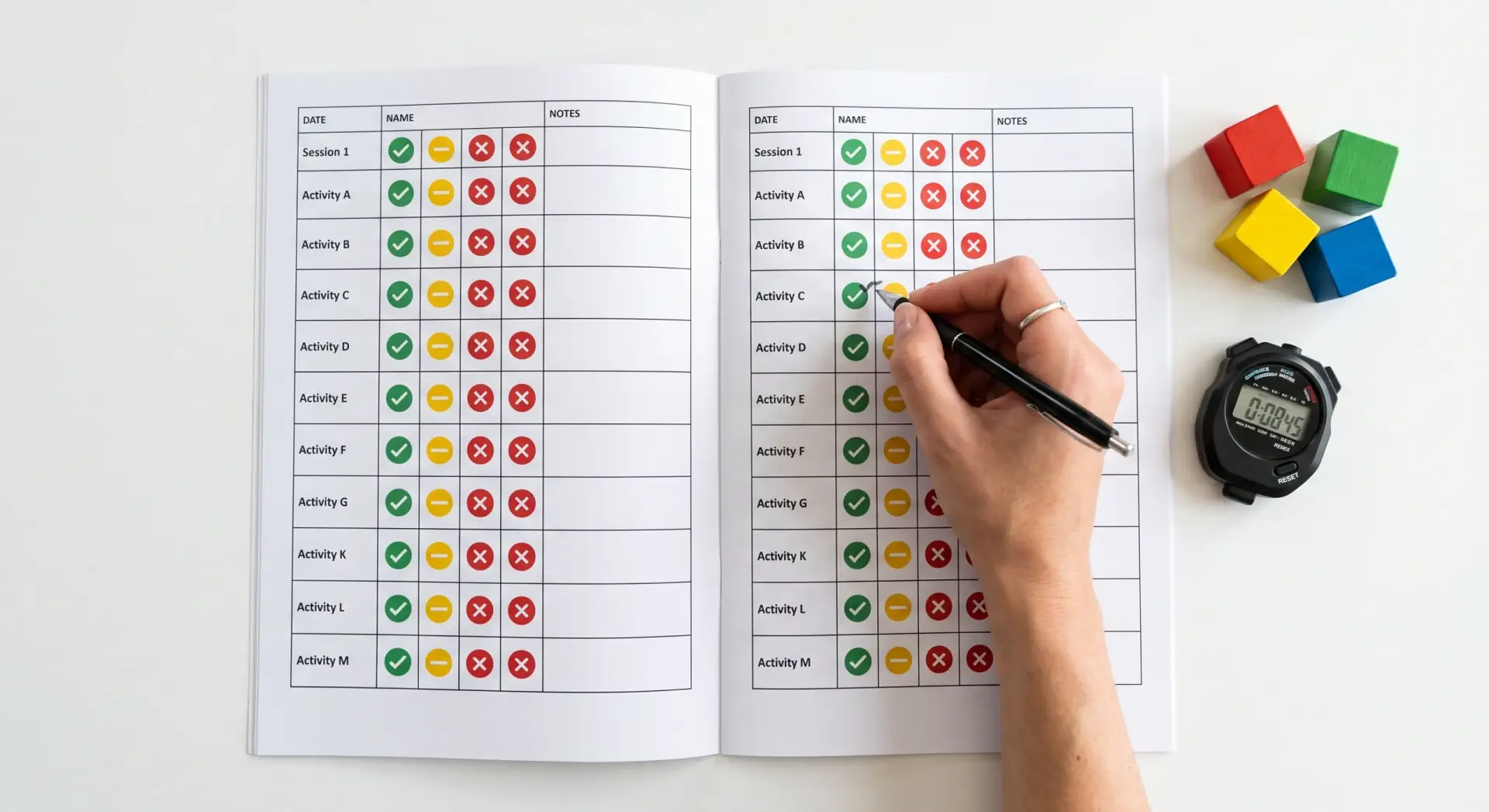
- Support match: visual reminder, role-play, video model, teacher cue, peer-mediated practice, reinforcement plan, home practice, BCBA goal, or parent follow-up note.
- Progress marker: repeated interaction with the same peer, longer back-and-forth exchanges, fewer shutdowns, quicker recovery, more confidence approaching classmates, or peer invitations.
- Escalation flags: bullying concerns, persistent overwhelm, unrealistic expectations, ongoing exclusion, or signs that a larger school-team discussion is needed.
This kind of checklist is often most useful before a teacher check-in, ABA parent meeting, or IEP conversation because it helps the team prioritize one barrier and one coordinated next step.
FAQ
Can ABA therapy improve peer interactions in school settings?
ABA therapy may help improve the skills behind peer interaction, such as initiation, flexibility, regulation, and repair. It cannot guarantee friendships on demand, but it may make real-world school interactions easier to start and sustain.
What social skills are most important for school friendships?
That depends on the child and the situation. Common priorities include starting interactions, conversational turn-taking, reading social cues, staying flexible, managing frustration, and repairing after a difficult moment.
How can parents and teachers support friendship-building for autistic children?
The most helpful approach is usually consistent and low-pressure. Parents, teachers, and ABA providers can agree on one target skill, create predictable practice opportunities, and reinforce effort without over-directing every interaction.
How do you help an autistic child start and maintain conversations with classmates?
Start small. Practice one opening line, one follow-up comment, and one way to re-enter if the conversation pauses. Lunch, transitions, and group work are often good places to focus because they offer frequent, real-life practice.
What does friendship progress look like over time?
Progress often looks like small wins that build on each other: more repeated peer contact, better recovery after setbacks, longer interactions, and more interest in trying again. Slower progress can still be meaningful when it reflects authentic connection.
If your family is exploring support, it can help to work with a provider that approaches these goals with warmth, realism, and respect for your child’s individual profile. At Alight ABA, friendship-related goals should be shaped around everyday school life, practical collaboration, and the kinds of changes that genuinely make a child feel more connected.