If you’re searching for the best ABA therapy provider near you, you’re probably trying to make a big decision while already carrying a lot. A strong provider should understand your child’s needs, explain care clearly, serve your area in a realistic way, and treat your family like a true partner. If those pieces are missing, it is worth taking a closer look before moving forward.
Quick Summary
- Needs Match: The plan should reflect your child’s real goals and daily life, not a one-size-fits-all script.
- Expertise: Ask who writes goals, how BCBA oversight works, and how progress is reviewed.
- Access: Confirm service area, setting options, insurance support, and realistic start timelines.
- Relationship Fit: You should feel heard, informed, and included from the start.
The N.E.A.R. Provider Screen for Local ABA Searches
When families compare local providers, it helps to keep the process simple. One way to do that is to look at four things: needs match, expertise, access, and relationship fit.
Needs Match
A good provider should be able to explain how therapy connects to your child’s real life. That might mean helping a toddler build communication skills, supporting a school-age child across home and school routines, or focusing on independence and practical life skills for an older child or young adult.
Listen for whether the conversation feels specific to your child. If the plan sounds overly generic, or if the provider jumps straight to standard hours and services without asking about daily routines, goals, or family concerns, that can be a sign the fit is not as individualized as it should be.
If you are still thinking through settings, how home-based and school-based ABA can work together gives helpful context. It is also fair to be cautious with any language about “fixing” a child or promising specific milestones on a set timeline.
Expertise
You do not need a highly technical explanation, but you should leave the first conversation with a clear sense of who is guiding care. Ask who creates the treatment plan, how a BCBA is involved, how often progress is reviewed, and what happens if something is not working.
Strong providers make this easy to understand. They can explain credentials clearly, describe how goals are updated, and talk about progress in a grounded way. The Behavior Analyst Certification Board is a good place to learn more about BCBA and RBT credentials if you want to verify what a provider shares.
ABA can be an evidence-based support option, but ethical providers should talk about it with honesty. That means no sweeping promises, no pressure, and no suggestion that there is only one right path for every child.
Access
Sometimes a provider sounds great on paper but is not a realistic fit day to day. Ask whether they truly serve your area, what settings they offer, how long intake usually takes, and who helps with insurance or authorizations.
This matters even more for families in Minnesota or North Carolina, where coverage, clinician availability, and travel range can affect what is actually possible. In Minnesota, it may help to ask about EIDBI, Medical Assistance, or MinnesotaCare. In North Carolina, it can be useful to ask how staffing and travel coverage affect in-home availability and start timing.
For more local context, you can explore in-home ABA therapy in Minnesota or in-home ABA therapy in North Carolina.
Relationship Fit
This part is easy to overlook, but families usually feel it right away. Pay attention to how the team talks with you. Do they answer questions directly? Do they make space for your concerns? Do they sound warm, organized, and respectful?
The right provider should feel like a partner, not just a service. That does not mean every conversation will be perfect, but it should feel clear, supportive, and grounded in real collaboration. If family involvement is important to you, what meaningful parent training can look like in ABA is worth reading too.
Red Flags That Should Make Parents Pause
Some concerns are easier to spot than others. A few common red flags include:
- vague answers about supervision or credentials
- treatment plans that sound the same for every child
- unclear service areas or setting options
- weak communication about progress
- pressure to commit before your questions are answered
- confusing explanations around insurance or scheduling
- limited parent involvement or little room for family input
None of these automatically tells you everything you need to know, but together they can signal that a provider may not be the right fit.
Questions to Ask on Your First Call With an ABA Provider
A first call does not need to feel like an interrogation. Think of it as a chance to understand whether this team can support your child and your family in a way that feels realistic and reassuring.
Here are a few questions that can help:
- How do you set goals for children at my child’s age and stage?
- Who creates the treatment plan, and how often does a BCBA review it?
- What settings do you offer in our area?
- How do you communicate with parents and provide coaching?
- What should we expect around benefits verification, authorizations, and scheduling?
- What is your typical start timeline?
If insurance is a big part of the decision, this guide to understanding ABA insurance coverage can help you prepare for those conversations.
ABA Provider Comparison Tool
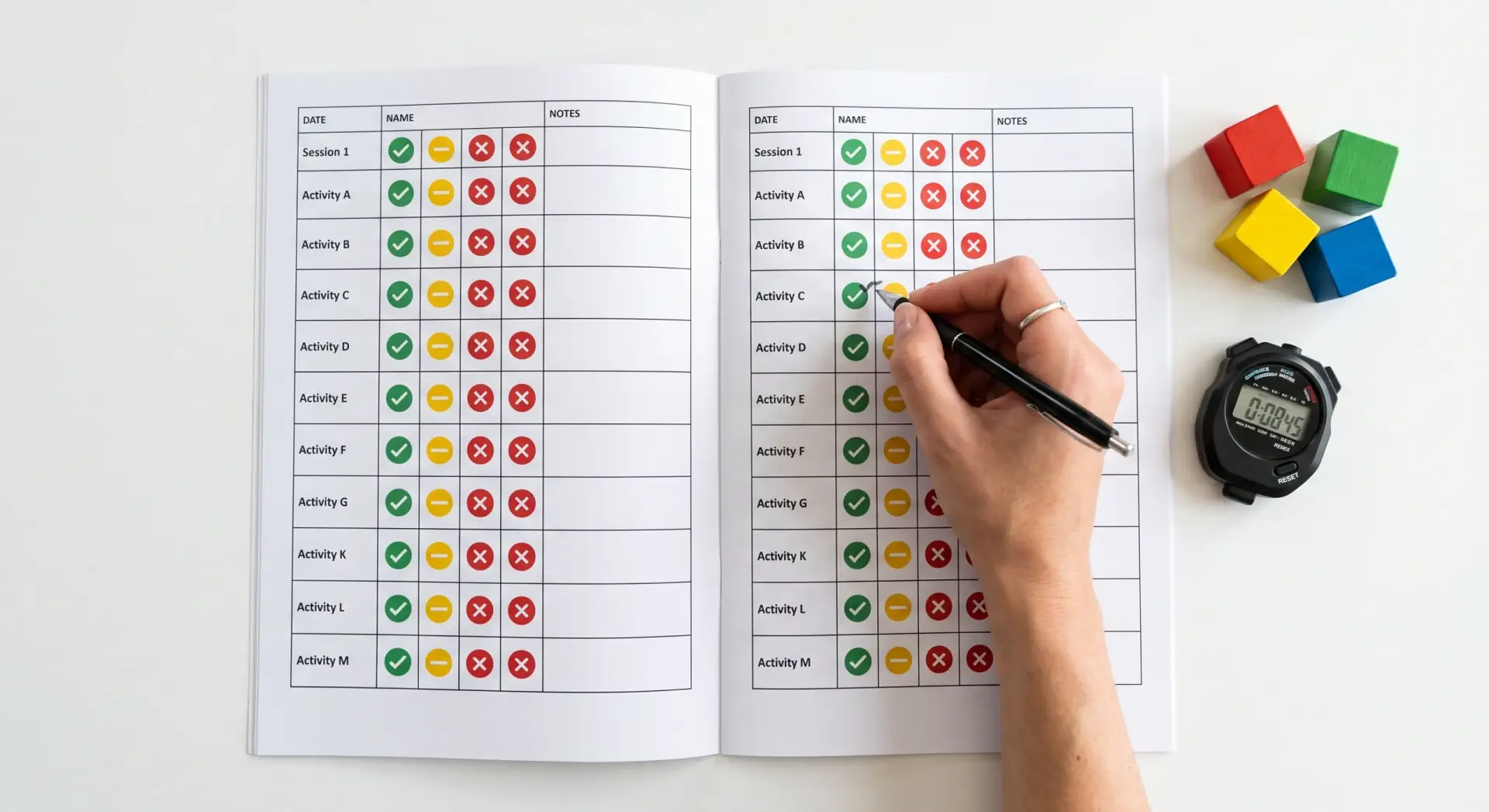
After each call, jot down a few notes while everything is still fresh. A simple comparison list can make the decision feel much more manageable.
Track:
- Provider Name
- Areas Served
- Settings Offered
- BCBA Oversight
- Therapist Consistency
- Parent Coaching
- Insurance and Admin Help
- Expected Start Timeline
- Notes or Red Flags
- Overall Fit
You do not need a perfect spreadsheet. A short checklist is often enough to help you see which provider feels clear, practical, and supportive.
FAQ
How do I know if an ABA provider is reputable?
Look for clear credentials, visible BCBA involvement, thoughtful answers, and respectful communication. A strong reputation is not just about branding. It shows up in how clearly a provider explains care and supports families.
What questions should I ask an ABA provider before enrolling my child?
Ask about goals, supervision, parent involvement, service setting, insurance support, and timing. The goal is to understand fit, not to memorize clinical terms.
Does insurance cover ABA therapy?
Coverage varies by plan and state. It helps to ask what approvals are needed, what out-of-pocket costs may come up, and how much help the provider gives during the process.
Is in-home or clinic-based ABA better for my child?
The best setting depends on your child’s goals, routines, learning style, and your family’s logistics. What works well for one family may not be the best fit for another.
How long are ABA wait times in my area?
Timelines can vary based on staffing, insurance, and setting. Asking about start timing early can save stress later.
What are red flags when choosing an ABA provider?
Common red flags include unclear supervision, generic plans, poor communication, and pressure instead of partnership.
If you are comparing ABA providers in Minnesota or North Carolina, Alight ABA focuses on warm, in-home support built around partnership, convenience, and clinically grounded care. You can learn more about in-home ABA therapy in Minnesota, in-home ABA therapy in North Carolina, or how parent training supports ABA progress.