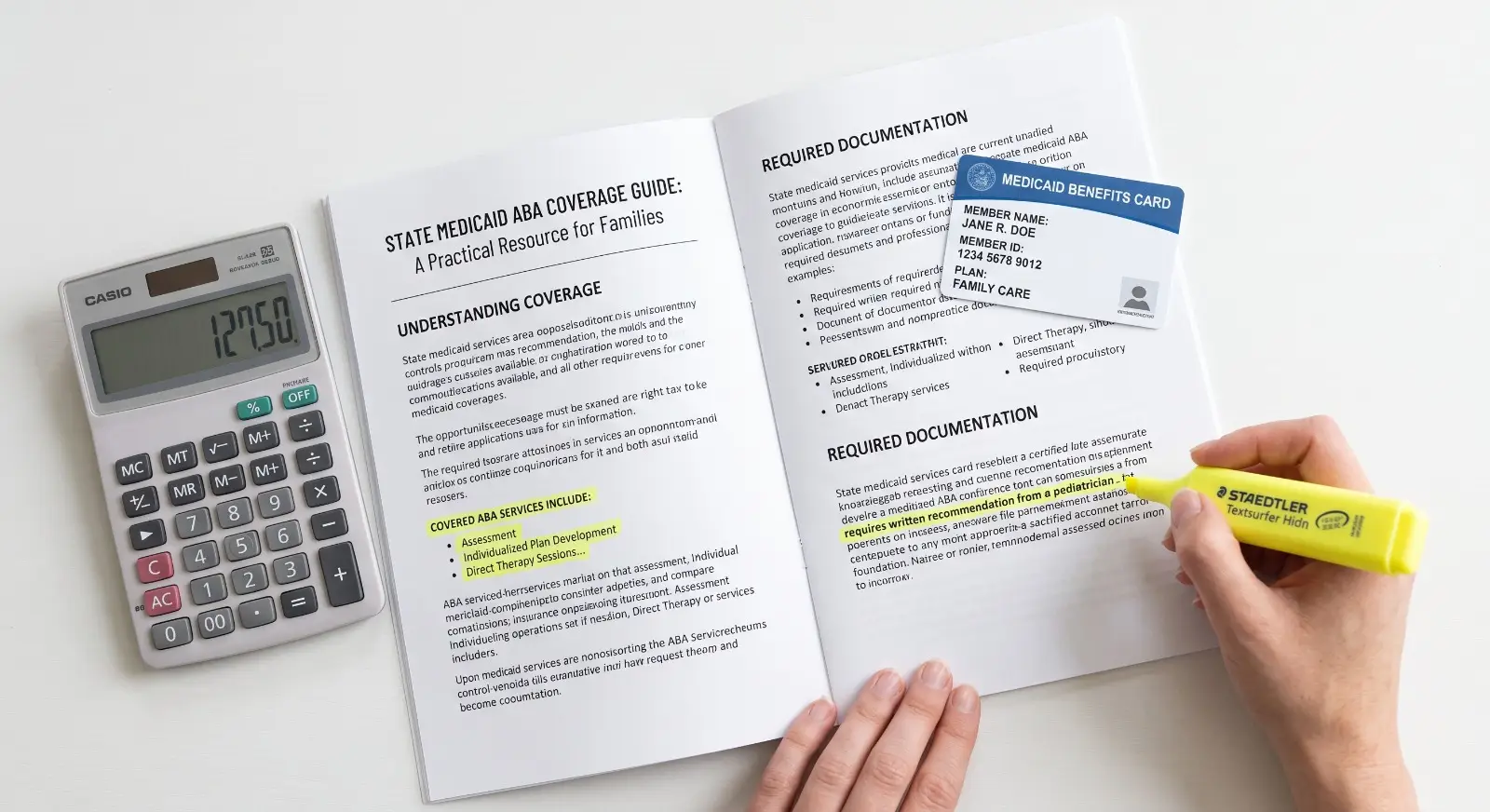
Yes, NC Medicaid may cover ABA therapy for eligible children when the service is medically necessary, but coverage is not automatic. If you are trying to figure out what happens next, you are not alone. For many North Carolina families, the hardest part is not hearing that coverage may exist. It is understanding how eligibility, paperwork, plan rules, and provider fit all come together.
This guide walks through that process in plain language so you can move forward with a little more clarity and a little less guesswork.
Quick Answer: Does NC Medicaid Cover ABA Therapy?
In many cases, yes. NC Medicaid may cover ABA therapy for children who qualify and have the right documentation in place. Still, coverage is only one part of the picture. Approval can also depend on medical necessity, prior authorization, the child’s specific Medicaid plan, and whether the provider accepts that exact plan.
Quick summary
- NC Medicaid may cover ABA therapy, but families usually need to confirm eligibility, documentation, and plan requirements.
- Children under 21 often come up in this conversation because of Medicaid’s EPSDT framework.
- Prior authorization may be part of the process.
- It is important to verify the exact managed care plan, not just assume all Medicaid coverage works the same way.
- It is also important to confirm that the provider accepts your child’s specific plan and offers the kind of support your family needs.
If you are in North Carolina, it can help to review information from NC Medicaid. Even so, most families will still need to check details directly with their plan and provider before they have a clear answer.
Who Qualifies for ABA Therapy Through NC Medicaid?
This usually comes down to two big questions.
First, is your child enrolled in NC Medicaid or a North Carolina Medicaid managed care plan?
Second, is there enough clinical documentation to show that ABA is appropriate and medically necessary for your child?
For many families, children under 21 are central to this discussion because Medicaid’s EPSDT benefit is designed to support medically necessary care for eligible children and adolescents. That does not mean every family follows the exact same path. It means age, diagnosis status, current needs, and plan requirements all matter.
On the clinical side, families are often asked for some combination of an autism diagnosis, an evaluation, a referral when required, and records that explain why ABA is being recommended. If you are still early in the process, it may help to start with a clearer picture of what an autism diagnostic evaluation may involve.
The path can look a little different depending on where your child is right now:
- Recently diagnosed younger children: Families may still be gathering records, sorting out next steps, and learning which calls to make first.
- School-age children and teens: Parents may already have documentation, but need updated records, continued-need support, or a better understanding of the right level of care.
ABA should be talked about as individualized support. It can help with communication, daily routines, behavior support, and quality of life. It is not about fixing a child or forcing a one-size-fits-all outcome.
What ABA Services May Be Covered Under NC Medicaid?
When families ask whether ABA is covered, they are usually asking about more than therapy hours alone.
Depending on the child’s needs, the plan, and the provider, coverage discussions may include assessment or intake-related review, direct ABA therapy, BCBA supervision or treatment planning, and caregiver training. Some families may also need to ask whether home-based or community-based services are part of the picture.
That is why it helps to ask a few follow-up questions early:
- Which ABA-related services are covered for my child?
- Are there setting limits I should know about?
- Does the plan require prior authorization for some or all services?
- Does this provider offer the type of support our family is looking for?
If you want a broader overview of how benefits, limitations, and out-of-pocket questions can work across insurance types, you can read more about how ABA insurance coverage and benefits typically work. For this article, the focus is narrower: how families in North Carolina can understand Medicaid access and next steps.
The CLEAR Path to NC Medicaid ABA Access
A simple way to think about the process is the CLEAR Path: confirm the coverage path, link the clinical proof, evaluate provider fit, anticipate approval friction, and route the next decision.
Confirm the Coverage Path
Start by confirming the exact coverage path. It is not enough to know that your child has Medicaid. You also want to know the managed care plan name, whether ABA goes through a specific behavioral health process, and who should be contacted first.
For one family, that may mean calling the plan to ask about ABA benefits and prior authorization. For another, it may mean checking with the pediatrician or evaluator to see what documentation is still missing before a provider can move forward.
Link the Clinical Proof
Next, gather the records that show why ABA is being requested. This often includes diagnosis paperwork, evaluation reports, referral details when relevant, recent provider notes, and anything else that supports medical necessity.
This part matters because missing or outdated paperwork is one of the most common reasons the process slows down. If you are still waiting on an evaluation or trying to understand what plans and providers may ask for, this guide to the diagnostic evaluation process can help fill in some of those gaps.
Evaluate Provider Fit
A provider saying, “We take Medicaid,” is a good starting point, but it is not always the full answer.
Families still need to confirm whether that provider accepts the child’s exact Medicaid plan, works with the child’s age group, offers the right setting, and has room to support the goals that matter most.
For example, a family in North Carolina may find a provider that accepts Medicaid broadly but not their specific managed care plan. Another family may find a provider who accepts the plan but does not offer the in-home support they were hoping for. In both cases, it helps to keep asking questions instead of assuming the door is closed. Families dealing with access barriers may also find it helpful to read about finding reliable ABA services in rural North Carolina.
Anticipate Approval Friction
Even when a child appears to qualify, approval can still take time.
Prior authorization, follow-up requests, missing records, intake back-and-forth, and confusion over who submits what can all slow progress. That does not automatically mean your child will be denied. Often, it simply means one part of the process still needs to be clarified or completed.
Many parents feel less overwhelmed once they know which step is pending, who owns it, and what document or call is holding things up.
Route the Next Decision
At that point, most families are not trying to solve everything at once. They are trying to identify the next right move.
That may mean gathering missing documents, verifying the plan again, contacting a different provider, asking about service-setting options, or looking at broader affordability support if Medicaid is delayed or does not cover everything you expected.
You do not need to figure out the entire road ahead in one day. A clear next step is often enough to get things moving.
NC Medicaid ABA Start-Up Checklist
Use this checklist during intake calls, plan-verification calls, or provider comparisons.
| What to confirm | Why it matters | What to do next |
| Child’s NC Medicaid or managed care plan details | ABA requirements may vary by plan | Write down the plan name, member ID, and plan phone number before calling providers |
| Diagnosis, evaluation, or referral paperwork | Plans and providers may need proof of diagnosis or medical need | Ask what records are required and what is still missing |
| Whether prior authorization is required | Approval is often not automatic | Ask who submits the request and how you can track the status |
| Exact provider-plan match | “We take Medicaid” may not mean they take your specific plan | Confirm the exact plan name with the provider before intake moves forward |
| Which ABA-related services are included | Covered settings and service types can differ | Ask about assessment, direct therapy, caregiver training, and supervision |
| Intake and approval documents | Missing paperwork can slow everything down | Gather insurance cards, evaluations, referrals, and recent clinical notes |
| Common delay points | Small gaps can turn into long waits | Keep a running list of open questions, dates, and who owes the next step |
| Backup financial guidance | Medicaid may help without covering every concern | Review broader financial help options for ABA therapy in North Carolina if you need a wider plan |
What Commonly Delays or Disrupts Approval?
A few problems come up again and again.
Missing documentation is a big one, especially when families assume a diagnosis alone will be enough. Outdated evaluations can also create delays if a plan or provider needs more current records. Other slowdowns come from unclear medical-necessity support, prior authorization bottlenecks, and confusion about who is supposed to submit what.
Provider-plan mismatch is another common issue. A family may spend time on intake only to learn later that the provider does not accept that exact managed care plan. That is frustrating, but it is also something families can often catch earlier by verifying plan details up front.
If you run into a delay, try to narrow it to one concrete question: What is missing, who is responsible for the next step, and what happens after that piece is completed? If your family needs more support after a denial or a long delay, it may also help to read what other parents did after denied ABA coverage.
When Medicaid Is Only Part of the Financial Picture
Even when Medicaid helps, families may still have bigger questions about timing, related costs, or what to do if coverage does not line up neatly with what their child needs.
Rather than turning this page into a broad funding guide, it makes more sense to keep the focus here on Medicaid access. If you need a wider look at paying for care, backup options, or other forms of support, this overview of financial help for ABA therapy in North Carolina is a good next step.
FAQ
Does NC Medicaid cover ABA therapy for children under 21?
In many cases, it may. Children under 21 often come up in this conversation because Medicaid’s EPSDT framework supports medically necessary care for eligible children and adolescents. Even so, families still need to confirm eligibility, documentation, and plan requirements.
What documents are usually needed to get ABA therapy approved through Medicaid in North Carolina?
Families are often asked for plan information, diagnosis or evaluation records, referral details when required, and documentation that supports medical necessity. The exact list can vary by plan and provider, which is why it helps to ask for a clear checklist early.
Is prior authorization required for ABA therapy under NC Medicaid?
It may be. Some plans or services require prior authorization, so families should confirm whether it applies, what documents are needed, and who is responsible for submitting the request.
How do I find an ABA provider in North Carolina that accepts my Medicaid plan?
Start by asking more than whether the provider takes Medicaid in general. Confirm the exact plan name, the child’s age fit, the service setting, and whether the provider can support the needs your family is trying to address.
What should I do if a provider accepts Medicaid but not my specific plan?
In that situation, the next step is usually to verify alternate providers through the plan, contact a different clinic, or ask whether there are other in-network options nearby. General Medicaid acceptance does not always mean every managed care plan is included.
What happens if my child’s ABA coverage is delayed or denied?
Delays and denials can happen for several reasons, including missing paperwork, outdated records, plan-specific requirements, or provider mismatch. A helpful starting point is to ask what is missing, who owns the next step, and whether updated documentation or a different provider path may help.
Final Thoughts
If you are asking whether Medicaid covers ABA therapy in North Carolina, you are probably looking for more than a yes or no. You are trying to understand whether care is truly within reach for your child and what you need to do next.
That uncertainty can feel heavy, especially when you are already juggling evaluations, daily routines, and a lot of emotion. A clearer process does not remove every hurdle, but it can make the next step feel more manageable. And sometimes that is exactly what a family needs most at the beginning.