Autism emergency preparedness can feel overwhelming because the part parents worry about most is not just the disaster itself. It is what happens when an autistic child is suddenly pulled out of a familiar routine, surrounded by noise, rushed by adults, or expected to cope in an unfamiliar place with very little warning.
This guide is designed to help you prepare for the real situations families fear most, including home evacuation, shelter or hotel stays, sudden school pickup, hospital visits, and other emergency events. Instead of offering broad disaster advice alone, it focuses on what autistic children often need in order to stay safer, more regulated, and better supported. The goal is not to create a perfect plan. It is to help you know what to pack, practice, document, and communicate before an emergency happens.
Why Emergency Events Can Be Especially Hard for Autistic Children
Emergency situations often involve abrupt change, sensory overload, unfamiliar people, and long periods of waiting. For many autistic children, that combination can quickly increase distress, confusion, shutdown, refusal, or bolting risk. A child who usually manages transitions well at home may struggle much more when routines disappear and adults are under pressure.
That is why preparation matters. Good planning supports four core goals: safety, regulation, communication, and continuity of care. It is not about pushing a child through distress or expecting them to tolerate every emergency calmly. It is about reducing unnecessary stressors and making it easier for adults to respond in ways that fit the child.
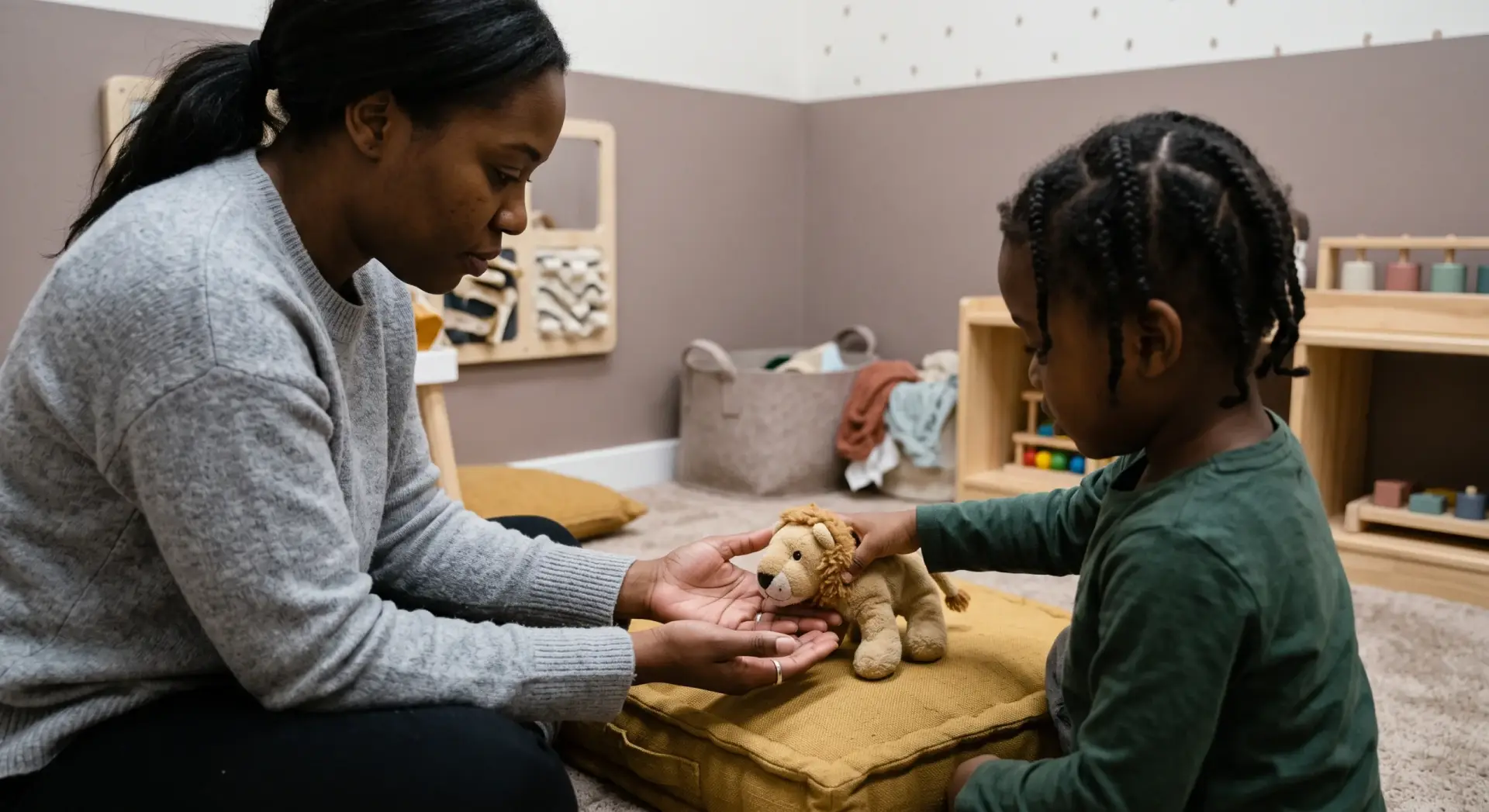
Younger children may need simpler explanations, more hands-on support, and highly familiar comfort items. Older children may be able to practice self-advocacy, carry identification they are comfortable with, or help identify safe adults and calming strategies that work for them.
The ANCHOR Plan for Emergency Preparedness
The ANCHOR Plan gives families a practical way to prepare without turning readiness into another overwhelming project. It focuses on what is most useful under pressure: anticipating likely scenarios, writing down child-specific needs, carrying the right essentials, coordinating the adults, and refining the plan over time.
A – Anticipate the Scenario
Start by thinking through the emergencies most likely to affect your family. That may include storms, wildfire smoke, power outages, evacuation orders, sudden school closure, medical emergencies, or community incidents that require a fast change in plans.
Then think about what tends to make these situations harder for your child. For one child, the hardest part may be leaving home quickly. For another, it may be sirens, uniforms, crowded spaces, sleeping somewhere new, or being separated from a familiar caregiver. Consider transportation changes, unfamiliar bathrooms, waiting in line, hunger, fatigue, and what happens if communication becomes harder under stress.
You are not trying to predict every detail. You are identifying the situations that are most likely to affect safety and regulation so your plan can be realistic.
N – Note the Child Profile
Write your child’s needs down in one place. In an emergency, adults may have only a few seconds to understand what helps and what makes things worse.
A strong child profile includes communication style, sensory triggers, calming supports, sleep needs, food restrictions, medication schedule, toileting considerations, and important safety risks. It should also note what adults need to know right away if your child is non-speaking, has limited danger awareness, is prone to wandering, or may not respond typically to strangers, lights, or loud directions.
If your child is older and able to participate, include preferred phrases, self-advocacy cues, or identification options they feel comfortable using. The more specific this document is, the more useful it becomes when routines collapse.
C – Carry the Essentials
Emergency supplies should support more than survival. For autistic children, they should also support regulation, communication, and continuity.
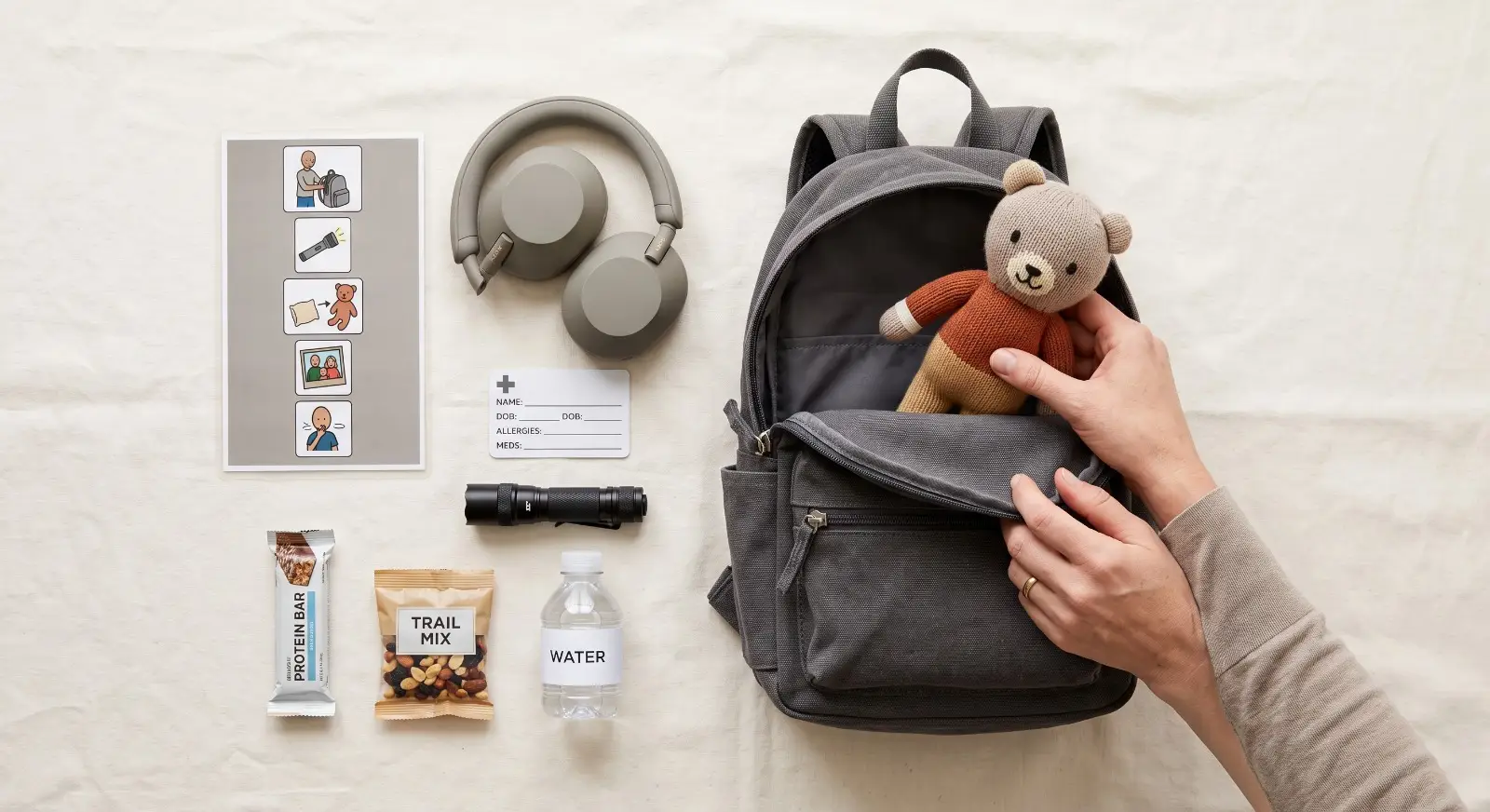
That means packing both physical items and key documents. Think beyond flashlights and bottled water. What will help your child wait, sleep, eat, communicate, transition, and recover if home no longer feels accessible? A well-packed go-bag should be portable, easy to grab, and reviewed often enough that medications, chargers, and comfort items are still current.
H – Help the Adults Coordinate
One of the most protective steps a family can take is deciding who does what before there is a crisis. Parents, relatives, backup caregivers, school staff, therapists, and first responders do not all need the full same plan, but they do need the right information.
Clarify who handles medications, who grabs the go-bag, who manages sibling logistics, who communicates with the school, and who stays focused on supporting the child. Also make a backup plan for separation. If a primary caregiver is injured, unreachable, or delayed, another adult should know what to do immediately and what the child is likely to need first.
OR – Observe, Rehearse, Refine
Families do not need full-scale drills to practice emergency readiness. Small rehearsals are often more useful. Try headphones in the car. Walk through where the go-bag lives. Use a visual schedule to practice leaving the house quickly. Review simple scripts such as “We are leaving now,” “You are safe,” or “First car, then snack.”
After any drill, travel experience, weather alert, or real disruption, update the plan. Note what helped, what escalated distress, and what was missing. Younger children may need practice built into routine. Older children may be able to explain what felt manageable and what did not.
Autism Emergency Readiness Sheet + Go-Bag Checklist
This checklist can help turn worry into a concrete plan.
Child Profile
- Preferred name or identifier
- Communication style and how the child shows pain, fear, or overload
- What helps when distressed
- What to avoid during escalation
- Wandering or elopement risk
- Water-safety concerns
- How the child may respond to strangers, uniforms, touch, or loud instructions
Regulation and Communication Supports
- Noise-reduction headphones or ear protection
- Visual schedule, simple first-then cards, or social story
- AAC device, communication card, or backup low-tech communication option
- Favorite comfort object, fidget, blanket, or calming sensory item
- Familiar snacks and drinks that are tolerated under stress
- Supports that help with waiting, sleep, crowding, or unfamiliar environments
Older children may prefer more discreet tools, while younger children may need highly visible and familiar items.
Medical and Logistics Essentials
- Current medications with dosing instructions
- Allergy information
- Insurance card and emergency contacts
- Diagnosis or evaluation documents if needed for care coordination
- Chargers, batteries, and device backups
- Hygiene supplies, wipes, and toileting items
- Change of clothes and sleep essentials
Keep copies updated and easy to grab. If your child depends on a specific routine item, pack a backup if possible.
Evacuation and Backup-Caregiver Plan
- Transportation plan and meeting points
- Shelter, hotel, or relative-home considerations
- Sleep setup and bathroom routine needs
- Who can step in if parents are separated
- What a school, caregiver, or relative should know if they must act fast
- A short responder information sheet with communication tips, calming supports, medical needs, and urgent safety concerns
Rehearsal and Review Notes
- What has already been practiced
- What still feels difficult
- What needs updating after travel, drills, or real disruptions
- Which items were missing or not helpful
How to Support Your Child During Evacuation, Sheltering, or Sudden Disruption
In the moment, focus on safety first and simplify everything else. Use calm, direct language. Reduce the number of demands. Offer only a few choices when possible. If your child uses visuals, bring them back in quickly, even if the larger daily routine is gone.
During a home evacuation, keep instructions short and concrete. Move toward the next safe step rather than explaining every detail. During a shelter or hotel stay, create a mini-routine as soon as you can: where to sit, where to keep comfort items, when to eat, and what happens next. During a hospital or ER visit, tell staff what helps your child tolerate waiting, touch, transitions, and questions.
Watch for signs that overload is escalating, such as bolting attempts, sudden shutdown, refusal, increased stimming, sleep collapse, or inability to communicate basic needs. Some children need less talking and more environmental support. Others need repeated reassurance and familiar scripts. Research and clinical practice both suggest that visual supports and predictable cues can reduce uncertainty during abrupt change, which is one reason tools like social stories and visual schedules are often included in autism emergency planning. Resources from Autism Speaks and the PLAN emergency-preparedness framework can help families expand these supports in practical ways.
How to Prepare Schools, Caregivers, and First Responders to Support Your Child
Before an emergency happens, share a short information sheet with the adults most likely to be involved. This can include communication style, calming supports, medication needs, wandering risk, sensory triggers, and what language or actions to avoid.
Schools and caregivers should know what to do during sudden pickup, lockdowns, transportation changes, or parent unavailability. Keep the guidance simple enough that another adult can act on it quickly. For example: who your child will go with, what item should always travel with them, how to explain the change, and when to contact you.
For first responders or shelter staff, stay focused on immediate support rather than broad education. What do they need to know in the first minute? If your child is older, involve them when appropriate in deciding how they want their needs explained to other adults.
How to Help Your Child Recover After the Emergency Event
The end of the emergency does not always mean the end of the stress. Some children show delayed reactions after the event, especially when sleep has been disrupted or familiar routines were lost.
Start with decompression. Lower demands where possible. Rebuild predictable routines one step at a time. Reintroduce familiar meals, bedtime supports, school expectations, and community activities gradually if needed. Watch for changes in sleep, appetite, communication, toileting, or behavior that suggest the child is still carrying stress.
Then review the plan. What worked? What was missing? Which items were useful, and which ones were not? This kind of review can make the next emergency less chaotic. At Alight ABA, the most meaningful preparation is usually the kind families can actually use in real life: clear, child-specific, and supportive of quality of life rather than built around pressure or perfection.
FAQ
How can families prepare an autistic child for an emergency or evacuation?
Start before the crisis by identifying likely scenarios, writing down child-specific needs, practicing a few simple steps, and making sure important adults know the plan.
What should be included in an autism emergency kit or go-bag?
Pack regulation supports, communication tools, medications, documents, chargers, snacks, hygiene items, and comfort objects that fit your child’s actual needs.
How do visual schedules or social stories help during emergencies?
They can make a confusing situation more predictable by showing what is happening next and giving the child a clearer path through the transition.
What can parents do to reduce sensory overload during a disaster or evacuation?
Reduce noise and demands when possible, use familiar supports, keep language simple, and create a small predictable routine even if the larger day has changed.
How can families help first responders, schools, or shelters better support an autistic child?
Share a short information sheet ahead of time that explains communication style, calming supports, medical needs, wandering risk, and what adults should avoid.
How can families plan for wandering or water-related danger during emergency events?
Build these risks into the child profile, strengthen supervision plans, use identification if appropriate, and make sure backup caregivers know exactly what to watch for in unfamiliar environments.