What autism is, how ABA therapy actually works, and what parents should look for.
Let’s Talk
If you’re new to autism — or new to Applied Behavior Analysis (ABA) therapy — there’s a lot to learn, and the internet doesn’t always make it easy. This page is a plain-English overview of what autism spectrum disorder (ASD) is, how ABA therapy works, what the research says about effectiveness, and how to know whether ABA is a good fit for your child.
What is autism spectrum disorder?
Autism spectrum disorder (ASD) is a developmental condition that affects how a person communicates, interacts socially, and processes information about the world. It’s called a “spectrum” because the way it shows up varies widely – two children with autism can look very different from each other. Common signs of autism in young children include:
Delayed or atypical speech development
Difficulty with eye contact, joint attention, or social back-and-forth
Strong preferences for routine and difficulty with transitions
Difficulty understanding others’ feelings or perspectives
Many children with autism also have specific strengths — often in memory, pattern recognition, music, math, or visual-spatial reasoning.
How is autism diagnosed?
There’s no blood test for autism. Diagnosis is made by a licensed clinician through a structured evaluation that includes parent interviews, standardized assessment instruments, and direct observation of the child. Pediatricians typically screen for developmental delays at well-child visits and refer for a full evaluation if concerns come up. You can also seek out a diagnostic evaluation directly — you don’t need to wait for a referral.
What is ABA therapy?
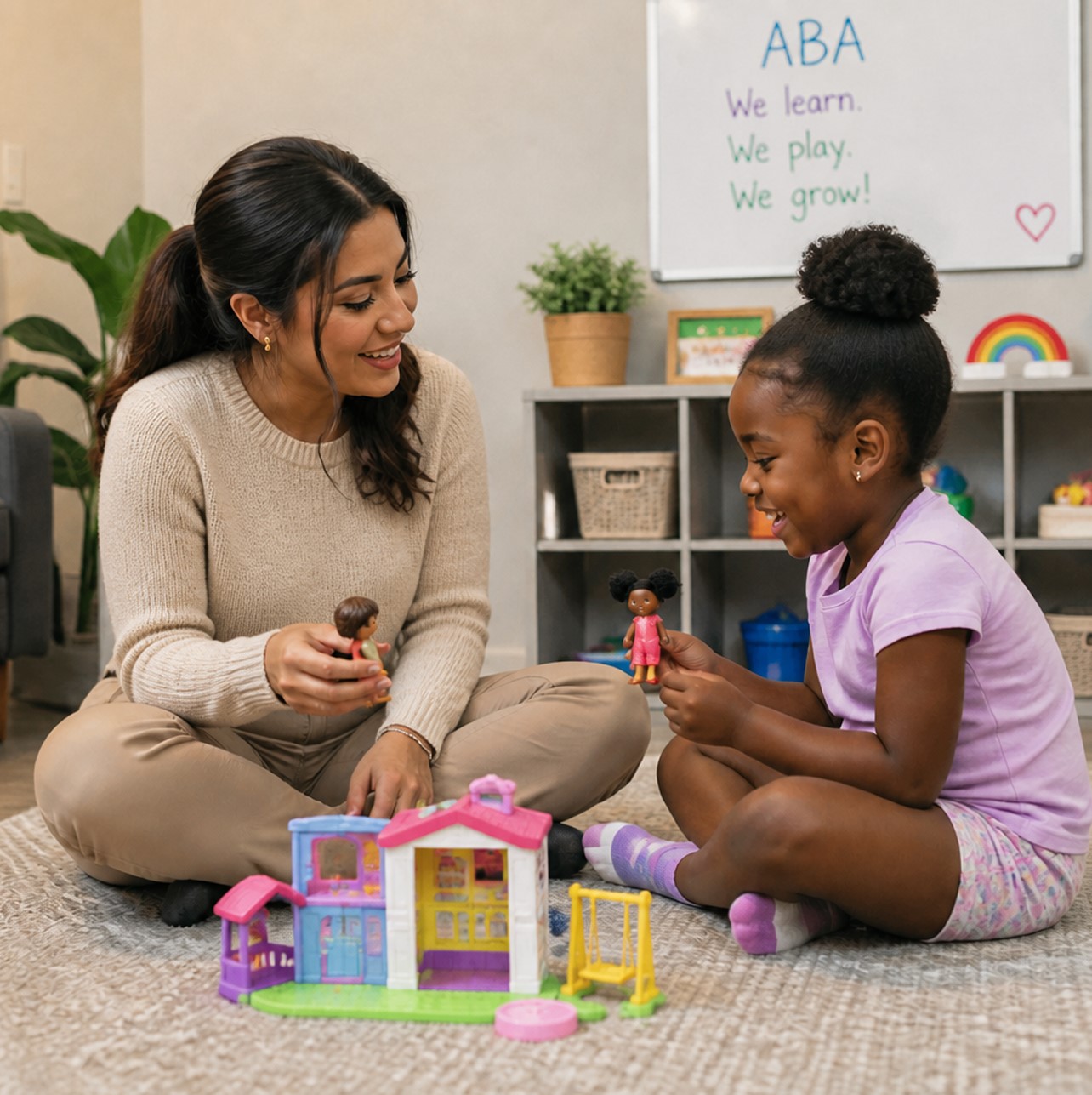
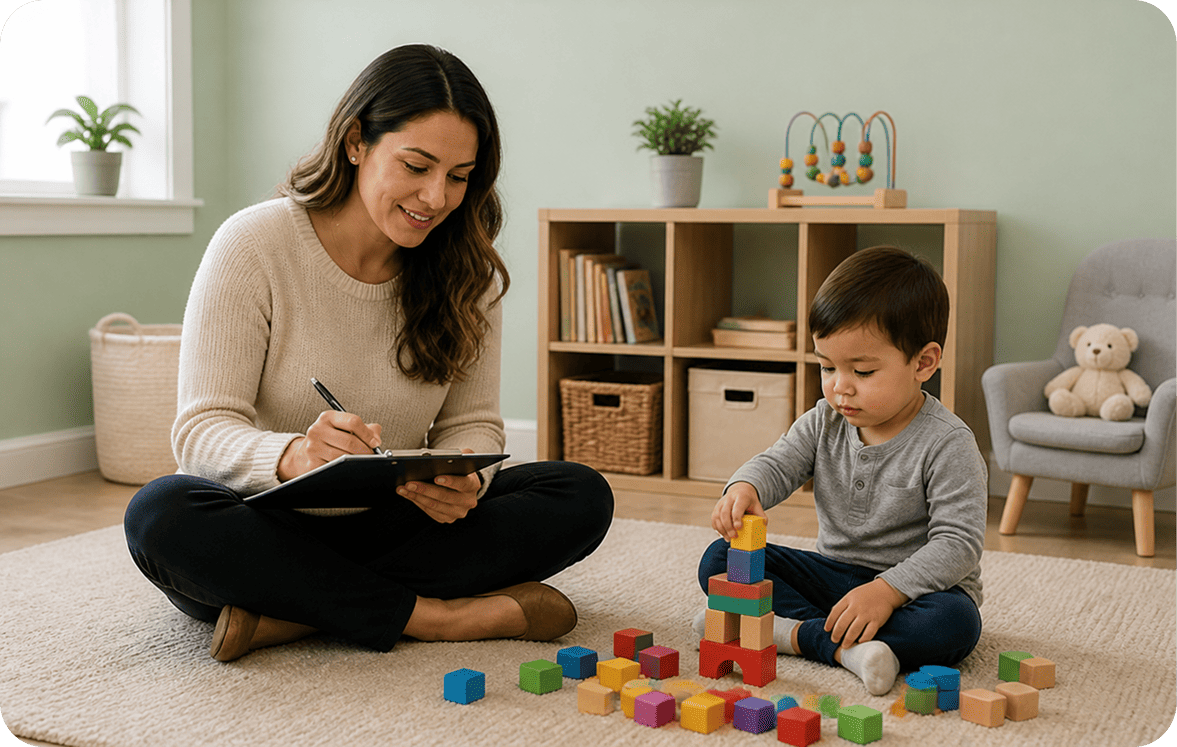
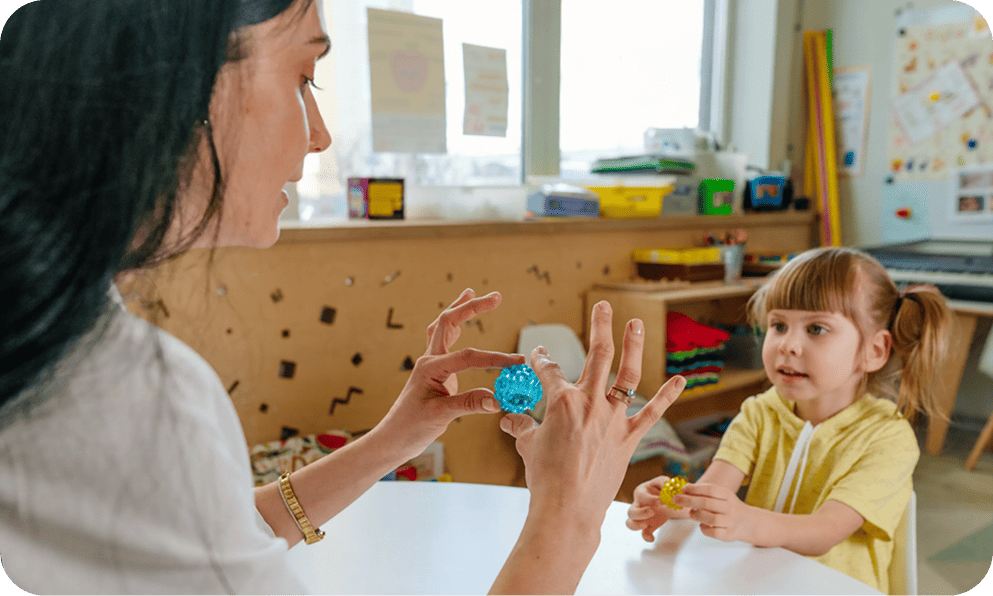
Applied Behavior Analysis (ABA) is the science of understanding why behavior happens, and using that understanding to teach new skills and reduce behaviors that get in a person’s way. In practice, that means an ABA therapist works one-on-one with your child to:
Build communication.
From first words and gestures to full conversations.
Develop social skills.
Joining play, taking turns, reading facial expressions, building friendships.
Teach daily living skills.
Toileting, dressing, eating new foods, sleep routines.
Reduce challenging behaviors.
Tantrums, aggression, self-injury, elopement — by understanding what triggers them and teaching better alternatives.
Prepare for school and community life.
Following directions, sitting for activities, navigating new environments.
A Board Certified Behavior Analyst (BCBA) designs your child’s plan. A Behavior Technician (BT), supervised by the BCBA, delivers the therapy in your home (or another natural setting).
Is ABA therapy effective?
Yes — ABA is the most research-backed treatment for autism. Decades of peer-reviewed studies show that ABA improves communication, adaptive behavior, and social skills, particularly when it’s delivered:
Early.
Most evidence supports starting between ages 2 and 6 for the largest gains.
Consistently.
Skills build through repetition. Sporadic therapy produces sporadic results.
Individually.
Plans built around one specific child outperform one-size-fits-all curricula.
Modern ABA looks very different from older models. Today’s ABA emphasizes naturalistic teaching, child-led play, family involvement, and trauma-informed care. At Alight, we practice what’s known as “compassionate ABA” — therapy that respects your child’s autonomy, prioritizes their well-being, and partners with you on every goal.
How is ABA therapy delivered?
The most common formats are in-home ABA (a therapist comes to your home) and center-based ABA (your child goes to a clinic).
Alight specializes in in-home ABA because:
Skills learned at home generalize faster to real life
Children are calmer and learn better in familiar settings
Parents can observe and learn the strategies in real time
Families avoid drive time, parking, and unfamiliar environments
Is ABA therapy covered by insurance?
Yes — in most cases. ABA therapy is covered by Medicaid in every state (including Minnesota, Virginia, and North Carolina), and by most major commercial insurance plans. Coverage details, hours, and authorization requirements vary by plan. Alight will verify your benefits for you, at no cost, so you’ll know what to expect before you start.
If you’d like to talk with someone about ABA therapy for your child, we’d be happy to help. There’s no cost or commitment to the first conversation.
At Alight Behavioral, we are always looking for qualified BCBA’s, RBT’s, and Behavioral Therapists to join our growing family of therapists. If you are pursuing a career in ABA therapy, consider joining the team at Alight.