If you’re looking into early support for your child in Rockingham, NC, you may already feel like the pressure is on. That feeling is common, especially when you are trying to sort through new concerns, unfamiliar terminology, and a long list of options. The good news is that families in Rockingham and across Richmond County can explore in-home ABA therapy as one possible next step, and you do not have to figure it all out at once.
This guide is here to make the process feel more manageable. We’ll walk through what in-home ABA can look like, why some families start searching early, what to ask when comparing providers, and how to think through next steps without adding more overwhelm.
ABA is not a one-size-fits-all answer for every developmental concern. Still, when a child is having a hard time with communication, routines, transitions, safety, play, or early school-readiness skills, a thoughtful evaluation can help families understand what kind of support may fit best.
Quick Answer: Can families in Rockingham get early in-home ABA support?
Yes. Families in Rockingham can look into in-home ABA therapy and other early support options when challenges are showing up in everyday life. For many parents, home-based care feels like a practical place to start because it supports real routines in the environment where those routines actually happen.
If you want a broader picture before comparing local options, it can help to start with how in-home ABA therapy works in North Carolina.
Quick Summary
- Who this support is often for: Children with autism spectrum disorder or related developmental challenges who need help with communication, routines, transitions, play, social interaction, or behavior in daily life.
- What early in-home ABA may focus on: Functional communication, smoother routines, safer responses, flexibility during transitions, learning through play, and caregiver support.
- Why BCBA oversight matters: A Board Certified Behavior Analyst (BCBA) helps shape assessment, goals, and progress review so support stays individualized.
- Why home-based care can be a strong fit: Skills practiced at home can carry more naturally into meals, bedtime, play, community outings, and preschool preparation.
- What families should clarify early: Provider fit, service-area coverage in Rockingham or Richmond County, scheduling realities, and insurance or benefit details in North Carolina.
Why families in Rockingham start looking for help early
Most parents do not begin this search because they suddenly became experts in ABA or early intervention. They start because something in daily life feels harder than it should. A child may be struggling to communicate needs, getting stuck during transitions, having a tough time with routines, or showing signs that preschool or kindergarten could feel like a big leap without more support.
The phrase “early start” usually comes from a place of care, not panic. Parents want to respond while their child is young and while support may be able to make daily life feel steadier. That does not automatically mean ABA is the right next step. It does mean families deserve clear, calm information so they can make a thoughtful decision.
For younger children, families are often thinking about communication, play, routines, and readiness for group settings. For children nearing preschool or the early school years, questions may also come up around flexibility, following directions, and participating more comfortably in everyday activities. If you want more background on how families weigh early support options, this guide to early intervention and ABA for toddlers is a helpful companion.
What in-home ABA can look like day to day
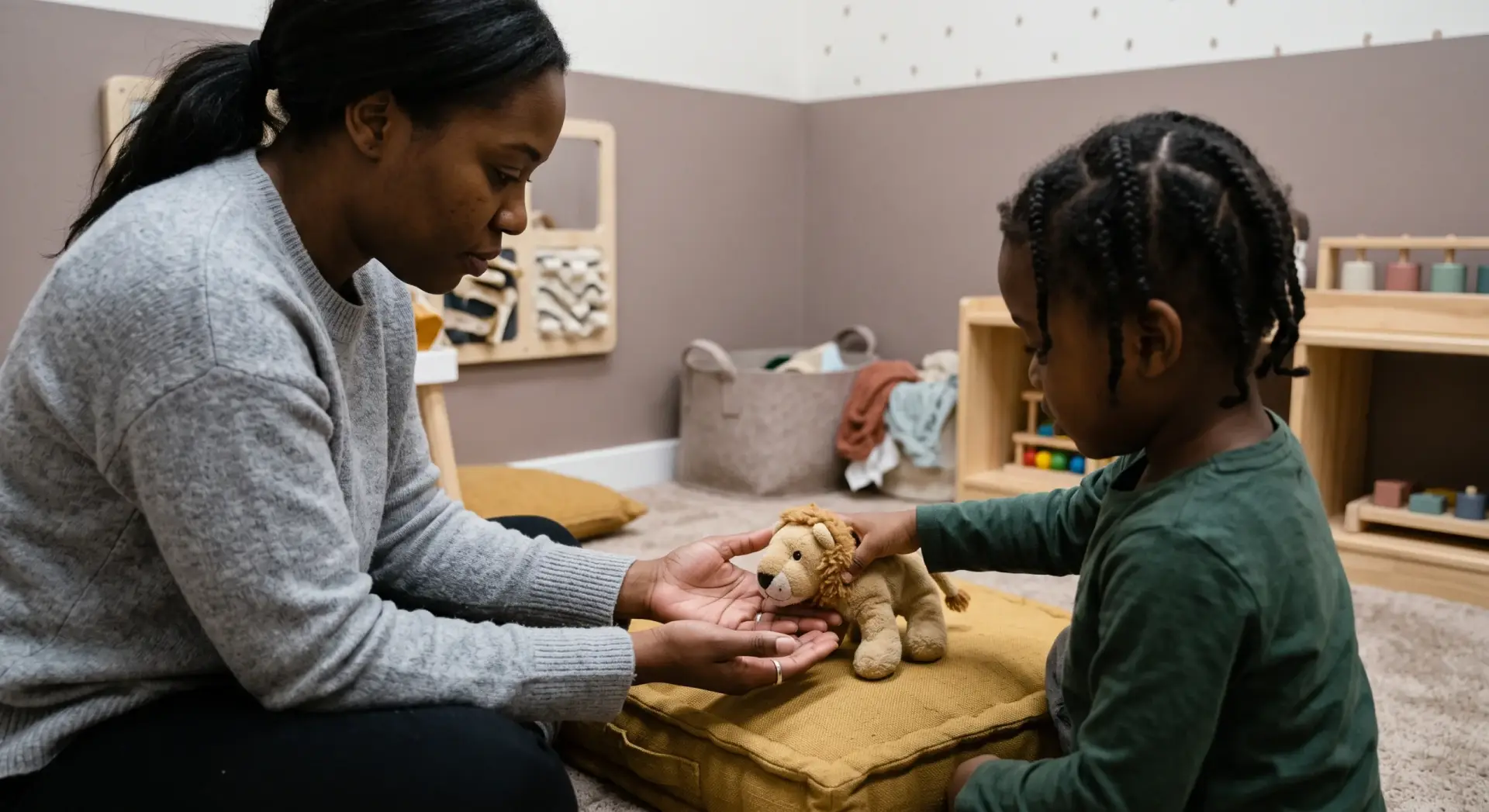
In-home ABA should not feel like turning your living room into a clinic. At its best, it is practical, warm, and built around the routines that already shape family life. Support might focus on helping a child ask for what they need more clearly, move through the morning with less stress, build play skills, handle transitions more smoothly, or practice everyday interactions with more confidence.
For toddlers and younger children, goals are often tied to play-based learning, communication, parent-child interaction, and routines that matter at home. That might include asking for help, moving from one activity to another, building back-and-forth interaction, or making preschool readiness feel a little more manageable.
A strong plan should be tailored to the child, not copied from a template. Assessment helps clarify what is getting in the way, what strengths are already there, and which next steps make sense for the child and family. If you want a clearer picture of the model, this overview of in-home ABA in North Carolina and this article on the benefits of in-home ABA offer more context.
RIGHT START at Home Framework
When families are comparing options, it helps to have a simple way to sort through the noise. The RIGHT START at Home Framework keeps the decision grounded in real life, not pressure.
R: Reason for seeking help now
Start with what is making this search feel important today. Maybe the biggest concern is communication. Maybe it is meltdowns during routines, safety worries, difficulty with play, or stress around preschool readiness. You do not need perfect language here. You just need an honest picture of what feels hardest right now.
That clarity matters. “Early intervention” is a broad phrase, and understanding why you are looking now makes it easier to decide whether ABA fits the child’s current needs.
I/G: In-home goals and fit
Next, think about whether home-based care fits your child and your family’s day-to-day life. In-home ABA can be especially helpful when the goals are closely tied to routines, communication, sibling interaction, meals, outings, or transitions that happen at home.
It also helps to think about the rhythm of your household. When is your child usually most ready to learn? How involved can caregivers be when coaching or support is offered? Would home-based services reduce the stress of travel compared with a center-based option? Learning more about in-home ABA therapy in North Carolina can help families think through that fit.
H: Help team quality
A good provider brings more than credentials. BCBA oversight matters, and so do individualized goals, thoughtful progress review, and a clear explanation of how therapy decisions are made. Just as important, though, is whether the team feels warm, respectful, and easy to talk to.
Families should feel like they have a real partner and a hand to hold, not like they are being talked at. A strong provider should be able to explain what they are seeing, how parents can be involved, and how progress will be tracked over time. If you want a practical list of comparison questions, this parent’s guide to choosing an ABA provider can help.
T: Therapy access realities
In Rockingham and across Richmond County, practical access questions matter. Does the provider regularly travel to your area for in-home care? Are session times realistic for your work and school schedule? How do they talk through insurance verification, benefits, and possible out-of-pocket questions in North Carolina?
It is smart to keep expectations steady here. Availability can depend on clinician coverage, scheduling, and insurance participation. Families should expect to verify details directly rather than assume every service listed online is immediately available. For broader context, this insurance guide for ABA therapy can help you prepare better questions.
START: Step-after-step readiness
The last part is knowing what happens after you reach out. Families should be able to understand the likely sequence: an initial conversation, intake questions, assessment, discussion of goals, scheduling, and the early phase of support. When that process is explained clearly, it usually feels much less intimidating.
The point is not to promise a specific timeline or outcome. It is to help families move forward with fewer unknowns and a stronger sense of what the process may involve.
Rockingham ABA Provider Fit Comparison Tool
If you are comparing two or three providers, a simple worksheet can help you stay grounded during calls or consultations.
| What to compare | What to ask or look for |
| Service area coverage | Do you regularly serve families in Rockingham and across Richmond County? |
| In-home vs. center-based options | Is in-home care available, and how is the setting chosen for a child? |
| Age and developmental fit | Do you work with children at my child’s age and stage? |
| BCBA assessment and oversight | Who completes the assessment, sets goals, and reviews progress? |
| Parent coaching | How are caregivers included in sessions, training, or home strategies? |
| School or community coordination | Can you support goals related to preschool, kindergarten, or community routines? |
| Insurance guidance | How do you handle benefits verification and plan-specific questions? |
| Intake and onboarding | What happens after we reach out, and what paperwork or steps should we expect? |
| Communication style | How do you share updates, answer concerns, and adjust goals? |
| Progress tracking | How will we know whether support is helping over time? |
This kind of tool is not about scoring providers with false certainty. It is simply a way to compare fit, clarity, and realistic access without losing track of what matters most to your family.
What happens after you reach out for support
After a family contacts a provider, the first step is usually an intake conversation. You may be asked about your child’s strengths, challenges, routines, previous services, and what led you to reach out now. From there, the provider may explain assessment, insurance verification, scheduling, and what onboarding typically looks like.
If services move forward, the early phase often focuses on understanding the child in context. For younger children, that may mean looking closely at communication during play, how routines unfold at home, and where support could make life feel easier for both the child and caregivers. Early goals are usually practical and specific, not broad promises about future outcomes.
If you want a clearer sense of the experience itself, this guide to what parents can expect before, during, and after an ABA session can make the process feel more familiar.
FAQ
How do I know if in-home ABA is the right next step for my child?
Look at where the biggest challenges are showing up. If concerns are most visible in communication, routines, play, transitions, or behavior at home, in-home support may be worth exploring. The best fit should come from an individualized assessment, not a generic promise.
What should I ask an ABA provider before getting started?
Ask who leads the assessment, how goals are chosen, how parent coaching works, whether the provider regularly serves Rockingham, how progress is shared, and what the first few steps usually look like. The comparison tool above can help keep those questions organized.
Is ABA therapy covered by insurance in North Carolina?
Coverage depends on the plan, the provider’s participation status, and the services being recommended. It is best to verify benefits directly and ask how the provider helps families understand coverage, limits, and next steps.
Can ABA help with communication, routines, and preschool readiness at home?
It can, when those are appropriate goals for the child. Many early support plans focus on functional communication, smoother routines, play, flexibility, and skills that can make home and school transitions feel easier. Goals should stay individualized and realistic.
What is the difference between a statewide ABA service page and a local Rockingham page?
A statewide page can help you understand the bigger picture of in-home ABA therapy in North Carolina, while a local page such as ABA therapy in Rockingham, NC helps confirm city-specific relevance and service context. Together, they give families both the broader overview and the local lens.
If you feel ready to move from research to next steps, it may help to start with in-home ABA therapy in North Carolina and then review the Rockingham ABA page to see what kind of conversation makes the most sense for your family.