If you’re searching for ABA therapy Greensboro NC, you’re probably not looking for a broad definition of ABA. Most families in this moment want to know whether in-home support is available close to home, what it may look like in real life, and how to choose a provider without adding more stress to an already full schedule. This guide is designed to help Greensboro families understand what to expect, what questions to ask, and how to decide whether in-home ABA feels like the right next step.
What Greensboro Families Are Really Looking for When They Search for ABA Therapy
ABA therapy may support communication, routines, transitions, behavior regulation, social interaction, safety, and parent coaching. For many families in Greensboro, the bigger question is not whether ABA exists, but whether a provider offers care that feels warm, collaborative, and realistic for daily life.
That can look different by age. Younger children may need support with early communication, play, and routines. School-age children may need help with transitions, behavior support, and carryover between home and school. Older youth may need more focus on independence, home responsibilities, and community participation. The goal should be individualized support that improves quality of life rather than trying to “fix” a child or promise a certain pace of progress.
The CARE-at-Home Fit Check
The CARE-at-Home Fit Check can help families decide whether this provider + this setting + this timing make sense right now.
C – Child goals and pressure points
Start with the most immediate needs: communication, routines, transitions, safety, behavior regulation, social participation, or school readiness. The clearest priorities are usually the ones showing up in everyday routines, not just broad labels.
A – At-home realities
In-home ABA can reduce travel and make it easier to work on skills where they actually happen, but it is not automatically the best fit for every family. Think about caregiver bandwidth, sibling dynamics, space, work schedules, and whether sessions can fit into mornings, after-school hours, or evening routines without creating more strain.
R – Relationship and clinician model
Ask how BCBA oversight works, how often goals are updated, and what parent coaching looks like. Strong providers usually explain their approach clearly, welcome questions, and connect therapy goals to real family priorities instead of giving vague or overly rigid answers.
E – Entry logistics
Before starting, ask about service areas in and around Greensboro, benefits verification, Medicaid or commercial insurance handling, likely waitlists, and what happens first. Convenience matters, but families should weigh access alongside communication, supervision, and clinical fit.
What In-Home ABA Can Look Like in Real Greensboro Family Life
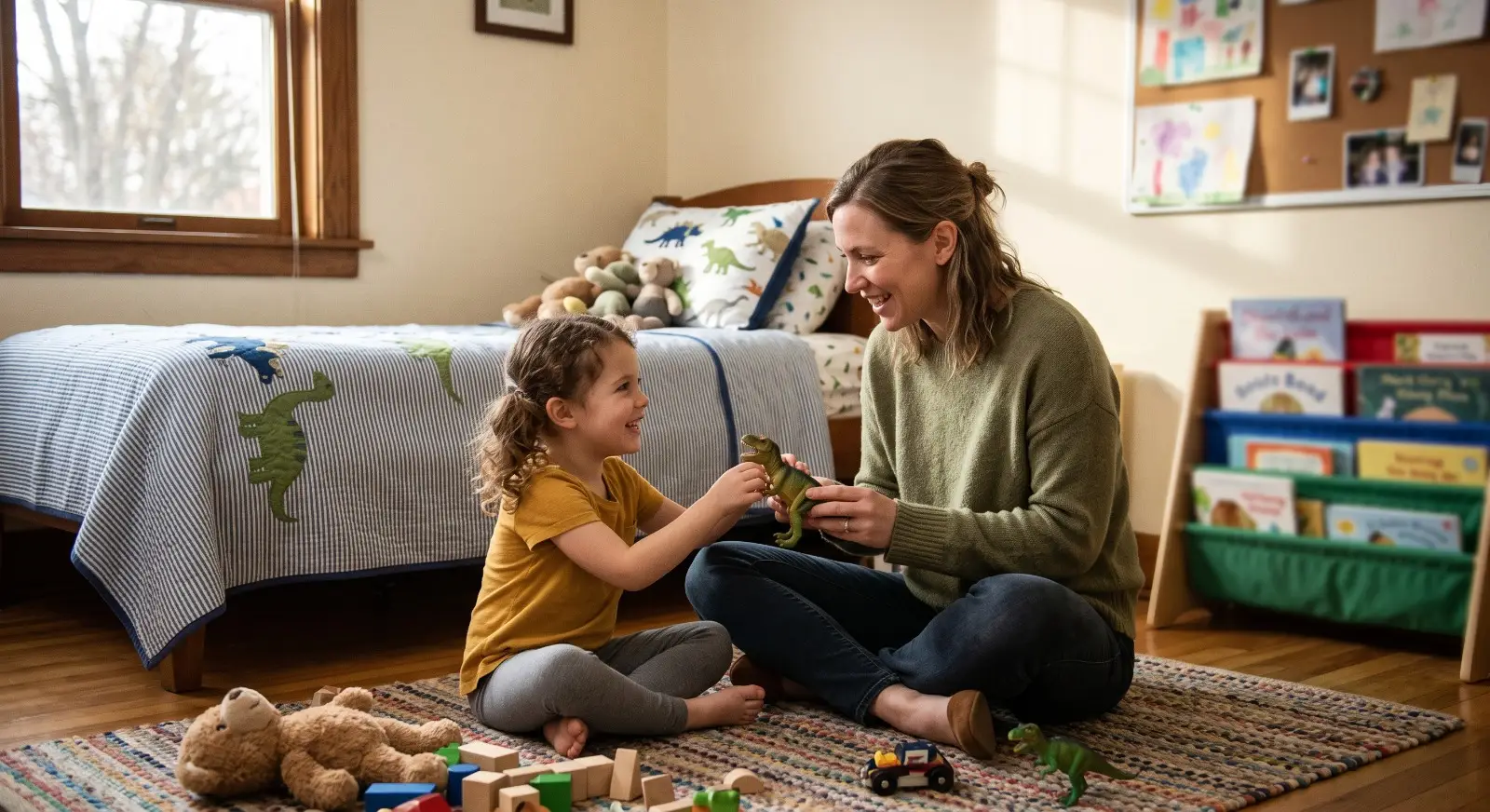
In-home ABA often focuses on the moments families are already navigating each day: getting ready in the morning, moving between activities, practicing communication during meals, building play skills, handling safety concerns, or working through after-school transitions. For toddlers, that may mean early communication and routines. For school-age children, it may involve homework, regulation, and family communication. For older youth, goals may include home responsibilities, independence, and community readiness.
Working in the child’s natural environment can make skills easier to practice across the week, and parent involvement may improve carryover between sessions. Still, the right schedule, goals, and setting should always be based on intake and evaluation rather than assumptions.
Questions to Ask Before Starting ABA Therapy in Greensboro
When you speak with providers, ask:
- Do you offer in-home, center-based, or hybrid care, and how do you decide what fits best?
- How does BCBA supervision work, and who updates goals?
- What does parent coaching look like from week to week?
- What will you handle with insurance or Medicaid, and what should we verify ourselves?
- What does the intake process involve, and how should we think about timing or waitlists?
- Do you actively serve Greensboro homes and nearby areas?
Strong answers should be specific, practical, and tied to everyday life. Red flags include vague supervision, unclear caregiver expectations, unrealistic progress promises, or no explanation of how goals connect to real routines.
Greensboro ABA Provider Comparison Grid
A simple comparison grid can help families evaluate 2–4 Greensboro-area options after consult calls or benefits conversations. Use one provider per column and compare:
- Setting offered: in-home, center-based, hybrid, or community support
- Greensboro service area and travel radius
- Ages or developmental stages served
- BCBA oversight and goal-setting process
- Parent coaching and communication cadence
- Intake timeline and benefits-check process
- Insurance or Medicaid handling
- Common support areas, such as routines, communication, behavior, school readiness, or community participation
- Red flags or unresolved concerns
This kind of side-by-side view makes it easier to compare details while they are still fresh.
FAQ: ABA Therapy in Greensboro, NC
Is in-home ABA therapy available in Greensboro, NC?
It may be, but availability depends on provider coverage, staffing, scheduling, and whether in-home care fits your household. Ask what services are offered in the home and whether your address is inside the active service area.
What ages do ABA therapy providers in Greensboro serve?
Many providers work with children and young adults, but experience can vary by developmental stage. Ask whether the provider regularly supports concerns that match your child’s current age and goals.
Do ABA therapy providers in Greensboro accept Medicaid or major insurance plans?
Some do, but families should verify both provider participation and plan-specific requirements. Ask about benefits checks, authorization steps, and what costs or paperwork may still fall to you.
What is the difference between in-home ABA therapy and center-based ABA therapy?
In-home ABA allows skills to be practiced in familiar routines, while center-based care may offer a more structured setting. The better option depends on your child’s goals, family schedule, and the provider’s model.
What happens during an ABA assessment or intake?
Most providers begin by learning about your child’s strengths, challenges, routines, and goals, then explaining logistics, fit, and next steps. At Alight ABA, that early conversation is intended to feel clear, supportive, and grounded in what will work best for your family.