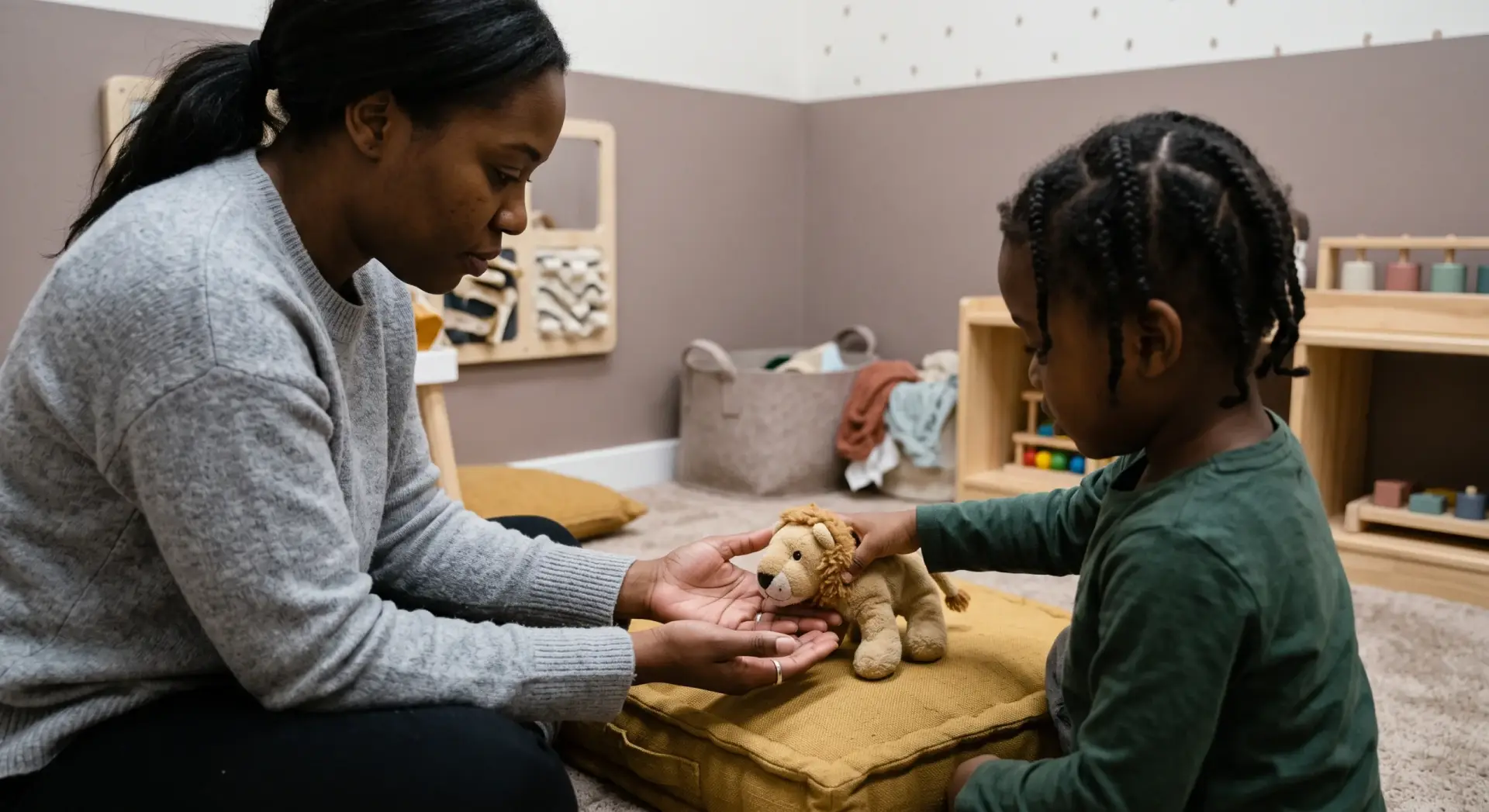
If you are considering ABA therapy in Burnsville or elsewhere in Dakota County, you may be wondering what a visit will feel like in your own home. A typical session often includes a caregiver check-in, time to connect, practice during everyday routines, data collection, and a short debrief. The details are shaped around the child and family.
A therapist does not need a spotless house or a special therapy room. In-home care is meant to meet a child in a familiar setting, where goals can connect to real routines. This guide explains what families may notice, what caregivers can expect, and which questions can help you decide whether a provider feels like the right fit. For provider-specific information, you can also review Alight ABA’s in-home ABA services in Minnesota.
Quick Facts: What Burnsville Families Can Expect from In-Home ABA
- Typical flow: A check-in, connection time, goal-focused teaching, practice in everyday routines, simple data collection, and a debrief. The order can change from one visit to the next.
- Who is involved: A BCBA, or Board Certified Behavior Analyst, may guide assessment, treatment planning, supervision, and clinical review. An RBT, or Registered Behavior Technician, may provide direct support under supervision.
- Common goals: Communication, play, transitions, self-care, safety, social participation, daily living, independence, or self-advocacy, depending on the child’s plan.
- Parent role: Share context and priorities, observe, ask questions, and practice strategies with coaching when appropriate. Caregivers are not expected to run clinical programming alone.
- What to prepare: A safe, workable area and access to ordinary routines. Let the team know about siblings, pets, sensory needs, privacy, schedule changes, and preferred activities.
Session length, frequency, setting, and intensity are individualized. Families may also hear terms such as FBA, which means functional behavior assessment; AAC, or augmentative and alternative communication; EIDBI, Minnesota’s Early Intensive Developmental and Behavioral Intervention benefit; and CMDE, a Comprehensive Multi-Disciplinary Evaluation that may be part of the access process for eligible families. These terms describe parts of an individual care or evaluation process, not a universal path for every child.
The BRIDGE-Home Session Map: A Flexible Walkthrough of a Home Visit
The BRIDGE-Home Session Map is one way to picture the moving parts of a home visit. It is not a rigid script. Some sessions may spend more time building comfort, while others may focus on a particular routine or skill.
B/R: Begin with context and relate first
The therapist may start by asking how the day is going, what has changed, and what the family would like to focus on. The team may consider the child’s preferences, sensory needs, communication style, safety, and energy level. A toddler, school-age child, teen, or young adult may each need a different kind of opening.
Rapport and observation can come before formal demands. The therapist might join a preferred activity, offer choices, or watch how the child communicates. This gives the team a useful starting point without treating hesitation or a need for more time as misbehavior.
I: Integrate goals into real routines
Communication may be practiced during play, meals, or a request for help. A transition goal may fit moving from a preferred activity to homework, hygiene, bedtime, or an appointment. Daily-living goals may fit the kitchen, bathroom, bedroom, yard, or a community setting such as a park or store.
Teaching may include natural practice, along with brief structured activities when they make sense for the child’s plan. The aim is to connect goals with routines that matter to the family, not to turn the home into a clinic.
D: Document and review what the team learns
The therapist may record observations or simple data, such as how the child communicates or what kind of support helps during a transition. The BCBA reviews this information, supervises implementation, and may adjust goals or strategies as the team learns more. Progress is not expected to follow one fixed timeline.
G: Guide the caregiver as a partner
Caregivers may share context, observe a strategy, practice it with support, or explain whether it fits the family’s routine. They are partners in the process, not substitute clinicians. They should not be left to make programming or safety decisions alone.
E: Extend the next useful step
A short debrief may cover what was practiced, what the team noticed, and what carryover idea feels realistic. Families can ask about supervision, scheduling, coverage, and coordination with school or community routines. A useful next step should feel manageable, not like another set of instructions to master.
How Goals Can Fit Everyday Home Routines
In-home sessions may address asking for help, choosing an activity, sharing a game, coping with a change, completing a hygiene step, participating in household routines, or communicating a preference in the community. The home setting can make it easier to notice where a skill is useful and what kind of support fits naturally.
Age and developmental stage influence the examples, but they do not create one universal protocol:
- Toddlers and early learners: Communication, play, shared attention, regulation, and caregiver-supported routines.
- School-age children: Communication, transitions, self-care, learning routines, social participation, and safety.
- Teens and young adults: Independence, self-advocacy, daily living, community participation, and planning.
The qualified care team determines goals, methods, intensity, and safety planning for the individual child. Families who want to compare settings can read this guide to compare home-based and center-based ABA and bring specific questions to the provider.
Caregiver Role, Home Preparation, and Real-Life Distractions
Caregiver presence may be needed for all or part of a visit, depending on the child’s needs, plan, and provider expectations. Participation might mean sharing priorities, watching a strategy, practicing a step, or giving feedback. The provider should explain what participation looks like rather than leaving the family to guess.
A workable home does not need to look like a treatment center. Families can:
- identify a safe area where the child and therapist can move or work;
- keep useful preferred items available without buying special equipment;
- explain routines, privacy needs, pets, siblings, visitors, noise, and sensory considerations; and
- share schedule changes and communication preferences.
Unexpected noise or a sibling entering the room does not mean the family failed. Those realities are part of the environment and can help the team plan thoughtfully. For more detailed setup ideas, see this parent checklist for preparing for an ABA home visit.
How BCBA Supervision, Data, and Progress Review Work
A clear team structure helps families know where questions belong:
- The BCBA may guide assessment, treatment planning, supervision, data review, and clinical adjustments.
- The RBT or behavior therapist may provide direct support under the applicable supervision structure.
- The caregiver contributes priorities, observations, context, feedback, and supported carryover.
Families may notice data collection, session notes, and conversations about goals. It is reasonable to ask what is being measured, how information is shared, who reviews the data, and how the plan changes when an approach is not useful. This plain-language overview of BCBA and RBT roles offers more background.
Burnsville and Dakota County Access: What Families Need to Confirm
Families looking for in-home ABA in Burnsville or Dakota County should confirm the practical details with the provider. Service depends on clinician availability, travel boundaries, scheduling, clinical fit, and authorization. A general service page cannot guarantee coverage for a particular address or a specific start date.
Ask Alight ABA about:
- current clinician availability and whether the home or a community setting is serviceable;
- scheduling, travel boundaries, caregiver presence, and how routine changes are handled;
- possible school or community coordination, without assuming that a specific school service is included; and
- whether private insurance, Medical Assistance, MinnesotaCare, EIDBI, a diagnostic evaluation or CMDE, and payer authorization apply to the family’s situation.
Alight describes its Minnesota services as primarily in-home and community-based and says it works with most major insurance plans, including Medical Assistance and MinnesotaCare. Coverage, eligibility, evaluation requirements, and authorization remain individual questions. The Minnesota guide to EIDBI, ABA therapy, and autism support provides broader context. Families can then use the in-home ABA therapy service page to confirm current service-area, evaluation, coverage, and intake details.
Families comparing autism centers in Burnsville may weigh center-based care, home visits, or a combination. No setting is automatically right for every child. A thoughtful conversation should consider the child’s goals, family capacity, safety, preferences, and the environments where support will be most useful.
Dakota County Home-Session Fit Card
Use this card before an intake call or early visit. It is meant to help a family evaluate fit, not to grade a child or demand a perfect home.
| Question to evaluate | What a family may observe | What to ask | Why it matters |
|---|---|---|---|
| Visit opening | A check-in about the child’s state, schedule, priorities, and safety. | How will changes in the day affect the visit? | The plan starts with current family reality. |
| Child connection | Time to warm up, choices, preferred activities, and respectful communication. | How do you learn what helps my child feel comfortable? | Connection supports participation. |
| Goal-to-routine fit | Practice in play, meals, transitions, self-care, or community routines. | Why does this routine matter to our family? | Skills are connected to everyday life. |
| Teaching and support | Play, structured practice, prompting, reinforcement, and respectful support. | How will you explain strategies and respect communication or refusal? | Families deserve humane, reasoned support. |
| Team and progress | Clear BCBA supervision, direct-care roles, data, and updates. | Who reviews goals, and how will we understand the data? | Transparency supports informed decisions. |
| Caregiver and home fit | Coaching plus planning for siblings, pets, privacy, space, travel, and coverage. | What participation is expected, and can you serve our address? | Care should fit family capacity and logistics. |
FAQ: In-Home ABA Therapy in Burnsville and Dakota County
What does a typical in-home ABA therapy session look like?
A visit may move from a caregiver check-in and connection time to routine-based teaching, data collection, and a debrief. The child’s current state, goals, preferences, and family priorities shape the visit, so there is no single script that every session follows.
How long do in-home ABA sessions last, and how often do they happen?
Duration and frequency depend on the child’s plan, goals, schedule, clinician availability, and authorization. Ask the provider what could affect the schedule and how changes will be communicated.
Do parents have to be present for the entire in-home ABA session?
Presence and participation vary by the child’s needs, plan, and provider expectations. Ask what is required before services begin. Caregivers are partners and an important source of context, but they are not substitute clinicians.
How should a family prepare the home for an ABA visit?
Provide a safe area and tell the team about routines, pets, siblings, privacy, noise, sensory needs, and preferred activities. A spotless home or special therapy room is not required. The provider can help decide what setup is useful for the individual visit.
What is the difference between a BCBA and an RBT during home-based ABA?
A BCBA generally guides assessment, treatment planning, supervision, data review, and clinical adjustments. An RBT or behavior therapist may provide direct support under supervision. Ask who answers clinical questions and how supervision is handled.
Is in-home ABA available in Burnsville and across Dakota County, and can insurance or EIDBI help?
Availability depends on the family’s address, clinician capacity, scheduling, eligibility, and authorization. Medical Assistance, MinnesotaCare, private insurance, and EIDBI requirements can differ. Confirm service area, evaluation or CMDE needs, coverage, and authorization with Alight ABA.
If you are considering home-based support, learn more about in-home ABA therapy in Minnesota to start a practical conversation about fit, evaluation, coverage, and next steps. Alight ABA’s stated approach centers on positivity, warmth, and partnership in the child’s natural environment.