If your child’s annual school meeting is coming up, ABA review IEP meeting preparation can help the conversation feel more organized and less overwhelming. Many parents walk into an annual Applied Behavior Analysis (ABA) review and Individualized Education Program (IEP) meeting carrying school reports, therapy updates, home concerns, and unanswered questions, but without a clear way to connect them. The goal is not to arrive with perfect paperwork. It is to understand what has changed, what support still fits, and what your child needs next at school and across daily routines.
When families prepare for the annual review by looking at school information, ABA progress, and home observations together, it becomes easier to spot patterns that might otherwise get missed. This article will help you decide what to review, what to bring, what to ask, and how to keep the school team and ABA team aligned without making the meeting feel adversarial.
Why Families Should Prepare for the Annual ABA Review and IEP Meeting Together
An annual review is a chance to look closely at how your child is doing now, not just how things looked last year. If your child receives ABA therapy, that therapy perspective can add useful context to school conversations about communication, behavior support, independence, participation, and daily functioning. It should not replace the school team’s role, but it can help round out the picture.
That matters because progress does not always look the same in every setting. A child may communicate more at home than at school, manage transitions well in therapy but struggle in the classroom, or show new strengths that have not yet made it into school goals. Parents are often the only people seeing all of those pieces at once. Bringing those observations into the meeting helps the team focus on support needs, not just isolated data points.
The One-Table Review Map
Bring the Full Picture
Before the meeting, gather the information that best shows how your child is functioning across settings: the current IEP, recent school progress reports, any evaluation updates, an ABA treatment plan or progress summary, and a few concrete home examples. You do not need to bring every note you have ever saved. It is usually more helpful to bring patterns: changes in communication, behavior triggers, independence with routines, peer interaction, and areas where support still seems inconsistent.
For school-age children, look especially at classroom participation, transitions, following directions, social demands, and how much help your child needs to move through the day. Keep the focus on meaningful progress and quality of life rather than framing your child as a problem to be fixed.
Review What Changed
Compare today’s picture to the last annual review. What has improved? What has stayed about the same? What feels harder now that classroom expectations are different? For some children, new academic demands or longer social periods can reveal support needs that were less obvious a year ago. For older students, self-advocacy, independence, and student preferences may need more attention.
This is also the point where parents can look for mismatch. School data may show one trend, ABA data may show another, and your home experience may not fully match either one. That does not mean someone is wrong. It usually means the team needs better context about when the challenge happens, what support is present, and what successful performance actually looks like.
Translate Needs into School Language
One of the most useful parts of ABA review IEP meeting preparation is turning broad concerns into school-ready talking points. “Transitions are still hard” becomes a discussion about what accommodations help between activities. “He melts down after noisy group time” may point to sensory supports, behavior planning, or clearer communication tools. “She can ask for help at therapy but not in class” may connect to measurable communication goals or classroom prompting strategies.
Listen carefully for vague phrases such as “making progress” or “doing better” without clear examples or measurement. It is reasonable to ask: How is progress being tracked? What does success look like in the classroom? What support is available when the skill breaks down? These questions help clarify needs without assuming that therapy recommendations automatically determine IEP decisions.
Align the Adults
A productive meeting does not require everyone to agree on every detail. It does require shared priorities. Parents can help by centering the discussion on a few concrete goals that matter most right now, such as safer transitions, better communication when frustrated, stronger classroom participation, or more consistent independence with routines.
It also helps to clarify who is responsible for what. The school team may be responsible for classroom accommodations and progress monitoring. The ABA team may be able to share patterns, support communication strategies, or explain what has helped in other settings. Parents can describe what daily life looks like outside both environments. When older students can participate, their preferences and concerns should be reflected too. Collaboration works best when the goal is clarity, not confrontation.
Lock the Next Steps
Before the meeting ends, make sure you understand what was decided, what still needs follow-up, and how progress will be measured going forward. If something is supposed to be revised, clarified, or shared later, ask who will send it and when. If reports or draft materials are still missing, it is appropriate to request them in writing.
Prepared families do not just leave with a general sense that the meeting went well. They leave with next steps, owners, and a way to monitor whether agreed changes are actually happening. That follow-up is often what turns a helpful conversation into better support over time.
What to Request, Review, and Bring Before the Meeting
Two Weeks Before
Start by pulling together the current IEP, the last annual review notes, recent school progress updates, evaluation reports, and any ABA summaries you already have. Then narrow your focus to the top three priorities you want addressed. That might be communication during frustration, support during transitions, peer participation, or daily independence at school. Organized preparation is more useful than trying to solve everything at once.
One Week Before
Confirm who will attend the meeting, what reports will be discussed, and whether draft materials are available ahead of time. If your child’s BCBA or ABA provider needs to share updated information, decide what would actually be most helpful: a short progress summary, a few examples of effective supports, or clarification around a specific concern. This is also a good time to write your questions down so they are easier to use in the meeting.
Resources such as PACER Center’s IEP checklist and Understood’s guide to preparing for an IEP meeting reinforce the value of reviewing records early and arriving with clear priorities rather than relying on memory in the moment.
The Day Before
Condense everything into a simple packet or note sheet you can actually reference. Highlight confusing data, list your top concerns, and jot down two or three examples that show how your child is doing across home, therapy, and school. The goal is to walk in calm and clear, not overloaded. If emotions are high, keep your notes simple enough that you can find what you need quickly.
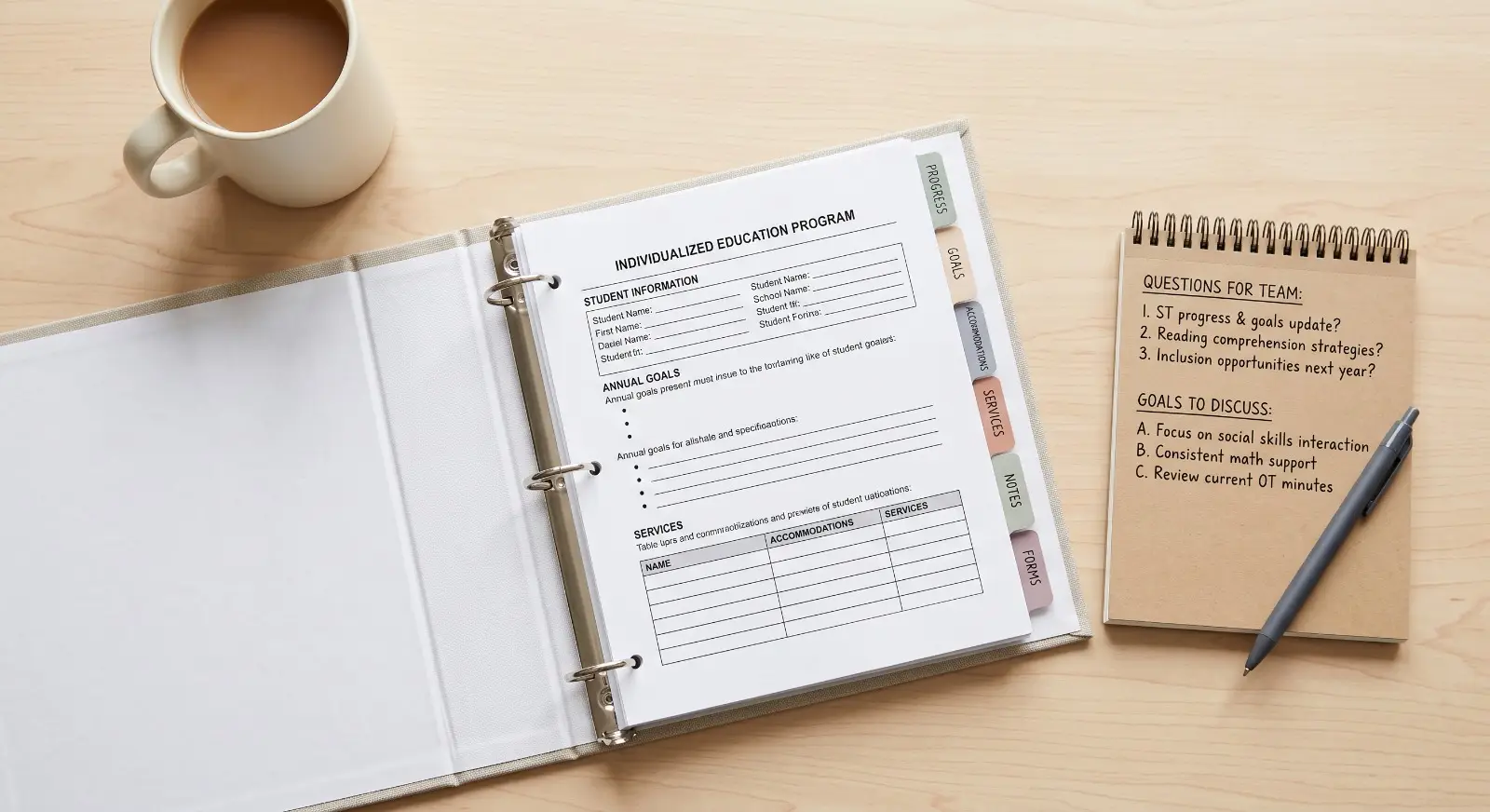
Questions to Prepare for the School Team and ABA Team
Questions for the School Team
You might ask:
- Which goals are clearly measurable, and how is progress being tracked?
- Where is my child doing well, and where does support still break down during the school day?
- Are current accommodations and services still a good fit for classroom demands?
- What does participation look like in academics, routines, transitions, and peer interaction?
- If progress is limited, what needs to change in supports, instruction, or data collection?
Questions for the BCBA or ABA Provider
You might ask:
- Which recent ABA updates are most relevant to the school discussion?
- What communication, regulation, or behavior patterns are showing up consistently?
- What supports have helped your child generalize skills across settings?
- Is there data or a short summary that would help the school team understand current needs?
- Are there strategies that work in therapy or at home that could inform school planning without assuming the settings are the same?
Questions to Ask When Progress Is Unclear
If reports feel vague or inconsistent, try questions like:
- What data is this conclusion based on?
- What happens right before or right after the difficult moment?
- Are we seeing the same issue across settings, or only in certain routines?
- What information is missing that would help us make a better decision?
- What follow-up should happen after the meeting if progress is still unclear?
These kinds of questions keep the conversation specific and collaborative, especially when home, school, and therapy perspectives do not fully match.
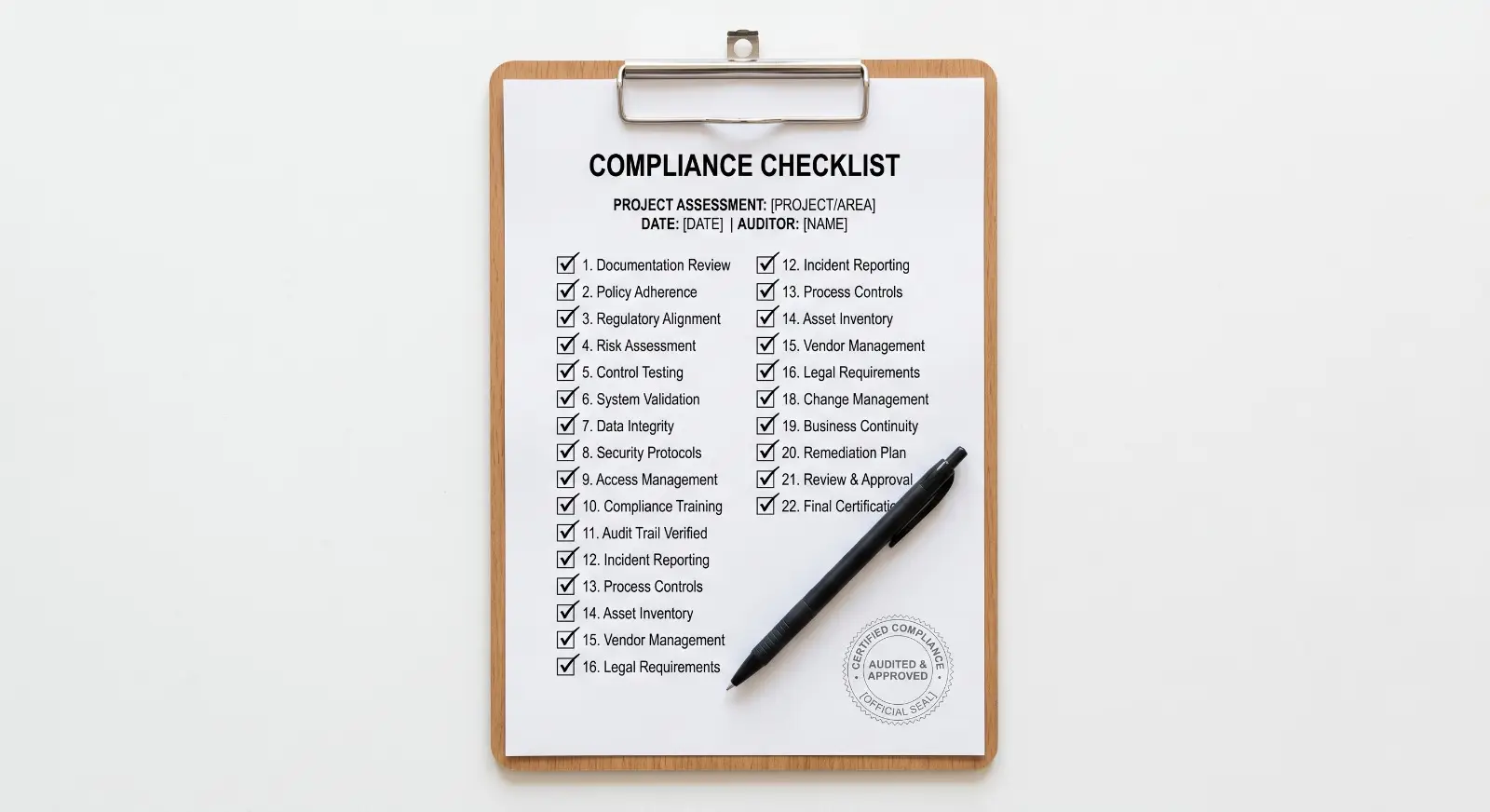
Annual ABA Review + IEP Prep Packet
Use this checklist one to two weeks before the meeting, bring it with you, and reopen it right after the meeting for follow-up.
Records to Review
Review your current IEP, prior annual-review notes, recent school progress reports, evaluation updates, your child’s ABA treatment plan or progress summary, and a few home observations that show meaningful patterns rather than isolated frustrations.
Questions to Prepare
Write down your top concerns, the questions you want to ask the school team, the questions you want to ask the BCBA or ABA provider, and any areas where progress feels hard to interpret or inconsistent across settings.
Documents to Request or Bring
Bring any draft materials or reports that were shared before the meeting, a short written summary of your family’s priorities, notes on supports or accommodations you want clarified, and a page where you can write down decisions made during the meeting.
Post-Meeting Follow-Up Items
Track any documents that are still outstanding, the action items each adult agreed to handle, the deadlines for follow-up, and how the team plans to review progress next. If a change was discussed but not clearly documented, make a note to request clarification in writing.
FAQ
What should I bring to an IEP meeting?
Bring the documents that help the team see the current picture clearly: the current IEP, recent school reports, relevant evaluation updates, an ABA progress summary if your child receives ABA, and a short written list of your main concerns and priorities. A few concrete examples from daily life are often more useful than a large stack of unsorted notes.
How can parents prepare for an annual IEP review?
Start by reviewing what has changed since the last meeting, narrowing your priorities, and organizing your questions ahead of time. It can help to compare school reports, ABA information, and home observations side by side so you can spot patterns and speak clearly about what still needs support.
What questions should I ask at an IEP meeting?
Focus on whether goals are measurable, how progress is being tracked, whether supports still fit your child’s current needs, and what the next steps will be if progress is unclear. Collaborative questions tend to open a more productive discussion than general frustration.
How can ABA data support IEP goals?
ABA data can help identify communication patterns, behavior triggers, support needs, and skills that are emerging across settings. The most useful approach is to translate that information into school-relevant language about goals, accommodations, participation, and progress monitoring rather than assuming therapy data alone should drive IEP decisions.
What should I do after the IEP meeting?
Review the notes while the conversation is still fresh, confirm who owns each action item, and follow up on any missing documents or unclear decisions. Monitoring what was agreed to after the meeting is just as important as preparing before it.
At Alight ABA, we know families often need both practical structure and a steady tone when school planning feels high stakes. When parents come in with a clear picture of progress, a few focused questions, and written next steps, the annual review becomes a better opportunity to support the child in a coordinated, realistic way.